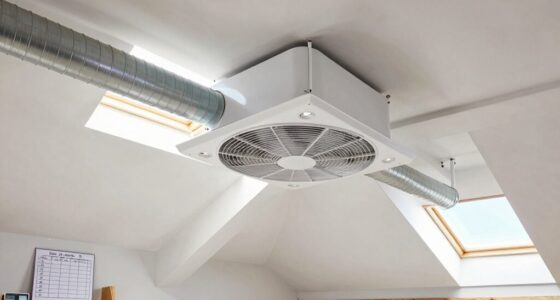
If you have a hot room with poor airflow, installing an inline duct fan can be a game-changer. These fans boost air circulation directly within your duct system, reducing heat buildup and uneven temperatures. They’re energy-efficient, easy to install, and can markedly improve comfort without costly upgrades. With proper placement and maintenance, inline duct fans help create a cooler, more balanced space. Keep going to discover how to choose and install the right one for your home.
Key Takeaways
- Inline duct fans improve airflow, preventing heat buildup and hot spots in rooms with poor ventilation.
- Properly installed fans move warm air away from ceilings, balancing indoor temperature.
- They help reduce indoor temperature and humidity, making hot rooms more comfortable.
- Selecting the right size and placement maximizes airflow efficiency and cooling effect.
- Regular maintenance ensures consistent performance and long-term effectiveness in hot environments.
What Are Inline Duct Fans and How Do They Work?

Are you wondering how inline duct fans improve your ventilation system? These fans are installed directly within your ductwork, allowing for smooth airflow and increased airflow efficiency. They work by pulling stale air out or pushing fresh air in, depending on your setup. The design ensures minimal noise and resistance, making your space more comfortable. To keep your inline duct fan running smoothly, regular fan maintenance is essential—cleaning blades, checking connections, and inspecting for obstructions. Proper maintenance prevents airflow issues and extends the fan’s lifespan. Additionally, airflow management plays a critical role in optimizing indoor air quality and system performance. Implementing effective ventilation strategies can further enhance the benefits of inline duct fans. Optimizing system design is also important to ensure maximum efficiency and performance. With an inline duct fan, you get a reliable, efficient way to boost ventilation without disrupting your existing system. This setup helps maintain a consistent airflow, making your environment healthier and more balanced. Proper system optimization techniques can help you achieve even better airflow and energy efficiency.
Why Do Hot Rooms Need Better Airflow Solutions?

Hot rooms often suffer from poor air circulation, making them uncomfortable and hard to cool effectively. This inefficiency leads to temperature imbalances that can affect your comfort and air quality. Better airflow solutions are essential to keep the space evenly cooled and livable. Incorporating cycling gear maintenance tips can also improve overall air quality and comfort in enclosed spaces. Additionally, understanding the horsepower of electric dirt bikes can help you choose the right equipment for ventilation projects involving power tools or generators. Properly maintaining your small wood stove can also ensure optimal airflow and heat distribution during colder months. Exploring sound healing science may offer innovative ways to enhance indoor environments and further improve airflow and ambiance. Recognizing the importance of caregiver emotional health can also promote a more balanced and relaxing atmosphere indoors.
Inefficient Air Circulation
When airflow is inefficient, hot rooms tend to trap warm air, making the space uncomfortable and difficult to cool. Poor airflow efficiency means warm air lingers, and stagnant air prevents proper circulation. Factors like inadequate duct insulation can cause heat loss or gain, disrupting airflow. To improve, ensure ducts are well-insulated and free of obstructions. Properly designed duct systems help distribute air evenly, preventing hot spots. Here’s a quick comparison:
| Factor | Impact on Airflow Efficiency |
|---|---|
| Duct Insulation | Reduces heat transfer, maintains airflow |
| Duct Size | Larger ducts improve airflow |
| Obstructions | Blockages decrease efficiency |
| Duct Materials | Smooth surfaces promote better flow |
| Vent Placement | Correct positioning ensures even circulation |
Additionally, selecting the appropriate duct materials can significantly enhance airflow performance. Considering airflow dynamics can also help optimize the system and reduce hot room issues.
Temperature Imbalances
Temperature imbalances in a room often occur because warm air naturally rises and becomes trapped in specific areas, leading to uneven comfort levels. Without proper airflow optimization, hot spots develop, making parts of the room uncomfortably warm while others stay cooler. To achieve effective temperature regulation, you need solutions that promote even airflow distribution. Using inline duct fans can help move air where it’s needed most, preventing hot air buildup. Consider these points:
- Hot air rises and accumulates near the ceiling
- Poor airflow causes uneven temperature distribution
- Inline fans improve circulation throughout the space
- Proper placement ensures consistent comfort levels
Proper airflow management is essential for maintaining a balanced temperature and avoiding hot spots. Additionally, understanding air circulation principles can help you optimize fan placement for maximum effectiveness, ensuring that airflow efficiency is maximized throughout the room. Regular assessment of ventilation effectiveness can further enhance comfort and energy efficiency. Incorporating airflow patterns into your planning can further optimize overall climate control.
Top Benefits of Installing Inline Duct Fans for Hot Rooms

Installing inline duct fans in hot rooms offers numerous advantages that can substantially improve comfort and air quality. One of the main benefits is enhanced airflow efficiency, which helps circulate air more effectively, reducing hotspots and uneven temperatures. This ensures a cooler, more comfortable environment without overtaxing your HVAC system. Additionally, inline duct fans contribute to energy savings by improving ventilation without requiring extra energy-consuming appliances. They help maintain consistent temperatures, reducing the need for frequent cooling or heating, which lowers your utility bills. Plus, better airflow minimizes indoor air pollutants and odors, promoting healthier indoor air quality. Incorporating air circulation techniques can further enhance these benefits by optimizing airflow patterns throughout your space. Proper ventilation helps prevent stale air buildup and maintains a fresh atmosphere. Improving indoor air quality through better airflow can also reduce the risk of health issues associated with poor air conditions. For example, improved airflow can prevent the buildup of indoor pollutants that can cause respiratory problems. To maximize these improvements, selecting the right capacity for your specific room size is crucial. Overall, installing inline duct fans provides a reliable, cost-effective way to keep hot rooms comfortable, efficient, and healthier year-round.
How to Choose the Right Inline Duct Fan for Your Home

To choose the right inline duct fan for your home, start by evaluating your ventilation needs to guarantee you pick a model that moves enough air. Next, consider noise levels so your fan won’t disrupt your comfort or daily activities. Finally, check compatibility features like size, mounting options, and control settings to make sure it fits seamlessly into your existing system. Additionally, selecting a fan with smart automation capabilities can enhance your home safety and convenience by allowing remote monitoring and scheduling.
Determine Ventilation Needs
Understanding your ventilation needs is essential before choosing an inline duct fan. You need to evaluate the space’s air quality and indoor humidity levels to select the right fan. Proper ventilation ensures fresh air circulation, reducing indoor pollutants and excess moisture that can cause mold. To determine your needs, consider:
- The size of the room or area
- The level of air contamination or odors
- The existing humidity levels
- The desired air exchange rate
Consider Noise Levels
When choosing an inline duct fan, considering noise levels is just as important as evaluating ventilation needs. You want a fan that provides effective airflow without creating disruptive noise. Look for models with sound mitigation features, such as insulated housings or quieter motor designs. Checking decibel ratings helps you compare noise levels across different fans—aim for lower ratings if the fan will operate near living spaces. Keep in mind that louder fans can interfere with daily activities or sleep, so balancing performance with quiet operation is key. Ultimately, selecting a fan with minimal noise guarantees a comfortable environment, allowing you to enjoy fresh air without unwanted distractions. Prioritizing noise considerations leads to a more pleasant and functional home ventilation system.
Check Compatibility Features
Choosing the right inline duct fan for your home depends on guaranteeing compatibility with your existing ventilation system. You need to check compatibility features like duct size, mounting options, and electrical connections to maximize ventilation efficiency. Proper compatibility ensures the fan fits seamlessly and operates effectively.
To verify compatibility, consider:
- Duct diameter matching the fan’s inlet and outlet sizes
- Compatible mounting brackets and space requirements
- Electrical voltage and power supply compatibility
- Connection types suited for your current system
Focusing on these compatibility features helps prevent airflow issues and maintains ideal ventilation efficiency. Ensuring these details align with your system guarantees the fan works smoothly, boosting airflow and reducing hot rooms efficiently.
Step-by-Step: How to Install an Inline Duct Fan

Installing an inline duct fan may seem challenging, but with the right steps, you can do it efficiently. Start by turning off your HVAC system and measuring the ductwork to ensure compatibility. Next, cut the duct in the desired location, making sure it’s accessible for maintenance. Mount the fan securely using brackets or straps, positioning it to maximize airflow optimization. Connect the duct to the fan’s inlet and outlet, sealing joints with foil tape for airtightness. Wire the fan according to the manufacturer’s instructions, ensuring proper grounding. Once everything’s connected, turn the system back on and test the airflow. Proper installation boosts duct fan efficiency, helping you achieve better airflow and a cooler, more comfortable room.
Troubleshooting Common Inline Duct Fan Problems

If your inline duct fan isn’t operating properly, identifying the root cause can save you time and frustration. Poor ventilation effectiveness often stems from simple issues like blocked filters, loose wiring, or obstructed ducts. To troubleshoot effectively, check these common problems:
- Clogged or dirty filters reducing airflow
- Loose electrical connections or faulty wiring
- Obstructions in the ductwork hindering airflow
- Incorrect fan placement affecting ventilation effectiveness
Addressing these issues can restore proper airflow and improve airflow optimization. Regular maintenance, cleaning, and proper installation guarantee your fan performs at its best. By keeping components clear and connections secure, you maximize airflow and maintain a comfortable, well-ventilated space. Troubleshooting these typical problems helps you keep your inline duct fan running smoothly and efficiently.
Inline Duct Fans vs. Other Cooling Options: Which Is Best?

When comparing inline duct fans to other cooling options, it’s important to contemplate how each solution fits your specific ventilation needs. Inline duct fans are highly effective at targeting hot spots, delivering consistent airflow without disrupting your room’s aesthetic appeal. Unlike portable units or window ACs that can be bulky and noisy, inline fans are discreet and integrated into your existing ductwork. They also offer energy savings by focusing airflow where it’s needed most, reducing unnecessary energy use. Other cooling options might cool the entire space but often at higher costs and with less aesthetic appeal. If you want a solution that balances efficiency, quiet operation, and a sleek look, inline duct fans can be the best choice for your hot rooms.
How Much Do Inline Duct Fans Cost and Are They Energy Efficient?

Inline duct fans typically range in price from $100 to $300, depending on their size, power, and features. When contemplating a cost comparison, think about long-term energy savings. These fans are designed to be energy-efficient, helping you reduce electricity bills over time. Factors influencing cost include motor quality, airflow capacity, and additional features like speed controls.
Here are key points to consider:
- Higher efficiency models may cost more upfront but save money long-term
- Energy-efficient fans consume less power, lowering operating costs
- Budget options can be effective but may lack advanced features
- Investing in quality ensures durability and consistent performance
Tips to Maintain Your Inline Duct Fan for Peak Performance

To keep your inline duct fan running efficiently, you should regularly check and replace the filters as needed. Ensuring your ductwork is properly sealed prevents leaks that can reduce performance. Simple maintenance like these can help your fan operate smoothly and last longer.
Regular Filter Checks
Have you checked your filter lately? Regular filter checks are crucial for maintaining airflow optimization and ensuring your inline duct fan performs at its best. A dirty filter restricts airflow, making your system work harder and reducing efficiency. To keep your system running smoothly, inspect your filter frequently and replace or clean it when needed.
Remember:
- Check filters monthly during peak use seasons
- Replace filters when they appear dirty or clogged
- Use high-quality filters compatible with your system
- Avoid neglecting filter maintenance, as it impacts overall performance
Consistent air filter maintenance keeps your airflow unobstructed, helps energy efficiency, and prolongs your fan’s lifespan. Staying on top of filter checks ensures your hot rooms stay cooler and your system runs smoothly.
Proper Duct Sealing
Proper duct sealing is essential for maximizing your inline duct fan’s performance. When ducts aren’t sealed correctly, air leaks reduce airflow efficiency, making your fan work harder and less effectively. Start by inspecting all connections and joints for gaps or cracks. Use high-quality duct tape or mastic sealant to secure leaks tightly. Ensuring airtight seals promotes airflow optimization, allowing your fan to move air smoothly through the system. Don’t forget to check around vents and registers, sealing any leaks that could compromise performance. Proper duct sealing not only improves airflow but also reduces energy consumption and noise. Regular maintenance of duct connections guarantees your inline duct fan runs at peak efficiency, providing consistent airflow and keeping your rooms comfortably cooled or heated.
Frequently Asked Questions About Inline Duct Fans and Hot Rooms

Are you wondering how inline duct fans can improve ventilation in hot rooms? These fans effectively move air, reducing heat buildup. They’re especially useful in humid climates, where moisture can make rooms feel even hotter. You might worry about noise or aesthetic impact, but modern models are quiet and discreet.
Some common questions include:
- Will the fan increase energy bills?
- Can it be installed without disrupting existing decor?
- How much maintenance is needed?
- Is it suitable for humid environments?
Inline duct fans not only boost airflow but also help control humidity and temperature, making your space more comfortable. With proper placement, they blend into your HVAC system and don’t compromise aesthetic considerations.
Frequently Asked Questions
Can Inline Duct Fans Be Used in Both Heating and Cooling Systems?
Yes, inline duct fans can be used in both heating and cooling systems. They improve air quality by increasing airflow and help distribute conditioned air more evenly. Plus, they boost energy efficiency by reducing the workload on your HVAC system, saving you money. Whether you’re heating or cooling, these fans enhance comfort and air circulation, making your space more pleasant and efficient year-round.
Are Inline Duct Fans Suitable for Small or Large Rooms?
You can use inline duct fans in both small and large rooms, but their suitability depends on room size and fan capacity. For smaller spaces, choose a fan with lower capacity to avoid over-ventilation. Larger rooms need higher capacity fans to effectively improve airflow. Always match the fan’s capacity with your room’s size for ideal performance, ensuring you get the right airflow boost without wasting energy.
Do Inline Duct Fans Require Professional Installation?
You might wonder if you need a professional for installation. In most cases, inline duct fans don’t require expert help, but installation complexity and electrical requirements can vary. If you’re comfortable with basic wiring and follow the instructions carefully, you can usually set it up yourself. However, for complex setups or if you’re unsure about electrical safety, consulting a professional guarantees everything runs smoothly and safely.
How Loud Are Inline Duct Fans During Operation?
Inline duct fans are generally quiet, with noise levels ranging from as low as 20 to 40 decibels, similar to a whisper or soft background noise. You can easily improve soundproofing around the fan if needed, making it even less noticeable. Most models are designed to operate smoothly, so you won’t be disturbed during use. Just choose a quieter model if noise is a top concern, and you’ll enjoy effective airflow without disruption.
Can Inline Duct Fans Be Integrated With Smart Home Systems?
Yes, inline duct fans can be integrated with smart home systems, making your life easier. Many models feature smart integration, allowing you to control airflow remotely or set schedules for energy efficiency. This setup helps you save energy by automating ventilation based on room temperature or occupancy. With seamless smart home compatibility, you gain greater control, improved efficiency, and a more comfortable environment without the need for manual adjustments.
Conclusion
Think of an inline duct fan as a invigorating gust for your hot room, turning stuffy heat into cool comfort. Just like a gentle breeze can transform a stifling day, these fans boost airflow and restore balance. With the right choice and proper upkeep, you’ll enjoy a cooler, more comfortable space. It’s your secret weapon against heat waves, making every room feel as revitalizing as a cool breeze on a hot summer day.