TL;DR

Get home appliances delivered free with Prime
- Fast, free delivery on millions of items
- Prime Video, Amazon Music and more included
- Member-only deals all year
Scientists have created a 3D-printed thermal cloak that redirects heat around objects, reducing infrared detectability. The technology could enhance stealth and thermal management applications, but remains in early testing stages.
Researchers at the University of Illinois Urbana-Champaign and the Technical University of Denmark have created a 3D-printed thermal cloak capable of hiding complex objects from infrared cameras by carefully guiding heat around them. This innovation represents a significant advance in thermal camouflage technology, with potential applications in stealth, electronics, and thermal management.
The new thermal cloak is designed for irregular three-dimensional shapes and dynamic heat flows, unlike earlier models that worked only with flat surfaces or fixed directions of heat. It functions by mapping the desired heat flow pattern around a protected object and translating that into a connected structure with variable density and orientation. The structure combines a 3D-printed aluminum lattice with a PDMS rubber-like material that conducts little heat, allowing precise control over heat pathways.
In experimental tests, the team placed an apple-shaped core inside a pear-shaped shell, positioned between two aluminum plates with one side heated to 40°C and the other cooled with iced water. After an hour, infrared imaging showed heat flowing around the object, with the external temperature pattern remaining largely undisturbed, whether heat traveled vertically or horizontally. Additional tests on other shapes, including face-like structures, confirmed the cloak’s ability to handle complex geometries and multi-directional heat flows.
Implications for Stealth and Thermal Management
This development could significantly impact infrared stealth technology by making objects less detectable without creating obvious cold patches. It also has potential applications in protecting sensitive electronics, batteries, or equipment from extreme temperatures by redirecting heat flow. However, the current prototypes are rigid, shape-specific, and operate only in controlled environments, limiting immediate practical use.
The ability to manipulate heat flow around irregular objects marks a step toward more sophisticated thermal camouflage, but further research is needed to adapt the technology for dynamic, heat-generating objects or living beings. The next phase involves developing active systems capable of managing internal heat sources, moving closer to real-world applications.
Products Worth Considering
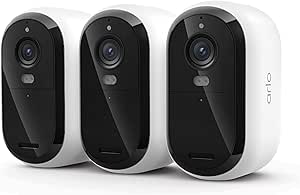
Arlo Essential Wireless Security Camera 2K (3rd Gen), 3-Camera Set with Yard Sign

Arlo Pro Wireless Security Camera, 2K HDR, 6th Generation, 4-Camera System

LEVOIT Vital 200S-P Smart Air Purifier for Large Rooms up to 1875 ft², Quiet 27 dB Operation, AHAM VERIFIDE Certified, Air Quality Monitor,
As an affiliate, we earn on qualifying purchases.
Advances in Thermal Cloaking Technologies
Traditional thermal cloaking methods primarily focused on flat surfaces or fixed heat directions, with limited adaptability to complex shapes or changing heat flows. Recent research has shifted toward free-form, three-dimensional cloaks that can handle irregular geometries, as demonstrated by teams at the University of Illinois and the Technical University of Denmark. Earlier prototypes used simple materials and geometries; the new approach employs 3D printing to create intricate aluminum lattices combined with low-conductivity materials, enabling precise control of heat pathways. These developments are part of ongoing efforts to make thermal camouflage more effective and versatile, with initial tests showing promising results in laboratory settings.
“This new approach allows us to guide heat around complex shapes, making objects less detectable by infrared cameras.”
— an anonymous researcher
Limitations of Current Thermal Cloak Prototypes
It is not yet clear how well the current prototypes perform in real-world conditions, especially with objects that generate their own heat or in environments with variable temperatures. The technology remains in laboratory testing, and practical applications—such as cloaking living beings or functioning machinery—are still in development. The ability to manage internal heat sources and create flexible, wearable cloaks has not yet been achieved.
Next Steps Toward Practical Thermal Cloaking
The researchers plan to explore active systems capable of managing internal heat sources, which could lead to adaptable, real-time thermal camouflage. Further development will focus on making the technology more flexible, lightweight, and suitable for field use, including potential integration with wearable or deployable systems. Additional testing in varied environments and with dynamic heat sources will determine readiness for practical deployment.
Key Questions
Can this thermal cloak hide objects from all types of infrared cameras?
It is designed to reduce infrared detectability by guiding heat around objects, but its effectiveness may vary depending on the camera’s sensitivity and environmental conditions. Currently, it has only been tested in controlled laboratory settings.
Is this technology ready for real-world applications?
No, the prototypes are still in early testing stages and are shape-specific, operating only in controlled environments. Further research is needed to develop flexible, active systems for practical use.
Could this be used to hide living beings or active machinery?
Not yet. The current prototypes cannot handle internal heat generation or dynamic heat sources, which are essential for cloaking living beings or functioning equipment.
What materials are used in the thermal cloak?
The structure combines a 3D-printed aluminum lattice with PDMS, a rubber-like material that conducts very little heat, allowing precise control over heat pathways.
How does the thermal cloak work in principle?
It maps the desired heat flow pattern around an object and creates a structure that guides heat along specific pathways, making the object thermally invisible from infrared perspective.
Source: designboom