
TL;DR
The Philippines’ Board of Investments approved 13 renewable energy projects valued at PHP 344.6 billion ($6.18 billion) in the first five months of 2026. This underscores the sector’s central role in the country’s economic development and energy independence.
The Philippines’ Board of Investments (BOI) has certified 13 renewable energy projects under the Green Lane initiative in the first five months of 2026, representing 99.6% of the PHP 346 billion ($6.18 billion) in total Green Lane approvals. This development confirms renewable energy’s central role in the country’s economic strategy and signals strong investor confidence in clean energy infrastructure.
According to the Department of Energy (DOE), the 13 certified projects account for nearly the entire value of Green Lane approvals during this period, highlighting the sector’s dominance in the country’s investment pipeline. The Green Lane certification streamlines project permits, facilitating faster development of renewable assets.
Energy Secretary Sharon S. Garin emphasized that renewable energy is now the ‘headline’ of the Philippines’ economic growth, citing the PHP 344.6 billion committed by investors as proof of the sector’s importance. She stated that each megawatt of solar, wind, hydro, and geothermal power contributes to community development and energy independence, with ongoing efforts to reduce barriers for project completion.
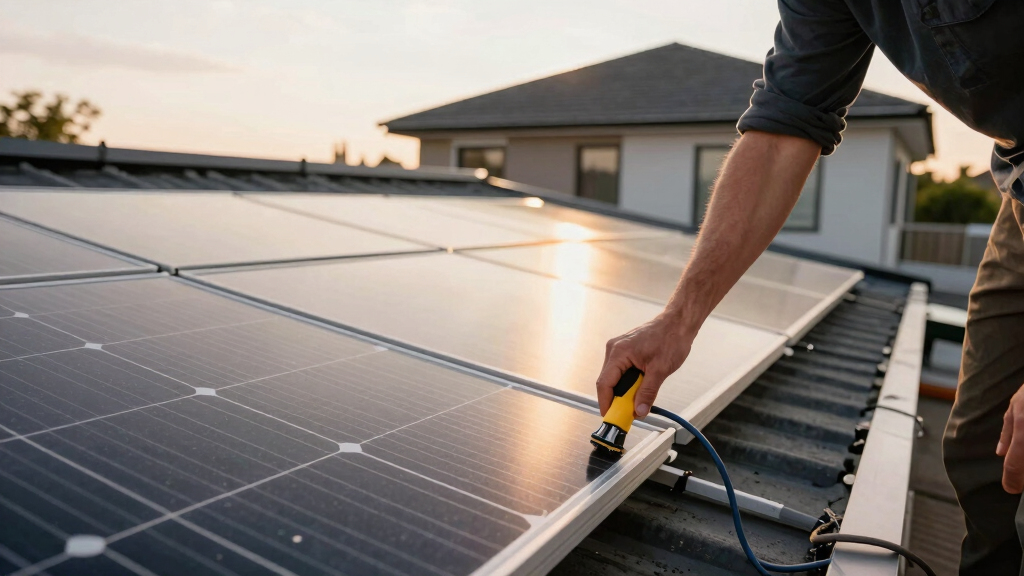
The Philippines added 899 MW of solar capacity last year, bringing the country’s total to over 3.8 GW, primarily from ground-mounted solar projects. The country also received a Certificate of Energy Project of National Significance from the DOE in July, for projects exceeding $59 million in capital, further underscoring government support for renewable energy.
Renewable Energy as a Central Economic Driver
This development underscores the Philippines’ strategic shift toward renewable energy as a key component of economic growth and energy security. The large-scale investments demonstrate investor confidence and government commitment, which could accelerate the country’s transition to cleaner energy sources, reduce reliance on fossil fuels, and create new jobs in the sector.
By prioritizing renewables, the Philippines aims to meet its climate commitments and foster sustainable development, potentially inspiring other nations in the region to follow suit.
As an affiliate, we earn on qualifying purchases.
Recent Growth and Government Support for Renewables
The Philippines’ renewable energy sector has experienced significant growth, with the country adding 899 MW of solar capacity last year, according to IRENA. The focus has been on ground-mounted solar projects, which dominate the market. The government’s Green Lane initiative, launched to expedite renewable project approvals, has been a key driver of this growth. The certification of 13 projects in early 2026 reflects a broader trend of increasing investment and policy support for clean energy infrastructure in the country.
“Renewable energy is not a side story in our economic growth, it is the headline.”
— an anonymous researcher
As an affiliate, we earn on qualifying purchases.
Unconfirmed Details on Project Implementation Timeline
While the certification of projects indicates strong commitment, it is still unclear how quickly these renewable projects will be completed and brought online. Details on specific project timelines, potential logistical challenges, or funding disbursements are not yet available.
As an affiliate, we earn on qualifying purchases.
Next Steps for Renewable Project Deployment
The government and industry stakeholders are expected to focus on finalizing project permits, securing financing, and beginning construction. Monitoring the progress of these 13 projects over the coming months will be crucial to assess how the sector’s growth translates into actual energy capacity and economic impact. Additionally, further policy support may be announced to sustain this momentum.
As an affiliate, we earn on qualifying purchases.
Key Questions
What is the Green Lane initiative?
The Green Lane initiative is a government program in the Philippines designed to streamline and expedite permits for renewable energy projects to accelerate development and investment.
How much renewable capacity has the Philippines added recently?
The Philippines added 899 MW of solar capacity last year, bringing the total to over 3.8 GW, mainly from ground-mounted solar projects.
What does certification under the Green Lane mean for projects?
It means projects benefit from faster permit processing and streamlined approval procedures, facilitating quicker deployment of renewable energy assets.
Why is renewable energy considered central to the Philippines’ economy?
Because it attracts significant investment, creates jobs, enhances energy security, and aligns with climate commitments, making it a core part of economic growth strategies.
Are there any challenges remaining for renewable project completion?
Details on project timelines and potential logistical or regulatory hurdles are still unclear, and their successful completion depends on addressing these factors.
Source: PV Magazine