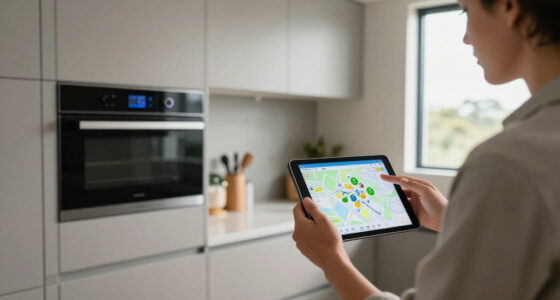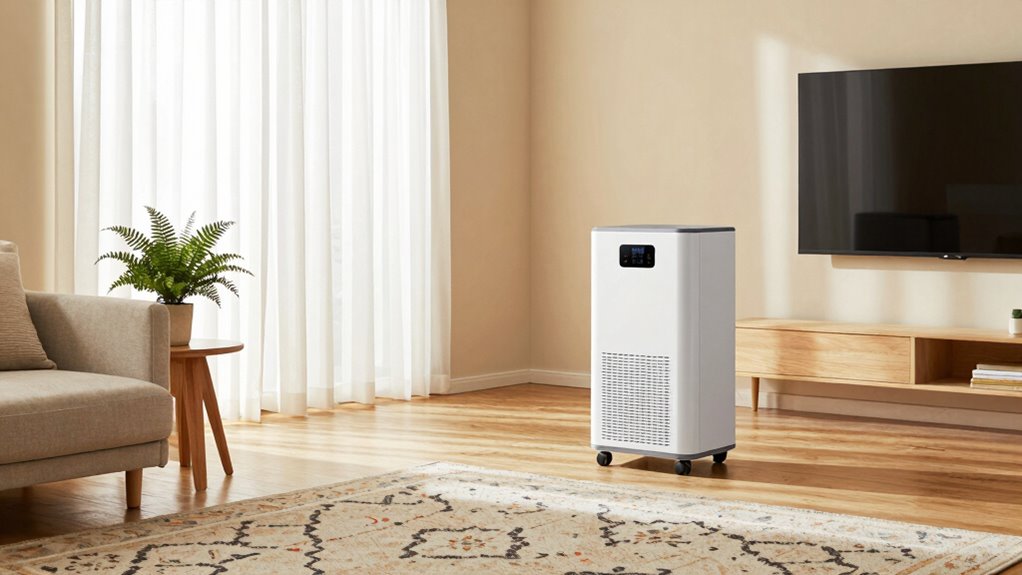

Before buying a portable AC, you should measure your room’s size and consider its layout, such as window placement and insulation. Make certain the unit’s cooling capacity matches your space; too small and it won’t cool effectively, too large and it’ll waste energy. Check the noise level and verify there’s good airflow around the unit. If you keep these details in mind, you’ll choose the best fit. Keep exploring to learn more tips for a perfect setup.
Listen free for 30 days with Audible
Thousands of audiobooks and originals — cancel anytime.
As an affiliate, we earn on qualifying purchases.
Key Takeaways
- Measure your room’s square footage and ceiling height to select an appropriately sized portable AC.
- Assess insulation levels and sunlight exposure to determine necessary cooling capacity.
- Check window and door placement for optimal airflow and ventilation options.
- Identify any obstructions or furniture that may block airflow around the unit.
- Consider noise sensitivity in the room to choose a quieter model with lower decibel ratings.
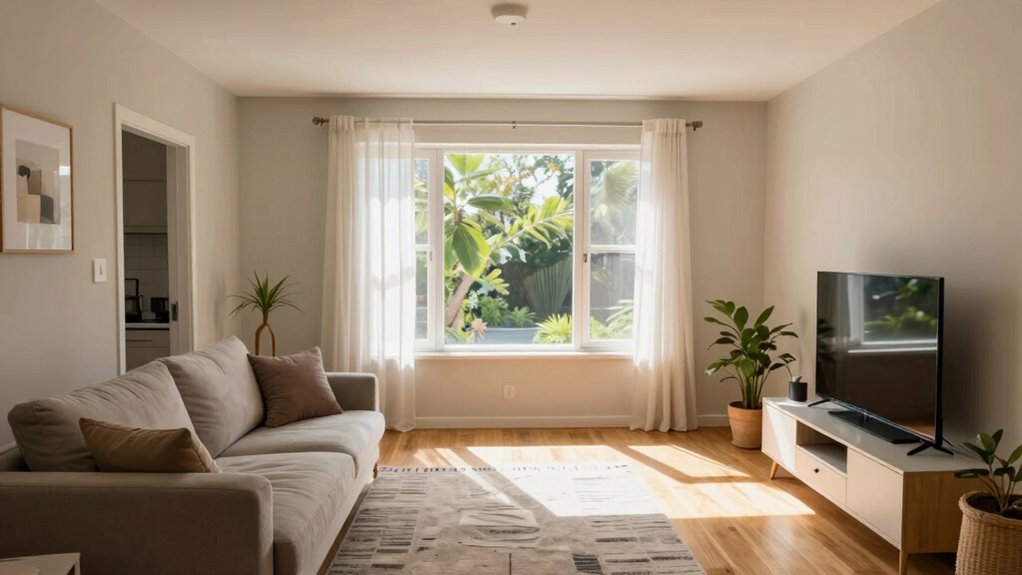
If you’re considering purchasing a portable air conditioner, it’s important to do your homework first. One of the most critical factors is understanding your room’s specifics, especially its size and layout. This information helps you choose a unit with the right cooling capacity, ensuring you don’t end up with an AC that’s too powerful or too weak. An undersized unit will struggle to cool the space effectively, while an oversized one might cycle on and off frequently, wasting energy and increasing wear and tear. Measure the room’s square footage accurately, and consider ceiling height, window placement, and insulation levels, as these all influence how well the AC performs. Additionally, understanding your room’s insulation levels can help you better assess the actual cooling needs and energy efficiency of your new unit. Proper insulation can significantly improve your AC’s effectiveness and reduce energy consumption. Knowing the room’s layout can also help you optimize airflow and placement for maximum cooling efficiency. Being aware of the room’s ventilation is equally important, as poor ventilation can hinder cooling performance and lead to moisture buildup.
Next, think about the room’s energy efficiency. Many portable ACs come with energy-saving features, but their effectiveness depends on your room’s characteristics. For example, if your space is well-insulated and shaded, you might get away with a less powerful unit that consumes less power. Conversely, rooms with lots of direct sunlight or poor insulation will require a more energy-efficient model to keep running costs manageable. Also, look for units with an ENERGY STAR certification, as they meet strict energy efficiency guidelines, helping you save money on electricity bills over time. Properly sizing your portable AC and selecting an energy-efficient model ensures you enjoy cooling comfort without skyrocketing your utility bills.
Noise levels are another crucial aspect to consider before buying. Portable air conditioners can vary significantly in how much noise they produce, which impacts your comfort and daily activities. If you plan to use the AC in a bedroom or quiet workspace, opt for a model specifically designed for low noise levels. Many units list their decibel ratings—aim for something under 55 dB for quiet operation. Keep in mind that noise can also be affected by the room size and how well the unit is positioned. Proper placement away from sleeping areas or workspaces can help minimize disruptions. Remember that higher-capacity units tend to generate more noise, so balancing cooling power and noise level is key. Additionally, choosing a unit with a quiet operation feature can further enhance your comfort, especially during nighttime use. Finally, regular maintenance and ensuring good airflow around the unit can help keep noise levels down and maintain optimal performance.
portable air conditioner for large rooms
As an affiliate, we earn on qualifying purchases.
As an affiliate, we earn on qualifying purchases.
Frequently Asked Questions
Can a Portable AC Cool Multiple Rooms Simultaneously?
A portable AC generally can’t cool multiple rooms simultaneously unless it has a high cooling capacity and you use a proper ducting system. For effective cooling, consider your room size and choose an AC with the right cooling capacity. Larger rooms need units with higher BTU ratings. To cool multiple rooms efficiently, you might need separate units or a central AC, as portable models are usually designed for single-room use.
How Noisy Are Portable Air Conditioners During Operation?
Portable air conditioners can be quite noisy during operation, with noise levels typically ranging from 50 to 70 decibels. Your experience depends on the unit’s design and your room’s sound insulation. If your space lacks good soundproofing, the noise might be more noticeable. Look for models with quieter settings or better sound insulation features to reduce disturbance and keep your environment comfortable.
Do Portable ACS Require Professional Installation?
Like the wise owl in the night, you can often set up a portable AC yourself with proper guidance. Portable ACs typically don’t require professional installation, but you should follow installation tips carefully to guarantee efficiency. Regular maintenance is simple—clean filters and check exhaust hoses. While some models might need minor setup, most users find they can install their portable ACs without calling in a professional, saving time and money.
Are Portable AC Units Energy-Efficient?
Portable AC units can be quite energy-efficient, especially if you choose models with good power efficiency ratings. They typically have adjustable settings, allowing you to control energy consumption based on your cooling needs. While they might not be as efficient as central systems, modern portable units often feature energy-saving modes that help reduce power consumption, making them a practical choice for smaller spaces and temporary cooling.
How Often Should I Clean or Maintain My Portable AC?
Think of your portable AC as a trusted friend who needs regular care. You should clean the filter and check refrigerant levels at least once a month to keep it running efficiently. Proper filter maintenance prevents dust buildup, and ensuring refrigerant levels stay ideal maintains cooling power. Neglecting these tasks can turn your cool oasis into a hot mess. Stay vigilant, and your AC will serve you well all season.
energy-efficient portable AC with ENERGY STAR
As an affiliate, we earn on qualifying purchases.
As an affiliate, we earn on qualifying purchases.
Conclusion
Before you buy a portable AC, remember to measure your room’s size and consider insulation to guarantee efficient cooling. Did you know that improperly sized units can increase energy bills by up to 30%? Taking these steps guarantees you get the right unit for your space, saving you money and keeping you comfortable. Don’t rush your decision—doing a quick room assessment pays off in better performance and lower costs in the long run.
quiet portable air conditioner under 55 dB
As an affiliate, we earn on qualifying purchases.
As an affiliate, we earn on qualifying purchases.
portable AC with adjustable cooling capacity
As an affiliate, we earn on qualifying purchases.
As an affiliate, we earn on qualifying purchases.
Flea & tick season Picks
flea and tick prevention
As an affiliate, we earn on qualifying purchases.