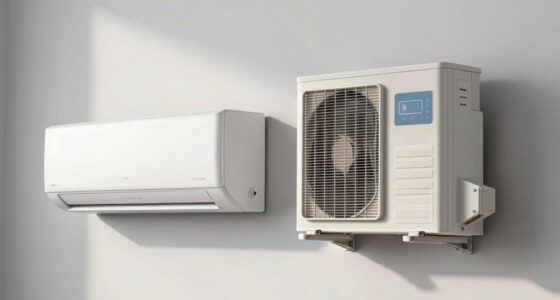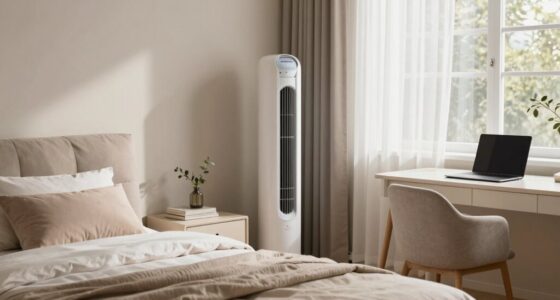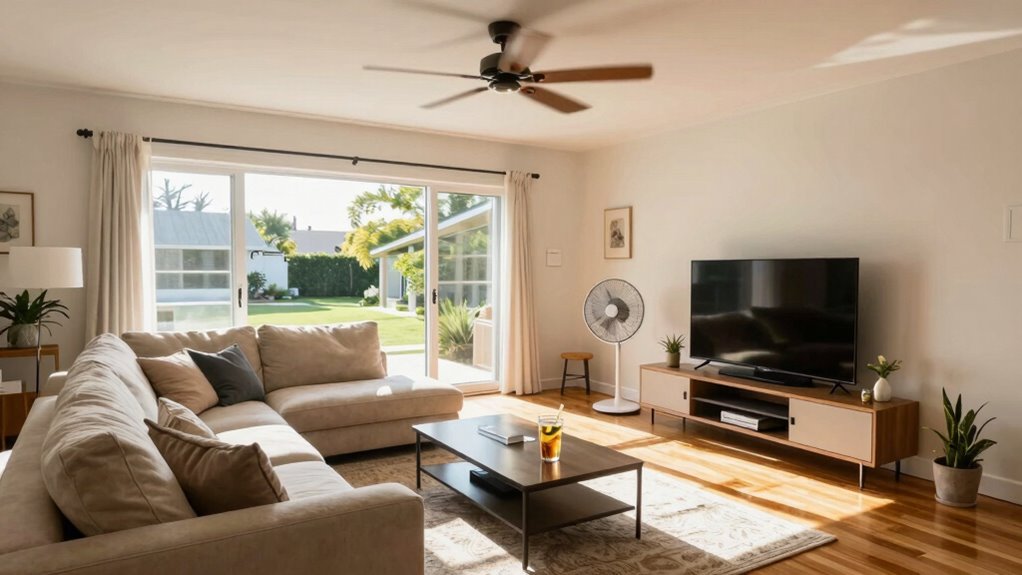

If you have an open-floor plan, you may notice cooling feels challenging each summer. Cool air escapes quickly, and your HVAC system has to work harder to maintain a comfortable temperature. Without zoning or targeted cooling, your energy bills rise, and some areas stay warmer than others. Sound and heat drift easily, adding to frustration. To find solutions and avoid these common pitfalls, explore more tips that can help keep your space cooler and more comfortable all season.
Key Takeaways
- Open layouts cause cool air to escape quickly, making consistent cooling difficult and increasing energy consumption.
- Lack of walls prevents targeted cooling, leading to higher utility bills during hot summer months.
- HVAC systems work harder to cool large, open spaces, reducing efficiency and increasing operational costs.
- Poor insulation and air leaks exacerbate heat gain, making cooling less effective and more expensive.
- Without proper zoning or soundproofing, open-floor plans can also lead to noise issues that disrupt comfort.
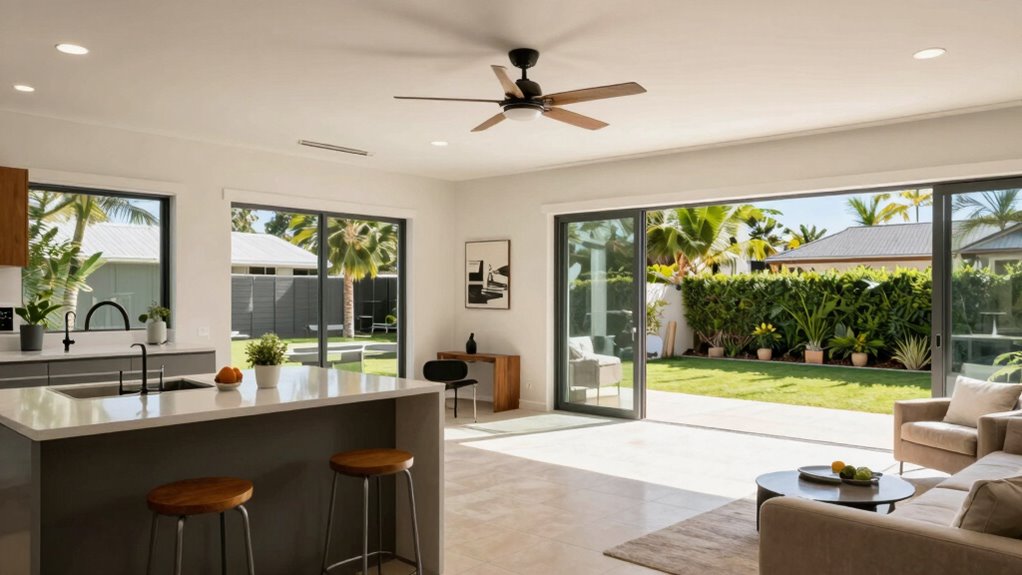
Open-floor plans may look modern and spacious, but they often come with a hidden challenge: cooling. When you design a home with minimal walls and open spaces, it creates a seamless flow that feels inviting, but it also complicates temperature control. During the summer, this layout can make it tough to keep your home comfortable without skyrocketing your energy bills. The open design allows cool air to escape more quickly and makes it harder for your HVAC system to maintain a consistent temperature. As a result, you may find yourself running your air conditioner more often, which eats into your energy efficiency and increases your utility costs.
Open-floor plans challenge temperature control, increasing energy costs and making cooling less efficient during summer.
In addition to energy concerns, interior acoustics in open-floor plans can become a problem. Without walls to contain sound, noise tends to bounce around, creating a noisy environment that can be distracting and stressful. When you’re trying to relax or work from home, the constant hum of activity and echoes can make it challenging to focus. This lack of sound privacy can lead to increased frustration, especially if you have a busy household. Improving interior acoustics in this type of space often requires strategic solutions like area rugs, curtains, or sound-absorbing panels, but these can sometimes clash with your aesthetic preferences or feel like temporary fixes. Incorporating soundproofing techniques can help mitigate these issues more effectively. Additionally, implementing biodiversity-friendly solutions such as natural plant barriers can also contribute to better sound absorption. Utilizing innovative insulation methods can further enhance sound control and energy efficiency in open-floor plans. Being mindful of thermal insulation can also play a significant role in maintaining a comfortable temperature and reducing energy waste.
The challenge with cooling these homes isn’t just about maintaining a comfortable temperature; it’s about doing so efficiently. Since open spaces require more air volume to be conditioned, your HVAC system needs to work harder, which wastes energy and raises your bills. Without proper zoning or targeted cooling, you end up cooling areas that aren’t in use, further reducing efficiency. You might consider adding ceiling fans, zone controls, or portable air conditioners to better manage airflow and temperature. These strategies can help you save energy, but they require a bit of planning and investment.
Managing the cooling trap in an open-floor plan also involves understanding how the layout impacts overall energy efficiency. Good insulation, strategic placement of vents, and smart thermostat programming can help optimize your HVAC’s performance. You’ll want to be proactive about sealing leaks and insulating walls to prevent heat gain through windows or gaps. Additionally, surveillance and spy technology innovations can be utilized to monitor and control your home environment remotely, ensuring optimal cooling efficiency. By addressing these factors, you can make your open space more comfortable and energy-efficient, even during the hot summer months. Ultimately, recognizing these hidden challenges allows you to take smarter steps to keep your home cool, quiet, and cost-effective year-round.
airflow zoning kits for open floor plans
As an affiliate, we earn on qualifying purchases.
As an affiliate, we earn on qualifying purchases.
Frequently Asked Questions
How Can I Identify if My Open Floor Plan Is Causing Cooling Issues?
You can identify if your open floor plan causes cooling issues by checking thermostat placement and airflow barriers. If your thermostat is near heat sources or in a drafty spot, it may not accurately reflect the room temperature. Also, look for airflow barriers like furniture or curtains blocking vents, which can prevent cool air from circulating properly. Adjusting these can improve cooling efficiency and make your home more comfortable.
Are There Specific Furniture Arrangements That Help With Cooling?
Imagine it’s the dawn of a new era, and your furniture plays a pivotal role. To improve cooling, arrange your furniture to promote airflow, avoiding blocking vents or windows. Use strategic furniture placement to create airflow channels, and consider lighter, movable pieces to optimize airflow. This setup helps prevent stagnant hot spots, making your open floor plan cooler and more comfortable during summer’s peak.
Does Ceiling Height Affect the Heat Distribution in Open-Floor Homes?
Yes, ceiling height impacts heat distribution in open-floor homes. Higher ceilings can cause warm air to rise, creating uneven airflow patterns and making cooling less efficient. To improve comfort, you should consider ceiling insulation to keep heat out and promote better airflow. Proper insulation and strategic use of fans help circulate cooler air more effectively, preventing hot spots and keeping your space more comfortable during summer.
Can Zoning Systems Improve Cooling Efficiency in Open Layouts?
Yes, a zoning system can markedly improve cooling efficiency in open layouts. By dividing your home into zones, you can control temperatures more precisely, avoiding overcooling or undercooling different areas. This targeted approach reduces energy waste, saves you money, and keeps your living space more comfortable. Installing a zoning system allows you to customize cooling for each zone, making your open-plan home more energy-efficient and enjoyable during hot summer months.
What Are Cost-Effective Solutions to Fix Open-Floor-Plan Cooling Problems?
You can fix open-floor-plan cooling problems cost-effectively by upgrading to energy-efficient windows, which reduce heat gain, and applying insulation techniques to keep cool air inside. Did you know that proper insulation can lower cooling costs by up to 20%? These solutions are affordable, easy to implement, and substantially improve comfort. You’ll notice better airflow and lower energy bills, making your home more comfortable during hot summer months.
soundproofing panels for living rooms
As an affiliate, we earn on qualifying purchases.
As an affiliate, we earn on qualifying purchases.
Conclusion
If you think open-floor plans are just spacious and stylish, think again. Without proper cooling strategies, you’re inviting comfort chaos—your home turning into a summer sweatbox. Don’t let the allure of openness trap you in a cycle of high energy bills and discomfort. Instead, choose smart cooling solutions that work with your space. Remember, a well-designed home isn’t just beautiful—it’s a sanctuary of comfort, even when the heat rises.
insulated curtains for summer cooling
As an affiliate, we earn on qualifying purchases.
As an affiliate, we earn on qualifying purchases.
portable air circulators for large spaces
As an affiliate, we earn on qualifying purchases.
As an affiliate, we earn on qualifying purchases.