
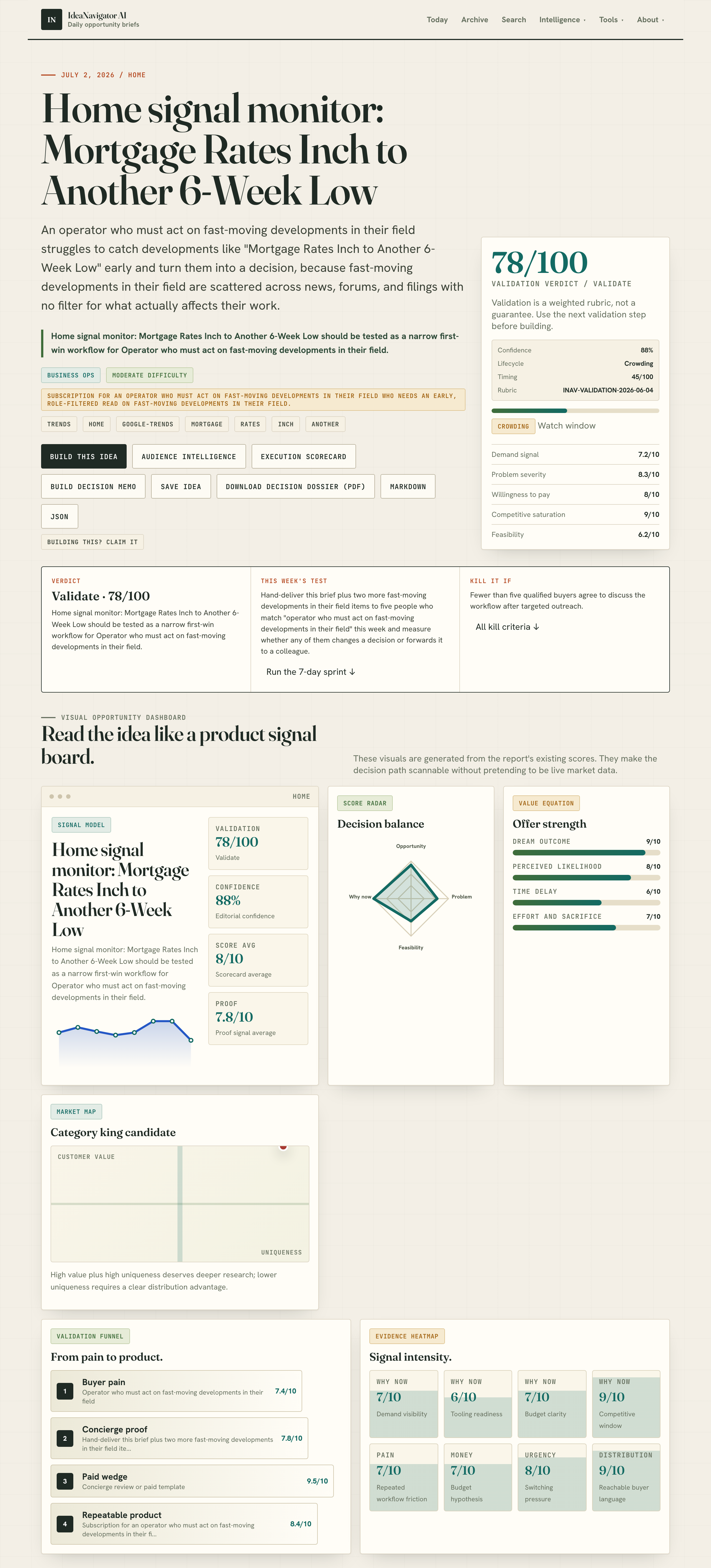
📊 Full opportunity report: Home signal monitor: Mortgage Rates Inch to Another 6-Week Low on IdeaNavigator AI — validation score, market gap, and execution plan.

Get home appliances delivered free — and shop member deals
- Fast, free delivery on millions of items
- Access to Prime Big Deal Days deals on October 6–7
- Prime Video, Amazon Music and more included
TL;DR
Mortgage rates have fallen to their lowest point in six weeks, indicating a possible easing in borrowing costs. This development is confirmed and could influence housing market activity.
Mortgage rates have declined to a six-week low, according to recent market data, marking a potential turning point in borrowing costs for homebuyers. This development is confirmed by market sources and could influence mortgage lending and housing affordability.
Data from financial market trackers show that the average 30-year fixed mortgage rate has edged down to approximately 6.25%, the lowest level since early March. This decline is part of the recent trends in mortgage rates inching to another 6-week low. This decline follows a period of volatility driven by economic indicators and Federal Reserve signals.
Experts attribute the drop to recent shifts in bond yields and investor sentiment, with some analysts suggesting that the market is pricing in expectations of slower rate hikes or stabilization in inflation. For more on current mortgage market movements, see Mortgage rates climb higher as House passes home affordability bill. The decline was observed across major lenders and mortgage platforms, indicating a broad market movement.
While the decrease is confirmed by multiple sources, it is still unclear whether this trend will continue or reverse amid ongoing economic uncertainties. Homebuyers and lenders should stay informed about mortgage rate developments. Borrowers and lenders are closely watching these developments, as they could influence mortgage application volumes and refinancing activity.
Implications for Housing Market and Borrowers
The decline in mortgage rates to a six-week low could make borrowing more affordable for prospective homebuyers and refinancing applicants. This may lead to increased activity in the housing market, potentially supporting home sales and price stability. For lenders, lower rates could mean a temporary boost in mortgage originations but also increased competition.
Economists note that sustained lower mortgage rates could influence broader economic indicators, including consumer spending and housing investment. However, the overall impact depends on whether rates hold steady or continue to decline.
As an affiliate, we earn on qualifying purchases.
Recent Trends and Market Factors Influencing Mortgage Rates
Mortgage rates have experienced fluctuations over the past few months, influenced by economic data, Federal Reserve policies, and bond market movements. In late February, rates peaked at around 6.5%, before gradually easing in March and April. The recent drop to a six-week low aligns with broader market signals of cautious optimism among investors.
Market analysts highlight that bond yields, which heavily influence mortgage rates, have declined amid signs of slowing inflation and expectations of a pause or slowdown in Federal Reserve rate hikes. This context suggests that mortgage rates could stabilize or decline further if economic conditions support such trends.
“While the drop is promising for prospective homebuyers, we need to see if rates can sustain this level amid ongoing economic uncertainties.”
— a mortgage industry expert
As an affiliate, we earn on qualifying purchases.
Unclear if Rate Decline Will Persist
It is not yet confirmed whether mortgage rates will remain at this low level or rebound in the coming weeks. Economic data releases, Federal Reserve decisions, and global market developments could influence the trajectory of rates, making the current decline potentially temporary.
As an affiliate, we earn on qualifying purchases.
Monitoring Economic Indicators and Federal Policy
Market participants will closely watch upcoming economic reports, inflation data, and Federal Reserve statements for signs of rate stabilization or further declines. Mortgage lenders and borrowers should stay informed about these developments, as they could impact borrowing costs and housing market activity in the near future.
As an affiliate, we earn on qualifying purchases.
Key Questions
What caused mortgage rates to drop to a six-week low?
The decline is primarily attributed to falling bond yields and investor optimism about slowing inflation and a potential pause in Federal Reserve rate hikes.
Will mortgage rates stay low or rebound soon?
It remains uncertain. Future movements depend on economic data, inflation trends, and Federal Reserve policies, which are still evolving.
How might this affect homebuyers and refinancing?
Lower mortgage rates could make borrowing more affordable, potentially increasing home purchases and refinancing activity in the short term.
Are all lenders offering lower rates?
While many lenders are reflecting the market trend, mortgage rates can vary based on borrower credit profiles and loan specifics. Consumers should compare offers.
What should borrowers do now?
Potential homebuyers and refinancers should consult with lenders to understand current rates and consider locking in favorable terms if rates remain low.
Source: IdeaNavigator AI
Fall yard work Picks
leaf blowers
As an affiliate, we earn on qualifying purchases.