
TL;DR

Get home appliances delivered free with Prime
- Fast, free delivery on millions of items
- Prime Video, Amazon Music and more included
- Member-only deals all year
Matter Alpha’s hands-on review found that Lafaer’s battery-powered LWR02 responds quickly and works well in smaller spaces such as a bathroom. In a larger living room, however, it sometimes failed to detect a person sitting still; the reviewer also encountered a Home Assistant issue with the optional Matter ICD feature.
Matter Alpha’s review of the Lafaer LWR02 found that the battery-powered Matter presence sensor reacts quickly when someone enters a room and performed well in a bathroom, but sometimes marked a person sitting still on a living-room sofa as absent. The result suggests the sensor may suit smaller spaces better than larger rooms where automations depend on continuous detection.
The LWR02 is a slimmer update to Lafaer’s earlier LWR01. It combines millimeter-wave radar, intended to detect people who are not moving, with an added passive infrared (PIR) sensor. It connects locally using Matter over Thread and runs on AAA batteries, including compatible rechargeable cells. A magnetic mount lets users attach and angle it on a metal surface without drilling.
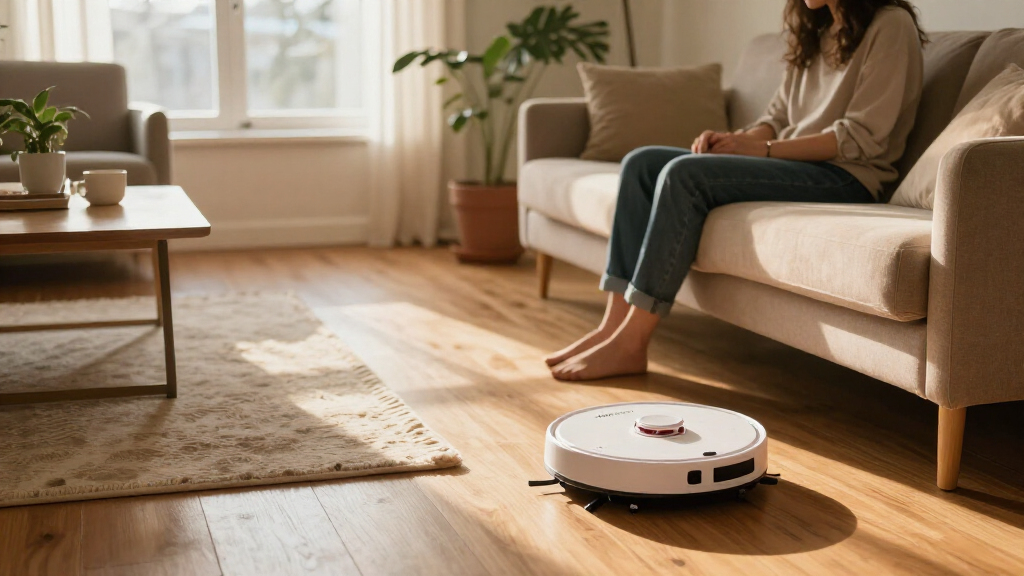
In the reviewer’s living-room test, the sensor was mounted about two metres from a sofa and aimed at the seating area for lighting and television automations. It responded quickly on entry, but sometimes reported the room empty when the reviewer remained seated, even with radar prioritized. The reviewer said the added PIR and filtering intended to reduce false occupancy may have made detection too aggressive in that setting.
Performance was better in a bathroom, where the reviewer tested multiple units and reported no problems during several months of use. The device also measures temperature, humidity and illuminance. The reviewer used a 30-second occupancy hold time in Home Assistant to reduce brief interruptions, and ultimately paired the LWR02 with another sensor to make occupancy automations more reliable.
Room Size Shapes Detection Reliability
Presence sensors can control lights and other smart-home routines based on whether someone remains in a room, not just whether they are moving. A sensor that quickly detects entry but loses track of a seated person can switch off lighting at the wrong time or interrupt an automation. The review’s contrast between a larger living room and a bathroom gives buyers a practical warning: placement and room size matter, and advertised stationary-detection range does not guarantee consistent results in every home.
The LWR02’s battery-powered, wireless installation can make it easier to place where a wired sensor would be inconvenient. Its additional environmental readings may also support lighting or climate routines. But the reviewer’s experience indicates that those advantages do not remove the need to test detection in the room and at the angle where the sensor will actually be used.
Products Worth Considering

Philips Hue White and Color Ambiance Smart Light Starter Kit, 2 A19 Bulbs with Hub

LEVOIT Air Purifier for Home, Pets, Bedroom, Smart WiFi

Philips Hue Secure Starter Kit with Contact Sensors, Motion Sensor, Bridge, and Color Smart Bulbs
As an affiliate, we earn on qualifying purchases.
Design, Setup and Smart-Home Support
According to GL.iNet, the LWR02’s detection coverage is approximately 120 degrees, with a maximum range of four metres for stationary presence and eight metres for motion. Those are manufacturer specifications; Matter Alpha’s review describes different results across its own tests, including missed stationary detection in the living room. The company rates the housing IPX3, for protection against water spray up to 60 degrees from vertical. The reviewer advises placing it away from a shower despite using a unit in a bathroom for several months.
The review found that recent firmware allowed quick pairing with Home Assistant through a built-in Bluetooth adapter, while the reviewer had more trouble with Apple Home and could not determine whether the cause was Apple’s system or the sensor. Although the device communicates locally through Matter over Thread, the reviewer said firmware updates still required GL.iNet’s app. That app also offers sensitivity controls, battery-chemistry selection and a self-learning filter for interference from moving objects such as curtains and fans.
The tested unit reported Thread 1.4 and Matter 1.4.2. The reviewer described the connection as stable in everyday use after commissioning. An optional Matter Intermittently Connected Device (ICD) feature caused the sensor to remain offline in the reviewer’s Home Assistant setup until a factory reset. The review recommends leaving ICD disabled in that setup. Its estimate that batteries might need replacing or recharging roughly once a year is based on the reviewer’s usage, not a controlled battery-life test.
““The LWR02 responds quickly when someone enters its detection zone.””
— Matter Alpha reviewer
Compatibility and Battery Life Questions
The review does not establish how often the LWR02 misses stationary people across different room layouts, furniture arrangements or firmware versions. Its living-room results are based on the reviewer’s testing, while the better bathroom results do not prove that every small room will perform similarly. The cause of the Apple Home setup difficulty also remains unresolved.
The Home Assistant failure with Matter ICD enabled occurred in the reviewer’s setup; the source does not say whether the issue affects all users, hubs or firmware versions, or whether a fix is available. Battery life is likewise not confirmed: the roughly annual replacement estimate is an observation-based projection, and the reviewer cautions that hub or router problems can drain batteries faster.
Test Before Building Automations
The source does not announce a firmware fix or a further test date. For now, the reviewer’s practical advice is to test the LWR02 in its intended location before relying on it for occupancy-based routines, particularly in larger rooms where people sit still. A short hold time or a second sensor may help reduce interruptions, though the review does not present either as a universal fix.
Home Assistant users should leave the optional ICD feature disabled if they encounter the reported offline behavior, and use GL.iNet’s app for firmware updates as described in the review. Whether later firmware or Matter-controller updates resolve the compatibility issue—and whether battery life reaches the reviewer’s estimate in broader use—remains to be seen.
Key Questions
What is the main drawback reported in the Lafaer LWR02 review?
The reviewer found that it sometimes reported a person sitting still as absent in a larger living room, despite radar being prioritized.
Where did the LWR02 perform best in the review?
It performed better in the reviewer’s bathroom tests, while entry detection was quick in the living-room test. The source does not establish that performance will be identical in every home.
Does the LWR02 work with Home Assistant?
The reviewer paired it with Home Assistant over Matter and Thread, but reported that enabling the optional Matter ICD feature left the device offline until a factory reset. The review advises leaving ICD disabled in that setup.
How long do the LWR02 batteries last?
The reviewer estimated that replacing or recharging the AAA batteries roughly once a year might be possible, based on personal use. That is not a confirmed battery-life figure, and the review says hub or router problems can increase drain.
Source: matteralpha.com