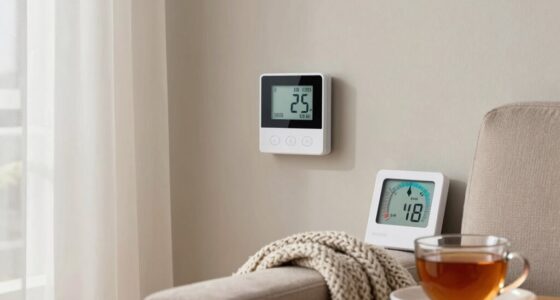
The fastest way to tell if your home needs better dehumidification is by noticing visible signs like mold, mildew, or a persistent musty smell. Check for condensation on windows or walls and feel for damp spots, especially in hidden areas. Using a hygrometer helps you measure humidity levels—anything above 50% indicates you could benefit from improved dehumidification. For more tips, keep exploring how to keep your home healthy and comfortable.
Key Takeaways
- Check for visible mold, mildew, or musty odors indicating high indoor humidity.
- Use a hygrometer to measure humidity levels; readings above 50% suggest improvement is needed.
- Notice condensation on windows or walls, a sign of excess moisture.
- Observe persistent dampness or water stains in specific areas.
- If your dehumidifier runs continuously without lowering humidity, upgrade for better performance.
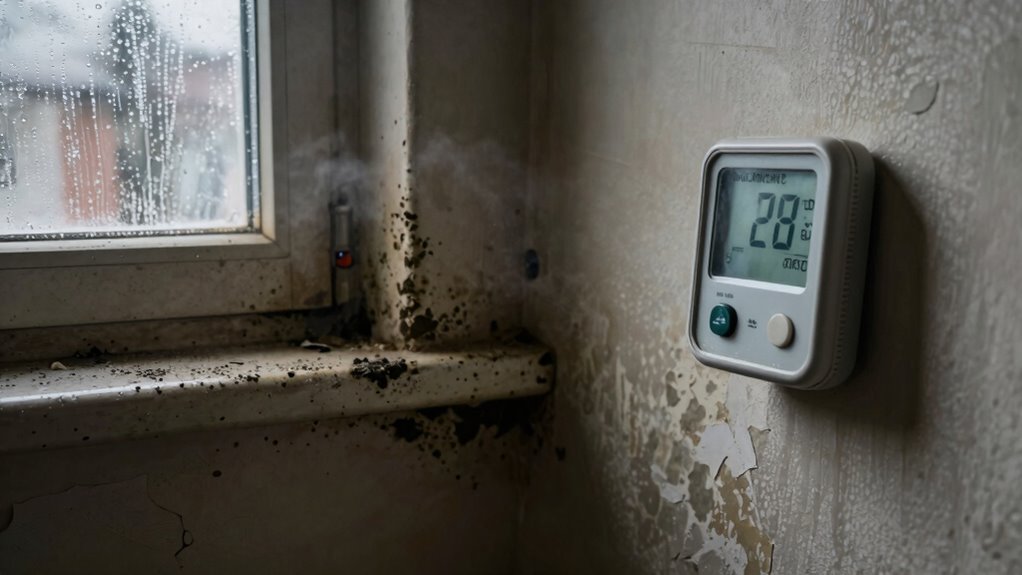
If your home feels consistently damp or musty, it’s a clear sign that your dehumidification system might not be doing its job effectively. High humidity levels create the perfect environment for mold growth, which can lead to health problems and damage to your property. Recognizing the signs early allows you to take action before mold becomes a serious issue. One of the fastest ways to tell if your home needs better dehumidification is by observing the physical signs. Check for visible mold or mildew on walls, ceilings, or around windows. A musty smell lingering in the air is another telltale sign that humidity levels are too high. If you notice condensation forming on windows or walls, it indicates excess moisture in the air. These signs point directly to the need for an upgraded or more efficient dehumidification system. Monitoring your home’s humidity levels with a hygrometer can provide precise information, as indoor humidity should ideally stay between 30% and 50%. If readings consistently hover above this range, you’re at risk of mold prevention issues and increased indoor dampness. Maintaining proper humidity not only helps prevent mold but also improves energy efficiency. When your home is properly dehumidified, your HVAC system doesn’t have to work as hard to regulate temperature and moisture. This reduces energy consumption, lowering your utility bills and extending the lifespan of your appliances. Additionally, understanding humidity control can help you make informed decisions about your home’s environment. Proper ventilation and air circulation also play a crucial role in controlling indoor moisture, helping to prevent excess humidity from accumulating. Regularly inspecting your home’s ventilation systems and ensuring they are functioning properly can significantly reduce moisture buildup. Being aware of moisture buildup in hidden areas, such as behind appliances or in attics, can also help prevent long-term issues. Another quick test involves paying attention to your comfort and health. If you frequently experience stuffiness, allergies, or respiratory issues, excess humidity might be to blame. High moisture levels can promote dust mites and mold spores, worsening indoor air quality. Improving your dehumidification system minimizes these health risks while making your living environment more comfortable. Additionally, consider the performance of your current dehumidifier. Does it run continuously without noticeably reducing humidity? Is it noisy or failing to keep up with moisture levels during humid days? If so, it’s a sign you need a more powerful or efficient model. Upgrading to a system with better energy efficiency can save you money over time, as newer models tend to consume less power while offering superior moisture control. This not only helps prevent mold but also ensures your home stays comfortable and healthy with less energy use.

TempPro TP49 Digital Hygrometer Indoor Thermometer Humidity Meter Room Thermometer with Temperature and Humidity Monitor Mini Hygrometer Outdoor Thermometer (Previously ThermoPro)
Face Icon Comfort Indicator: Humidity temperature gauge features face icons to indicate DRY/COMFORT/WET air conditions, quickly informs you…
As an affiliate, we earn on qualifying purchases.
As an affiliate, we earn on qualifying purchases.
Frequently Asked Questions
How Often Should I Check My Home’s Humidity Levels?
You should check your home’s humidity levels weekly using humidity sensors to keep everything in balance. Regularly monitoring helps you catch any spikes or drops early. Also, make sure your ventilation systems are functioning well, as they help control moisture. If you notice persistent humidity issues, consider adjusting your system or using dehumidifiers. Consistent checks keep your home comfortable and prevent mold or damage caused by excess moisture.
Can Dehumidifiers Help With Mold Prevention?
Yes, dehumidifiers help prevent mold growth by reducing excess moisture in your home. When humidity levels stay low, mold struggles to thrive, improving your air quality. By maintaining ideal humidity—ideally between 30-50%—you create an environment less inviting for mold. Regularly running a dehumidifier, especially in damp areas like basements or bathrooms, keeps moisture levels in check and helps protect your home’s health.
What Are the Signs of Excessive Indoor Moisture?
You notice musty odors or visible mold spots, which hint at excessive indoor moisture. Perhaps your walls feel damp, or you see condensation on windows. Humidity sensors can help detect high moisture levels, while ventilation techniques like opening windows or running exhaust fans reduce excess humidity. These signs show your home might need better dehumidification, so addressing them promptly keeps your space comfortable and mold-free.
Are There Health Risks From Poor Dehumidification?
Yes, poor dehumidification can pose health hazards. Excess moisture creates a breeding ground for mold, bacteria, and dust mites, which can trigger allergies and respiratory issues. You might notice increased allergy symptoms, coughing, or asthma flare-ups. Without proper dehumidification, these allergy triggers become more prevalent, putting your health at risk. Ensuring your home stays dry helps reduce these hazards and improves indoor air quality.
How Does Climate Affect Indoor Humidity Needs?
Climate influences your indoor humidity needs more than anything else—think of it as the thermostat of your comfort. In dry climate zones, you might need humidifiers, while humid zones demand strong humidity control to prevent mold and discomfort. Hot, humid climates require more aggressive dehumidification, whereas cooler areas can manage with less. Understanding your climate zone helps you optimize indoor humidity, making your home a haven against weather’s wildest effects.
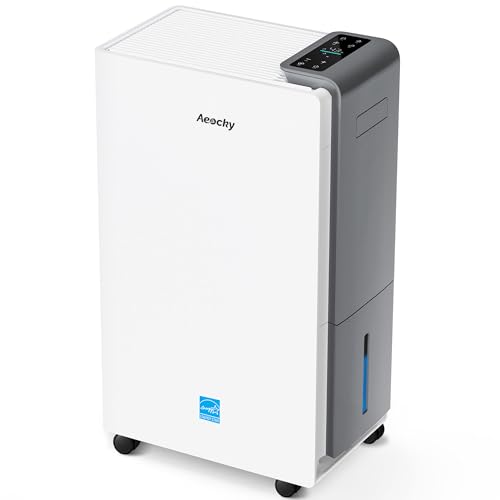
AEOCKY 4500 Sq.Ft Energy Star Most Efficient 2025 Dehumidifier, Max 80 Pint/Day Smart Compressor Dehumidifier with Drain Hose, Intelligent Humidistat,for Basement,Bedroom,Home,Bathroom
【ENERGY STAR 25 ≠ ENERGY STAR Most Efficient 2025】Don't fall for competitors' word games. With only 2.6% of…
As an affiliate, we earn on qualifying purchases.
As an affiliate, we earn on qualifying purchases.
Conclusion
If you notice persistent musty odors, condensation on windows, or lingering dampness, your home is crying out for better dehumidification. Think of your home as a garden—without proper care, it can become overrun with mold and mold spores. Addressing moisture issues now keeps your living space healthy and comfortable. Don’t let humidity win the battle; take action today to restore balance and breathe easy in your sanctuary.

Waykar 2000 Sq. Ft 34 Pints 2025 Most Efficient Energy Star Dehumidifier for Home and Basement with Auto or Manual Drainage, Quiet 33dB Operation, 0.62 Gallon Water Tank Capacity
【Compact Size, Big Efficiency】 The upgraded 2025 Waykar dehumidifier features cutting-edge rotary compressor technology. It’s more compact but…
As an affiliate, we earn on qualifying purchases.
As an affiliate, we earn on qualifying purchases.

RMR Brands DIY Mold & Stain Remover Bundle, Complete Mold Killer & Mildew Prevention Kit, Disinfectant Spray, Includes 2-32 fluid ounce Bottles
TWO FAST-ACTING FORMULAS: The ultimate mold prevention kit, our bundle includes 1 spray bottle of RMR-86 and 1…
As an affiliate, we earn on qualifying purchases.
As an affiliate, we earn on qualifying purchases.