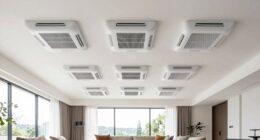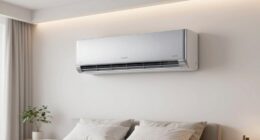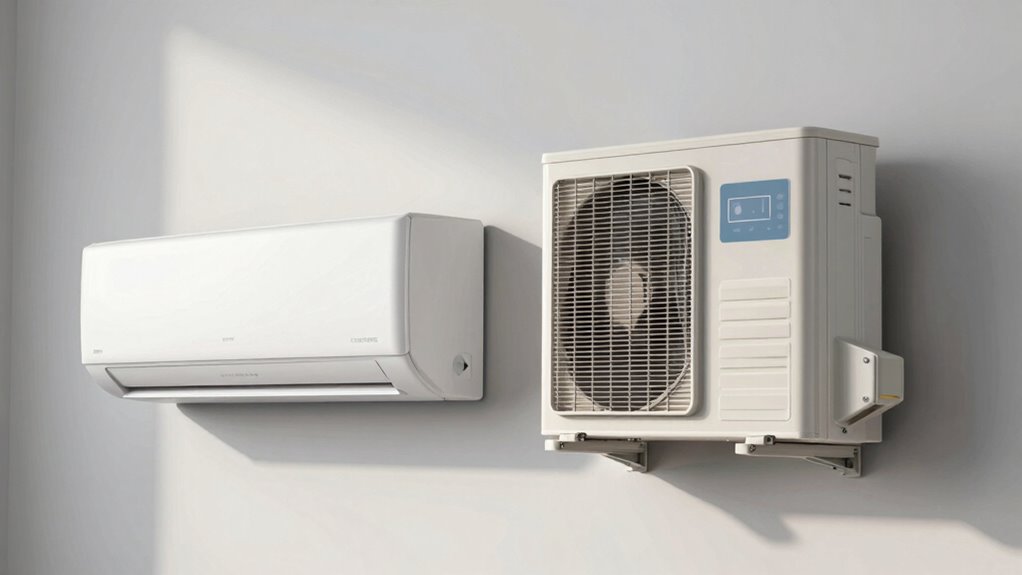

Choosing between a single-zone and multi-zone mini split depends on your home’s size and needs. Single-zone units are simple, affordable, and great for one room or small spaces. Multi-zone systems are better if you want customized comfort across multiple areas and improved energy efficiency. Consider your layout, future plans, and budget carefully. To make the best decision for long-term comfort and savings, explore the full comparison and tips that follow.
Key Takeaways
- Choose single-zone mini splits for small spaces needing precise, cost-effective cooling or heating without extra complexity.
- Opt for multi-zone systems when controlling multiple rooms independently, improving energy efficiency and personalized comfort.
- Consider installation costs and complexity: single-zone units are simpler and cheaper, while multi-zone systems require more planning and investment.
- Assess your home’s layout and future needs; multi-zone systems offer flexibility for expansion and varied zone preferences.
- Prioritize energy efficiency and noise levels to maximize long-term savings and avoid regret over unsuitable system choices.
What Are Single‑Zone and Multi‑Zone Mini Split Systems?

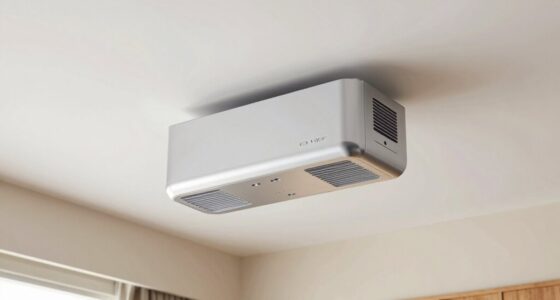
Are you wondering how single-zone and multi-zone mini split systems differ? Single-zone systems cool or heat just one area, making them simple and cost-effective for small spaces. Multi-zone systems, on the other hand, can handle multiple areas with separate indoor units connected to a single outdoor compressor. When comparing these options, consider energy efficiency; multi-zone units often use energy more effectively across larger spaces. Additionally, understanding system scalability can help you plan for future expansions or modifications. Many multi-zone systems also offer individual zone control, allowing you to customize comfort levels in each area. Noise levels also vary—single-zone units tend to be quieter since they operate in a single location, while multi-zone systems can produce more sound due to multiple indoor units working simultaneously. Furthermore, smart home integration with better color accuracy and contrast ratios can enhance your viewing experience, whether you’re using a single-zone or multi-zone system to enjoy movies or gaming. Understanding these differences helps you choose the right system for your needs, balancing energy use and noise to maximize comfort and efficiency.
Which Home Sizes Are Best for Single‑Zone Mini Splits?
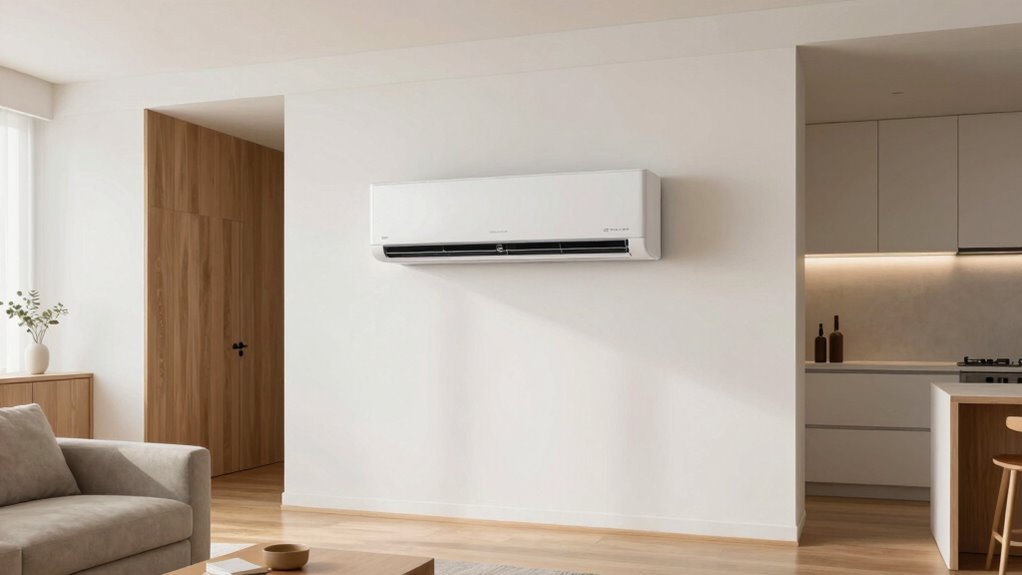
Single-zone mini splits are ideal for small to medium-sized homes or specific rooms where focused climate control is needed. They excel in providing energy efficiency by targeting only the space that requires cooling or heating, which helps lower your utility bills. These systems are perfect for single rooms, such as bedrooms, home offices, or small living areas, where you want precise temperature control without affecting the rest of your home. Additionally, single-zone units offer flexibility in interior design, as they don’t require extensive ductwork and can be installed discreetly. If your home has a straightforward layout and you prioritize efficiency and aesthetic appeal, a single-zone mini split is an excellent option. It’s a smart choice for maintaining comfort without sacrificing style or budget. Understanding climate control can help you make informed decisions about the best system for your specific needs. For homes with varying heating and cooling needs, considering multi-zone options might provide greater flexibility and overall comfort. Proper installation and system maintenance are also crucial for optimal performance and longevity of your mini split.
When Should You Consider a Multi‑Zone Mini Split?
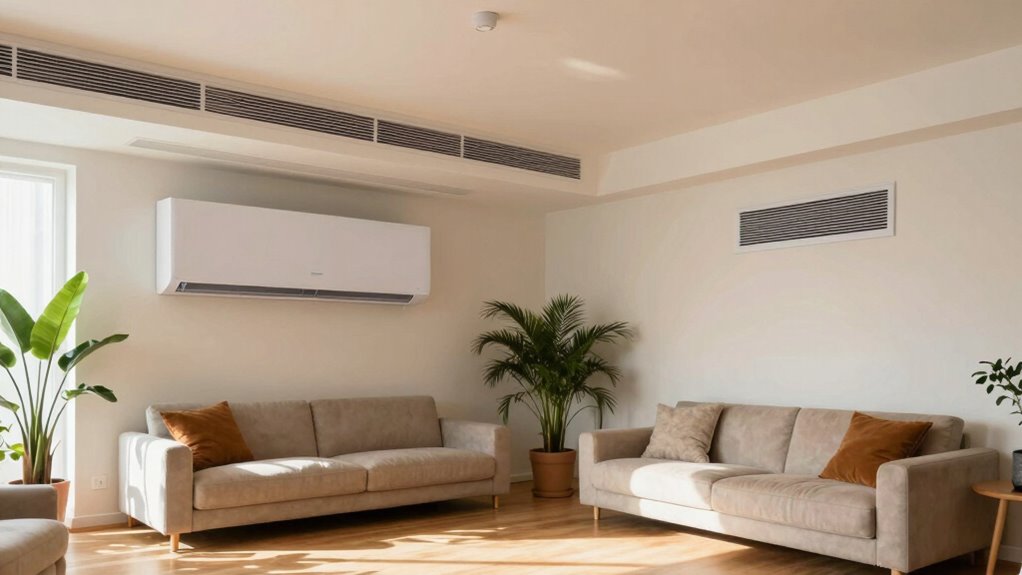
Consider a multi-zone mini split when you need to control the temperature in multiple areas of your home independently. This setup offers exceptional zoning flexibility, allowing you to customize comfort for each room or space. If your household has different heating or cooling preferences, a multi-zone system ensures everyone can enjoy the best comfort without wasting energy. Additionally, multi-zone mini splits enhance energy efficiency by targeting only occupied or specific zones, reducing unnecessary operation. You should consider this option if your home layout is complex or if you want to avoid the expense and inconvenience of multiple single-zone units. Overall, a multi-zone mini split is ideal when you prioritize personalized comfort and energy savings. Recognizing early warning signs of system inefficiencies can help maintain optimal performance and prevent costly repairs.
How Do Single‑Zone and Multi‑Zone Mini Splits Differ in Design and Cost?
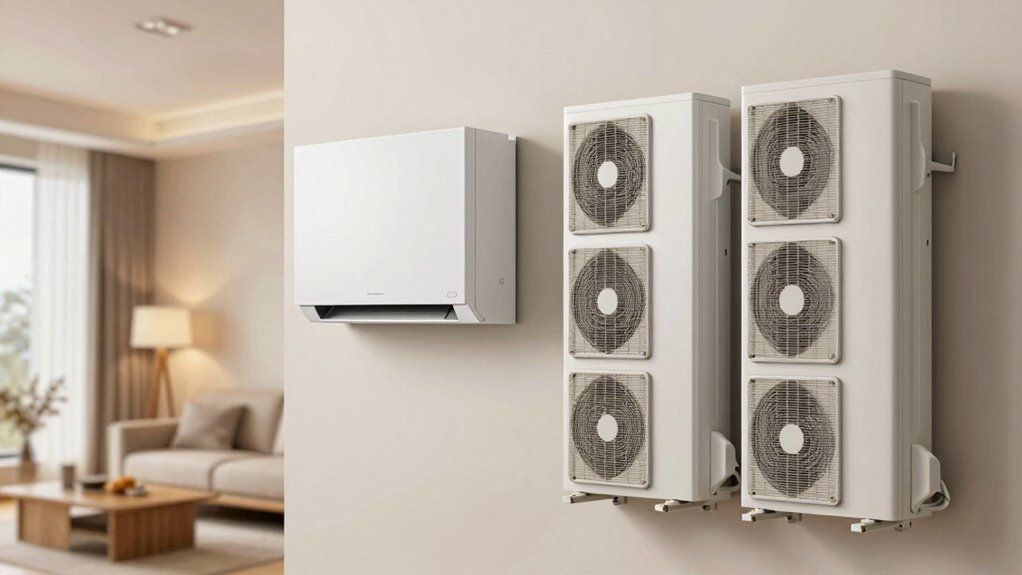
Single-zone mini splits are simpler and usually less expensive to install, since they require fewer components. Multi-zone systems involve more equipment and higher upfront costs but offer greater flexibility with multiple areas. Understanding these differences helps you choose the right system based on your needs and budget. Additionally, zone control can significantly impact the overall comfort and efficiency of your heating and cooling setup. For example, energy efficiency can vary greatly depending on whether a single-zone or multi-zone system is installed, affecting long-term costs. Properly assessing your cooling requirements is essential for optimal performance and energy savings. Considering the installation complexity is also important, as multi-zone systems often demand more involved setup and maintenance. Moreover, system customization plays a crucial role in tailoring the climate control to your specific space and usage patterns.
Installation Complexity and Cost
Installing a multi-zone mini split system typically involves more complexity and higher costs than a single-zone unit. You’ll need additional indoor units, longer refrigerant lines, and more planning during installation. This increased complexity can also lead to potential installation errors, which may affect the system’s overall efficiency. This can impact your energy efficiency, as improper setup may cause leaks or inefficiencies. Aesthetic appeal also matters, as multi-zone systems require more visible hardware and routing. Proper installation planning is crucial to ensure optimal performance and minimal aesthetic disruption. The table below highlights key differences:
| Aspect | Single-Zone | Multi-Zone |
|---|---|---|
| Installation Complexity | Simpler, fewer components | More complex, multiple indoor units |
| Cost | Lower initial investment | Higher upfront costs |
| Energy Efficiency | Usually easier to optimize | Potential for better zoning control |
| Aesthetic Appeal | Less clutter, minimal visible units | More hardware, visible multiple units |
| Flexibility in design | Limited to one space | Can cover multiple zones simultaneously |
Equipment and Zone Flexibility
Multi-zone mini split systems are designed to offer greater flexibility by allowing you to control the temperature in multiple areas independently. This setup lets you customize comfort based on zoning regulations and your specific needs. Multi-zone systems require more equipment, including multiple indoor units connected to a single outdoor compressor, which can increase upfront costs. They also offer aesthetic advantages, as indoor units can be discreetly placed in various locations to blend with your decor. In contrast, single-zone setups are simpler, with one indoor unit serving a single space, making them more cost-effective and easier to install. Overall, multi-zone systems provide unmatched zone flexibility, but they come with higher initial investment and more complex equipment design.
What Are the Installation and Maintenance Requirements for Both?

When it comes to installation and maintenance, both single-zone and multi-zone mini splits require careful planning to guarantee ideal performance. Proper installation ensures peak energy efficiency, so you should follow manufacturer guidelines closely. Installing a single-zone unit is generally straightforward, often involving fewer indoor units and simpler ductwork. Multi-zone systems are more complex, needing precise setup for multiple indoor units and refrigerant lines, which can affect noise levels if not done correctly. Regular maintenance, like cleaning filters and checking refrigerant levels, helps sustain efficiency and quiet operation. Both systems benefit from professional installation to minimize issues and maximize lifespan. While maintenance demands are similar, multi-zone setups may require more attention due to their increased complexity. Additionally, choosing reputable brands such as Fidelity Precious Metals IRA can provide better support and service throughout the installation and maintenance process. Proper initial setup and routine care are essential for system longevity and performance, especially considering potential issues related to complex refrigerant lines in multi-zone systems. Moreover, professional guidance can significantly reduce troubleshooting time and ensure compliance with local codes.
How Can You Evaluate Your Home’s Heating and Cooling Needs?
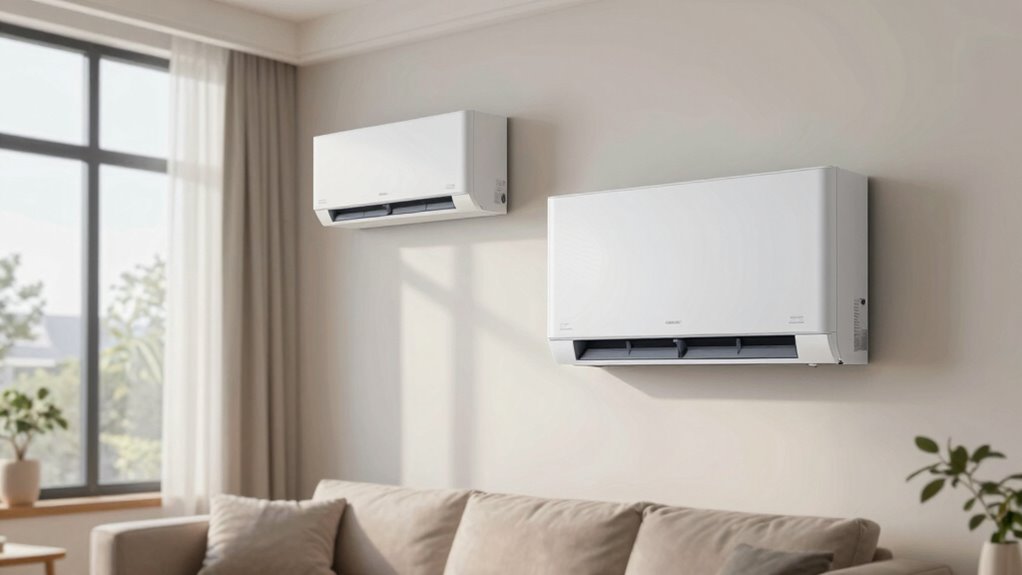
To determine your home’s heating and cooling needs, start by evaluating how often and when you use each room. Consider how climate patterns affect your comfort throughout the year. This will help you decide whether a single-zone or multi-zone system best fits your lifestyle. Additionally, assessing your home’s insulation and energy efficiency can influence the most suitable system for your needs. Properly understanding your energy consumption patterns can further ensure you select a system that minimizes costs and maximizes comfort.
Assess Room Usage Patterns
Understanding how each room in your home is used can substantially improve your heating and cooling efficiency. By observing patterns—like which rooms are occupied most and when—you can tailor your system for better zoning flexibility and system scalability. For example, a home office during the day or a guest room only seasonally impacts your choices. Use this table to evaluate your needs:
| Room Type | Usage Frequency | Preferred Temperature | Occupancy Time | Priority Level |
|---|---|---|---|---|
| Living Room | Daily | Moderate | Daytime | High |
| Bedroom | Nightly | Cooler/Warmer | Night | Medium |
| Home Office | Weekly | Cool | Daytime | High |
| Guest Room | Occasional | Variable | Varies | Low |
| Storage Area | Rare | N/A | N/A | Low |
Evaluate Climate Variability
Evaluating your home’s heating and cooling needs requires a clear understanding of your climate variability. You need to consider how temperature fluctuations, humidity levels, and seasonal changes impact comfort and energy efficiency. In climates with extreme variations, climate adaptability becomes essential, so your system can handle both hot summers and cold winters effectively. Analyzing local weather patterns helps determine whether a single-zone or multi-zone mini split offers better energy efficiency for your home. If your climate experiences consistent temperatures year-round, a single-zone system might suffice. However, if you face diverse conditions, a multi-zone setup provides targeted comfort and maximizes energy efficiency. By understanding these factors, you make an informed choice that optimizes comfort and reduces energy costs over time.
What Common Mistakes Should You Avoid When Choosing a Mini Split System?

Choosing the right mini split system can be tricky, and making common mistakes can lead to ineffective cooling or heating, higher energy bills, and costly repairs. One mistake is selecting a system without considering energy efficiency; a poorly rated unit will consume more power and increase expenses. Another common error is ignoring noise levels, which can disrupt your comfort and daily activities. Be sure to check decibel ratings to ensure quiet operation. Oversizing or undersizing your system is also a mistake, leading to uneven temperatures and inefficiency. Avoid rushing the decision—take your time to assess your space, needs, and product specifications. By steering clear of these pitfalls, you’ll maximize comfort, save money, and enjoy your mini split system’s full benefits.
How to Pick the Right Mini Split System for Long-Term Comfort and Savings
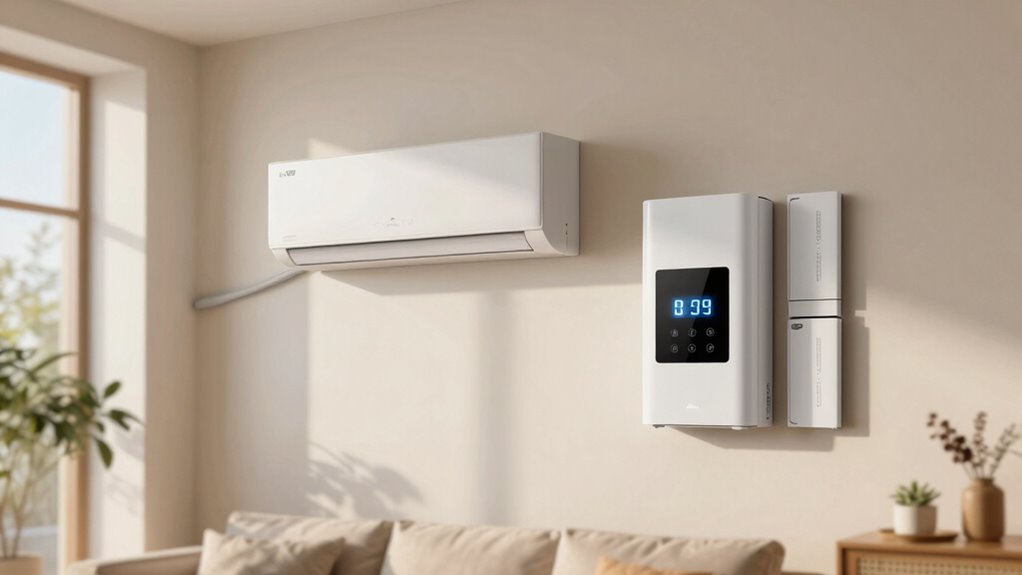
Selecting the right mini split system is essential for ensuring long-term comfort and saving money on energy bills. Focus on energy efficiency ratings, like SEER and HSPF, to choose a system that minimizes energy use while maintaining comfort. Consider the noise levels, especially if the unit will be installed in bedrooms or shared spaces; quieter systems enhance overall comfort. Multi-zone systems often provide better energy efficiency for larger areas by allowing zones to operate independently, reducing unnecessary energy waste. Single-zone units are simpler and may be more cost-effective for small spaces. Assess your needs carefully, balancing the initial investment with long-term savings. By prioritizing energy efficiency and noise levels, you ensure a comfortable environment that won’t break your budget over time.
Frequently Asked Questions
How Do Zoning Options Impact Energy Efficiency?
Zoning options greatly impact your energy efficiency by allowing you to control temperature in specific areas through zone control. This targeted approach prevents energy waste, as you avoid heating or cooling unused spaces. With effective zoning, you’ll enjoy energy savings because your mini split system only operates where needed. It’s a smart way to cut costs and improve comfort, ensuring you get the most out of your HVAC investment.
Can Mini Splits Be Expanded for Future Home Additions?
Yes, you can expand your mini split for future home additions, but it requires careful planning. Make certain your new space is compatible with your existing system and consider DIY installation options if you’re comfortable, as it can save money. However, always check system compatibility beforehand, because mismatched components can lead to inefficiency or system failure. Consulting a professional is wise to guarantee seamless integration and maximum performance.
What Are the Noise Level Differences Between Systems?
Like a whisper in a library, mini split noise levels vary. You’ll find duct noise from air movement is minimal, but compressor sound can differ—single-zone systems tend to be quieter, while multi-zone units might generate more noise during operation. Consider your space; if quiet is a priority, opt for models with quieter compressors. Remember, a peaceful environment makes all the difference, no matter the system you choose.
Are Multi-Zone Systems Suitable for All Climate Zones?
Multi-zone systems are suitable for many climate zones, but you should consider your specific needs. If you’re comfortable with DIY installation, these systems can be flexible, but they may require additional planning for aesthetic considerations and proper placement. In colder or hotter climates, verify your chosen system can handle temperature extremes. Consulting with a professional can help you determine if multi-zone mini splits are a good fit for your climate.
How Does System Size Affect Long-Term Operational Costs?
Think of your system size as a garden’s growth—too big or small, and maintenance costs rise like weeds, draining your resources. A properly sized mini split reduces installation complexity and saves money over time, while an oversized unit may seem efficient initially but leads to higher operational costs and frequent repairs. Choosing the right size guarantees smooth, cost-effective operation, keeping your comfort garden healthy and thriving long-term.
Conclusion
So, now that you’re armed with all the mini split secrets, go ahead—pick the system that suits your home’s quirks and budget. Just remember, making a rushed choice might leave you sweating in summer or freezing in winter, and nobody wants that drama. Whether you go single or multi-zone, treat it like a marriage—choose wisely, and enjoy years of cozy bliss. Or, you know, regret everything later—your call.