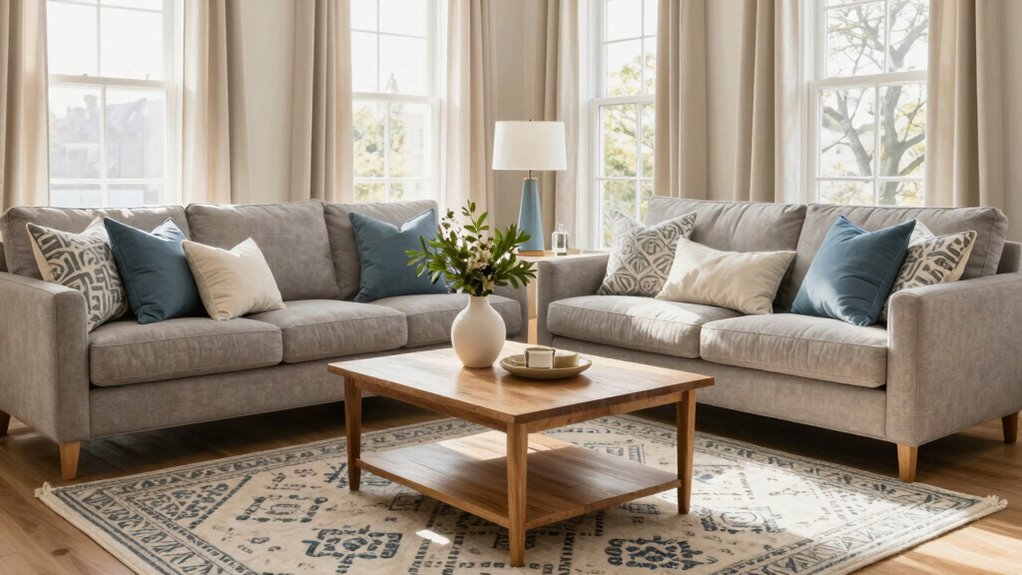

To create a more cohesive home without a full remodel, focus on unifying your color palette by using core hues, shades, and textures that flow seamlessly across rooms. Arrange your furniture for balance, ensuring consistency in style and size, and use repeating design elements like pillows or artwork to connect spaces. Incorporate accessories and textiles that match your palette, and make small adjustments to optimize natural light and layout. Keep exploring these ideas to transform your space effortlessly.

Get home appliances delivered free with Prime
- Fast, free delivery on millions of items
- Prime Video, Amazon Music and more included
- Member-only deals all year
Key Takeaways
- Use a consistent color palette with core hues and complementary shades to unify different rooms.
- Arrange furniture in a balanced, cohesive style that promotes flow and functionality throughout your space.
- Incorporate repeating design elements like artwork, rugs, or pillows to create visual links between rooms.
- Coordinate accessories and textiles, such as curtains and cushions, to reinforce the overall aesthetic.
- Make small adjustments in layout, lighting, and decor to enhance harmony without a full remodel.
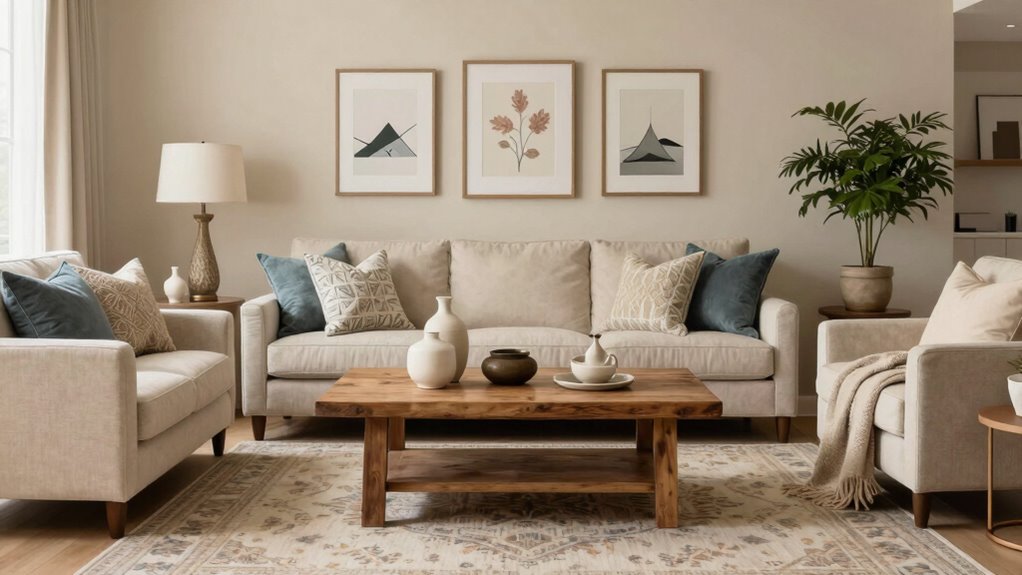
Revamping your home doesn’t always mean tearing everything down and starting from scratch. Sometimes, small adjustments can make a big difference in creating a cohesive look. One of the most effective ways to achieve this is through thoughtful color coordination. Instead of randomly choosing paint colors or decor, focus on a unified palette that flows seamlessly from room to room. Select a few core hues and use them as the foundation for your space. Incorporate different shades, tones, or textures of these colors to add depth while maintaining harmony. For example, if you prefer neutral tones, mix warm beige with soft taupe or cream accents to create visual interest without disrupting the overall flow. This approach guarantees that your home feels connected, even if each room serves a different purpose. Paying attention to interior design principles can further enhance the sense of cohesion throughout your space.
Alongside color coordination, paying attention to furniture arrangement plays a vital role in establishing a cohesive environment. When rearranging your furniture, aim for balance and consistency. Keep similar styles, finishes, and sizes in mind—this helps avoid a cluttered or disjointed appearance. For instance, if your living room has modern, sleek furniture, try to maintain that style in adjacent spaces, or incorporate complementary pieces that blend well. Arrange furniture in a way that promotes conversation and functionality, but also guarantees a smooth transition from one area to the next. Avoid blocking pathways or creating awkward spaces, as this can disrupt the flow and make the room feel disconnected. Being mindful of spatial organization ensures your home remains both functional and visually harmonious. Additionally, understanding the principles of visual flow can help you create a more unified look.
You can also tie your rooms together by repeating certain design elements, such as throw pillows, rugs, or artwork, in different spaces. These small details act as visual cues that link each area, reinforcing your overall aesthetic. When updating your furniture arrangement, consider how each piece interacts with the room’s natural layout and lighting. Proper placement can make a room feel larger and more inviting, while also emphasizing the cohesiveness of your design choices.
Finally, don’t overlook the power of accessories and textiles. Coordinating curtains, cushions, and decorative objects with your chosen color palette reinforces harmony across your home. By paying attention to these details and making strategic adjustments, you can transform your space into a cohesive, stylish home—without the need for a full remodel. Small, intentional changes can breathe new life into your environment and create a more unified, welcoming atmosphere.
neutral color palette throw pillows
As an affiliate, we earn on qualifying purchases.
As an affiliate, we earn on qualifying purchases.
Frequently Asked Questions
How Can I Unify Different Design Styles in My Home?
You can unify different design styles by using lighting accents to highlight key areas and create a cohesive mood throughout your home. Incorporate art integration by selecting pieces that complement various styles, tying the spaces together visually. Mix textures and colors thoughtfully, and guarantee your furniture and accessories share a common theme or palette. This approach creates harmony, making your home feel intentional and well-coordinated without a full remodel.
What Small Changes Make the Biggest Impact on Cohesion?
You can make a big impact by focusing on texture contrast and lighting consistency. Incorporate varied textures like plush rugs or sleek furniture to add visual interest, while maintaining consistent lighting across rooms to unify the space. Use similar light fixtures or bulbs to create a cohesive ambiance. These small changes draw the eye smoothly from room to room, making your home feel more connected without a full remodel.
How Do I Choose a Unifying Color Palette?
Did you know that 85% of people feel more relaxed in homes with a unified color palette? To choose one, start with a base color you love, then pick complementary shades for wall art and accent pieces. Stick to a cohesive theme across rooms, using similar tones or hues. This creates harmony, making your home feel more intentional and inviting without the need for a complete remodel.
Can Furniture Arrangement Improve Home Flow?
Yes, furniture arrangement can substantially improve your home flow. You should analyze your floor plan to identify natural pathways and avoid cluttered spaces. By strategically placing furniture, you create a sense of openness and ease of movement. Opt for a layout that connects rooms seamlessly, emphasizing flow. This approach enhances your home’s cohesion without the need for a full remodel, making your space more functional and inviting.
What Affordable Decor Tips Enhance Overall Harmony?
You can enhance harmony by adding affordable decor accessories like matching cushions, rugs, and artwork that tie your spaces together. Incorporate lighting strategies such as layered lighting—table lamps, string lights, and soft overhead fixtures—to create a warm, inviting atmosphere. Keep color schemes consistent and avoid clutter to promote visual flow. These simple adjustments make your home feel more cohesive without needing a full remodel.
repeating artwork for home decor
As an affiliate, we earn on qualifying purchases.
As an affiliate, we earn on qualifying purchases.
Conclusion
By making small, intentional updates like matching your decor and repainting walls in a unified color palette, you can transform your home into a more cohesive space. For example, Sarah noticed her living room felt disconnected from her dining area. By choosing coordinating accents and repainting both in soft neutrals, she created a seamless flow without a full remodel. These simple tweaks can make your home feel more harmonious and inviting, all without the need for major renovation.
As an affiliate, we earn on qualifying purchases.
As an affiliate, we earn on qualifying purchases.
Cold & flu season Picks
humidifiers
As an affiliate, we earn on qualifying purchases.