
TL;DR
A recent experiment confirms that placing gravel at the bottom of pots does not improve drainage for houseplants. Instead, it can lead to increased water retention near roots, counteracting the intended benefit. Experts recommend using pots with proper drainage holes and well-draining soil instead.
Recent experiments confirm that adding a layer of gravel at the bottom of plant pots does not improve drainage, countering a common gardening myth. This finding is relevant for houseplant enthusiasts and professionals aiming to prevent root rot and promote healthy growth.
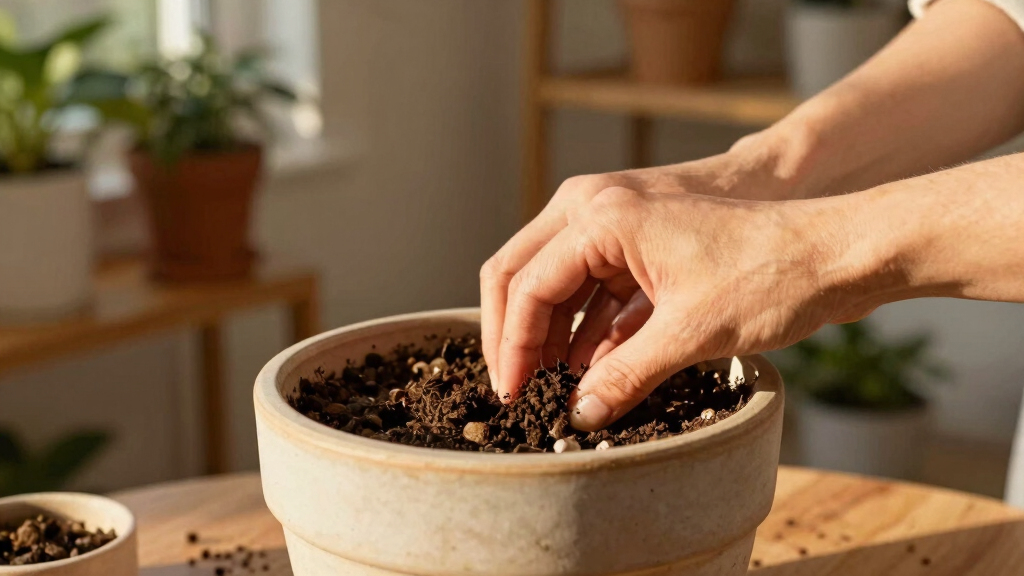
In a controlled test, two identical pots were prepared—one with a gravel layer at the bottom and one without. Both were filled with the same compost and watered equally. The soil above the gravel in the first pot remained wetter than the soil in the second, indicating poorer drainage with the gravel layer.
The science behind this outcome involves the perched-water-table effect, where water tends to pool above coarse gravel until the soil above is saturated. This results in water lingering near the roots, contrary to the intended purpose of gravel layers to improve drainage.
Experts emphasize that proper drainage depends primarily on adequate drainage holes and soil composition, not on adding gravel at the bottom of pots. The practice of placing gravel is more likely to hinder than help in maintaining healthy roots.
Implications for Houseplant Care Practices
This finding challenges a long-standing gardening myth, suggesting that many houseplant owners might be inadvertently increasing the risk of root rot by using gravel layers. It underscores the importance of using pots with sufficient drainage holes and selecting well-draining soil mixes to ensure healthy plant growth.
Adopting scientifically supported practices can improve plant health outcomes and reduce unnecessary gardening steps that do not provide benefits, saving time and resources for hobbyists and professionals alike.
houseplant pots with drainage holes
As an affiliate, we earn on qualifying purchases.
As an affiliate, we earn on qualifying purchases.
Historical Use of Gravel in Potting
The practice of adding gravel or stones to the bottom of pots has been a common recommendation in gardening guides for decades, based on the idea that it prevents waterlogging. However, recent scientific testing by experts shows that this method does not facilitate better drainage and may worsen water retention near roots.
This shift in understanding aligns with broader gardening research emphasizing soil and pot design over simple layering techniques. The experiment conducted in June 2026 provides concrete evidence against the traditional practice, prompting a reevaluation of common houseplant care advice.
“Adding gravel at the bottom of pots does not improve drainage and can actually cause more water to remain near the roots.”
— an anonymous researcher
well-draining potting soil for houseplants
As an affiliate, we earn on qualifying purchases.
As an affiliate, we earn on qualifying purchases.
Remaining Questions About Drainage Techniques
While the experiment clearly shows that gravel layers do not improve drainage, it is still unclear whether different types or sizes of gravel might have varying effects. Further research is needed to explore whether other layering methods could influence water movement or root health.
Additionally, individual plant species and pot designs may respond differently, so general recommendations might require further validation across diverse conditions.
indoor plant watering can with measurement
As an affiliate, we earn on qualifying purchases.
As an affiliate, we earn on qualifying purchases.
Future Research and Practical Recommendations
Researchers plan to conduct additional tests with various gravel sizes and soil types to refine understanding of drainage dynamics. Meanwhile, gardeners are advised to prioritize pots with adequate drainage holes and use well-draining soil mixes. Industry guidelines may update to reflect these findings, discouraging the use of gravel layers at the bottom of pots.
As an affiliate, we earn on qualifying purchases.
Key Questions
Does adding gravel at the bottom of a pot help prevent root rot?
No, scientific evidence shows that gravel does not improve drainage and may increase water retention near roots, potentially raising the risk of root rot.
What is the best way to ensure good drainage for houseplants?
Use pots with sufficient drainage holes and fill them with well-draining soil mixes designed for houseplants. Avoid relying on gravel layers at the bottom.
Are there any exceptions where gravel might help?
Current research suggests no significant benefits; however, further studies on different gravel sizes or specific plant needs are ongoing. For now, focus on proper pot and soil choices.
Should I remove existing gravel layers from my pots?
If you have used gravel layers, it is advisable to monitor your plants for signs of waterlogging. Consider repotting with better-draining soil and ensuring proper drainage holes.
Source: Guardian Life