
TL;DR

Get home appliances delivered free with Prime
- Fast, free delivery on millions of items
- Prime Video, Amazon Music and more included
- Member-only deals all year
Manila Water is installing individual water meters for households in Mandaluyong. This move aims to enhance water usage monitoring and billing fairness. The project is ongoing, with details on implementation and impact still emerging.
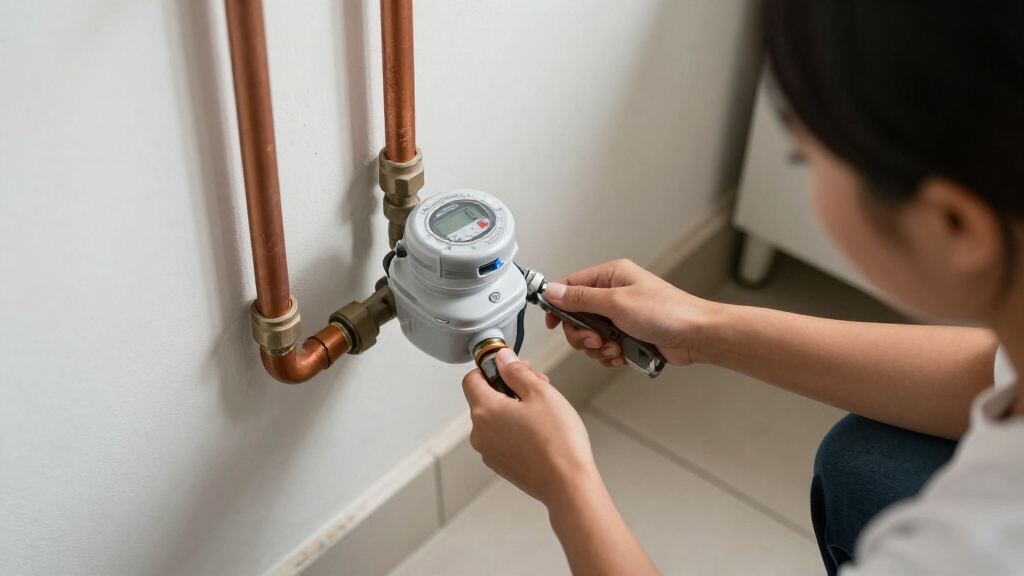
Manila Water has begun installing individual water meters for households in Mandaluyong City, a move confirmed by the company to improve water usage monitoring and billing fairness. This initiative is part of a broader effort to modernize water services and promote efficient resource use, making it a significant development for local consumers and stakeholders.
The water utility firm Manila Water announced that it has started installing individual water meters across households in Mandaluyong. The project aims to replace the existing bulk or shared water meters, allowing for more precise measurement of each household’s water consumption. According to Manila Water, the installation process is currently underway and targets to cover all residential units in the city.
Officials from Manila Water explained that the move is intended to promote water conservation and ensure fair billing by accurately reflecting individual household usage. The company added that the project aligns with government initiatives to improve urban water management and reduce wastage. The installations are expected to span several months, with updates provided as the work progresses.
Residents have been informed about the project through local notices, and Manila Water has assured that the installations will follow safety protocols, including shutting off water supply temporarily where necessary. The company emphasized that affected households will be notified in advance to minimize inconvenience.
One household. One meter. A fairer water bill.
Manila Water has begun replacing shared or bulk metering with individual household meters in Mandaluyong City—aiming to make consumption easier to track, billing more precise, and conservation more meaningful.
Project status: installation underwayEach household’s consumption can be measured separately.
Charges can more closely reflect actual household usage.
Advance notice is expected where temporary interruption is needed.
Households across the Metro Manila city
Installations have begun
Residential coverage is the stated target
No completion date announced
Precision at the household level
Bulk meters can blur the relationship between what one household uses and what it pays. Individual metering creates a clearer signal—supporting accountability for consumers and better demand information for the utility.
Usage you can see
Separate readings provide a more precise record of each household’s water consumption instead of relying on a shared total.
Bills tied to behavior
Lower-use households may no longer subsidize heavier users through a bulk allocation, improving transparency and perceived fairness.
A reason to save
When individual use is visible and billable, households have a stronger incentive to identify waste and reduce unnecessary consumption.
How individual metering changes the model
The expected gains are clearest when the new setup is compared with the shared-meter system historically used by multiple households or residential units.
| Measure | Bulk or shared meter | Individual meter | Likely effect |
|---|---|---|---|
| Household-level reading | ✗Limited | ✓Direct | More precise consumption records |
| Billing transparency | ~Depends on allocation | ✓Usage based | Clearer link between use and cost |
| Conservation feedback | ✗Weak signal | ✓Stronger signal | More incentive to reduce waste |
| Bill outcome | ~Shared calculation | ~Varies by use | Some bills may fall; others may rise |
| Installation disruption | ✓No retrofit | ~Temporary | Short shut-off may be required |
From installation to impact
The project’s logic follows a connected path: better measurement enables better information, which can influence billing behavior and improve management of a constrained urban resource.
Residents receive local notice before work begins.
An individual meter is fitted for the household.
Consumption is recorded at the household level.
Charges can reflect measured usage more closely.
Clear feedback supports more responsible use.
“The installation of individual meters is part of our commitment to improve water service and promote responsible usage among our customers.”
“We support Manila Water’s initiative as it will lead to fairer billing and better water management for our residents.”
Clear goals, emerging details
The direction of the initiative is established, but several implementation details remain unconfirmed. These gaps matter when assessing household costs and the project’s long-term results.
Current information confidence
Qualitative assessment based on the details presently reported.
Still to be confirmed
Key information residents should watch for in future notices.
No specific citywide installation deadline has been announced.
Potential household fees or adjustments have not been specified.
The size and sequencing of the first rollout phases remain unclear.
Actual changes will depend on consumption and future billing policies.
What households need to know
Residents should review official notices, prepare for any scheduled interruption, and compare consumption and billing after the new meter becomes active.
When will every household receive a meter?
Work is expected to continue over several months, but a firm date for complete coverage has not been published.
Will the monthly bill change?
Potentially. More accurate measurement could lower bills for light users and raise them for households that consume more.
Will residents pay for installation?
No installation charge has been specified. Households should rely on formal Manila Water notices for any fee information.
Will water supply be interrupted?
A temporary shut-off may be necessary during fitting. The utility says affected households will receive advance notice.
Implications for Water Management and Consumers
This development is significant because it marks a shift toward more precise water usage measurement at the household level, which can lead to more equitable billing and encourage water conservation. For consumers, this could mean adjustments in their water bills, potentially reducing costs for low-usage households and increasing transparency. It also aligns with national efforts to modernize urban water infrastructure and promote sustainability.
For Manila Water, the project demonstrates a commitment to improving service delivery and complying with local government mandates. It could serve as a model for other cities seeking to upgrade their water systems and promote responsible consumption.
As an affiliate, we earn on qualifying purchases.
Background on Mandaluyong Water Services
Mandaluyong City, part of Metro Manila, has historically relied on bulk water meters that serve multiple households or buildings. This setup has faced criticism for lack of precision and fairness in billing. Previous efforts to upgrade water infrastructure have included pilot projects on individual metering, but widespread implementation has been limited.
Manila Water, the primary provider in the area, has announced several initiatives aimed at infrastructure modernization, including the recent rollout of individual meters. The company’s move aligns with broader government policies to improve urban water systems, reduce leakages, and prevent wastage. The timing of this project coincides with national and local efforts to enhance water resource management amid increasing urban demand.
Prior to this, residents and advocacy groups have called for more transparent and fair billing practices, citing issues with shared meters and inaccurate readings. The new project aims to address these concerns directly.
“The installation of individual meters is part of our commitment to improve water service and promote responsible usage among our customers.”
— Manila Water spokesperson
As an affiliate, we earn on qualifying purchases.
Unconfirmed Details on Implementation Timeline
It is not yet clear how long the entire installation process will take or how many households will be affected in the initial phases. Details on potential billing adjustments or resident compensation are also still emerging. Additionally, the long-term impact on water rates and overall service quality remains to be seen.
As an affiliate, we earn on qualifying purchases.
Next Steps for Project Rollout and Community Engagement
Manila Water plans to continue the installation over the coming months, with updates provided to residents and stakeholders. The company will also hold consultations to address concerns and gather feedback. Monitoring the project’s progress and assessing its impact on water billing and conservation will be key milestones in the coming period.
As an affiliate, we earn on qualifying purchases.
Key Questions
When will all households in Mandaluyong have individual water meters installed?
The installation process has begun and is expected to continue over several months. A specific timeline for complete coverage has not yet been announced.
Will residents see changes in their water bills after installation?
Potentially, yes. Individual meters should allow for more accurate billing based on actual consumption, which could result in lower bills for some households and higher for others, depending on usage.
Are there any costs to residents for the installation?
Manila Water has not specified any charges for the installation itself. Residents will be informed if any billing adjustments or fees are involved.
How will the installation affect water supply during the process?
Temporary water shut-offs may occur during the installation in affected households, with prior notice given to minimize inconvenience.
What are the benefits of individual water metering?
Benefits include fairer billing, better water conservation, and improved resource management by accurately tracking household consumption.
Source: local
Cold & flu season Picks
humidifiers
As an affiliate, we earn on qualifying purchases.