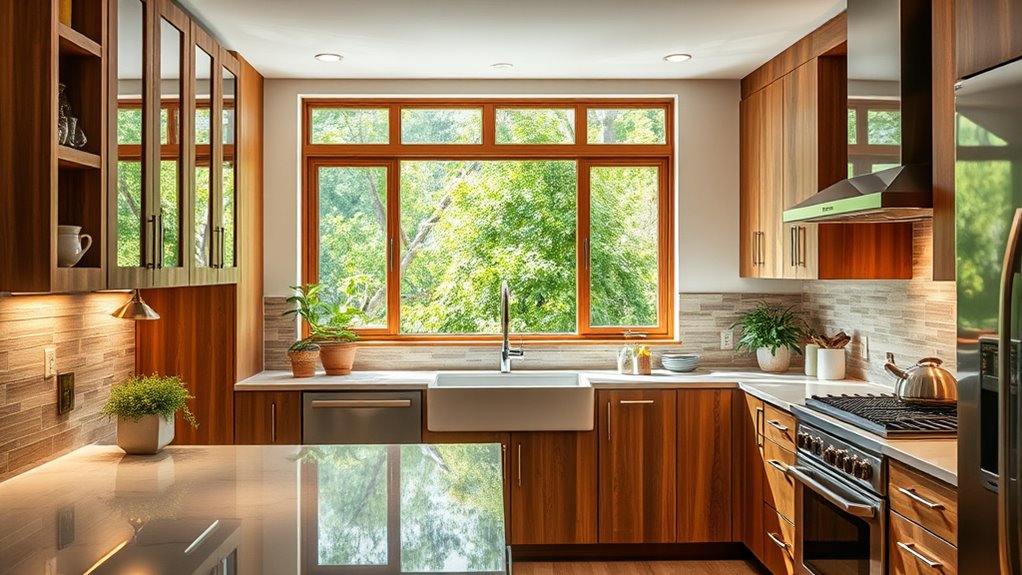

When planning your kitchen remodel with sustainability in mind, focus on eco-friendly materials like bamboo, reclaimed wood, and recycled countertops to reduce environmental impact. Invest in energy-efficient appliances and LED lighting to lower your energy use. Choose low-VOC paints and water-saving fixtures for healthier indoor air and conservation. Opt for durable, timeless designs to guarantee longevity, and work with eco-conscious contractors to minimize waste. Keep exploring to discover how these strategies can transform your kitchen sustainably.
Key Takeaways
- Choose eco-friendly, sustainably sourced materials like bamboo, reclaimed wood, and recycled glass to reduce environmental impact.
- Select ENERGY STAR-rated appliances and LED lighting to maximize energy efficiency and lower utility costs.
- Incorporate low-VOC paints, water-saving fixtures, and finishes that improve indoor air quality and promote health.
- Use durable, timeless designs with modular cabinets and accessible layouts for long-lasting, adaptable functionality.
- Implement sustainable building practices, natural light solutions, and waste-reduction strategies during construction and renovation.

Redoing your kitchen with sustainability in mind not only benefits the environment but can also save you money in the long run. When planning your remodel, consider using eco-friendly materials that are sustainably sourced, durable, and non-toxic. Bamboo flooring, reclaimed wood cabinets, and recycled glass countertops not only reduce environmental impact but also add unique character to your space. These materials often require less maintenance and last longer, making them cost-effective choices over time.
In addition to sustainable materials, investing in energy-efficient appliances is essential. Modern dishwashers, refrigerators, and ovens consume substantially less energy than traditional models, helping you cut down on utility bills and reduce your carbon footprint. Look for appliances with ENERGY STAR ratings, as they meet strict efficiency guidelines and are designed to operate with minimal energy waste. Incorporating LED lighting fixtures and low-energy bulbs further enhances your kitchen’s efficiency, providing ample illumination while conserving power.
When selecting fixtures and finishes, opt for low-VOC (volatile organic compound) paints and sealants. These products emit fewer harmful fumes, creating a healthier indoor air quality for you and your family. Also, consider water-saving fixtures like dual-flush toilets, low-flow faucets, and aerators that can considerably reduce water consumption without sacrificing performance.
Designing with accessibility and longevity in mind contributes to sustainability as well. Modular cabinets, for example, can be easily repaired or updated, extending the life of your kitchen. Avoid trendy, short-lived design choices and instead focus on timeless aesthetics that won’t need frequent replacement. This approach reduces waste and ensures your remodel remains stylish and functional for years.
Incorporating natural light into your kitchen layout is another eco-friendly strategy. Larger windows, skylights, or glass doors can minimize the need for artificial lighting during the day. Combine this with energy-efficient lighting options, and you’ll lower your energy consumption even further. Additionally, selecting sustainable building practices during construction can significantly reduce environmental impact and ensure your remodel aligns with your eco-friendly goals. Finally, plan for waste reduction during construction by working with contractors committed to recycling and repurposing materials. This proactive step guarantees your remodel aligns with your sustainability goals from start to finish.
Frequently Asked Questions
How Can I Reduce Water Usage During My Kitchen Remodel?
You can reduce water usage during your kitchen remodel by installing water-saving fixtures, such as low flow faucets and aerators. These fixtures cut down on water consumption without sacrificing performance. Make sure to choose models with high efficiency ratings and consider replacing old appliances with water-efficient dishwashers. Additionally, fix any leaks promptly to prevent waste. These simple steps help you conserve water and support your sustainability goals.
Are Eco-Friendly Appliances More Cost-Effective Long-Term?
Eco-friendly appliances are often more cost-effective long-term because they offer significant energy savings, which reduce your utility bills over time. While the initial investment may be higher, the energy efficiency benefits quickly offset that cost. You’ll save money and help the environment, making these appliances a smart choice for sustainable living. Plus, many offer advanced features that enhance convenience and performance, making your kitchen more eco-conscious overall.
What Sustainable Materials Are Best for Kitchen Cabinets?
You should choose reclaimed wood or bamboo cabinetry for sustainable kitchen cabinets. Reclaimed wood is eco-friendly because it reuses existing materials, reducing waste and deforestation. Bamboo grows quickly and absorbs carbon, making it a highly renewable resource. Both options offer durability and a natural aesthetic. Opting for these materials helps minimize your environmental impact while creating a stylish, long-lasting kitchen.
How Do I Ensure Proper Insulation for Energy Efficiency?
To guarantee proper insulation for energy efficiency, choose the right insulation types like spray foam, cellulose, or mineral wool. During installation, follow key tips such as sealing gaps and using vapor barriers to prevent air leaks. Properly installing insulation around cabinets, walls, and floors enhances thermal performance, reduces energy costs, and supports sustainability. Always consult professionals to ensure insulation is correctly fitted and meets energy efficiency standards.
Can I Incorporate Solar Energy Into My Kitchen Design?
Yes, you can incorporate solar energy into your kitchen design by adding solar panel integration on your roof. This allows you to generate clean energy, reducing your reliance on the grid. Pair it with energy-efficient lighting to maximize savings and sustainability. Consider positioning your kitchen near windows for natural light, further lowering energy use. Combining solar panels with smart, energy-conscious choices makes your kitchen both eco-friendly and cost-effective.
Conclusion
Just as Da Vinci’s masterpieces blend artistry with innovation, your kitchen remodel can harmonize style with sustainability. By choosing eco-friendly materials, energy-efficient appliances, and mindful design, you create a space that’s both beautiful and responsible. Remember, this transformation isn’t just about aesthetics; it’s a legacy you leave for future generations. Embrace the journey with purpose, knowing your mindful choices today echo the wisdom of those who shaped history with vision and care.