
Before buying a stackable washer and dryer, you must measure three key things: the available width, height, and depth of your space to guarantee a proper fit; the clearance around the units for ventilation and airflow; and the location and specifications of your water and electrical hookups to confirm compatibility. Proper measurements help prevent installation issues and ensure safety. Keep exploring to learn more about optimizing your setup and verifying all requirements.
Key Takeaways
- Measure the available width, depth, and height in your laundry area to ensure the stackable units fit comfortably.
- Check ceiling height and clearance space needed for easy access, loading, and unloading of stacked appliances.
- Confirm the location and compatibility of water supply, drainage, and electrical outlets for both units.
- Ensure proper ventilation clearance around the dryer to prevent overheating and allow for safe venting.
- Allocate space for detergent storage and laundry accessories within reach of the stacked setup.
How to Measure Your Space for a Stackable Washer and Dryer

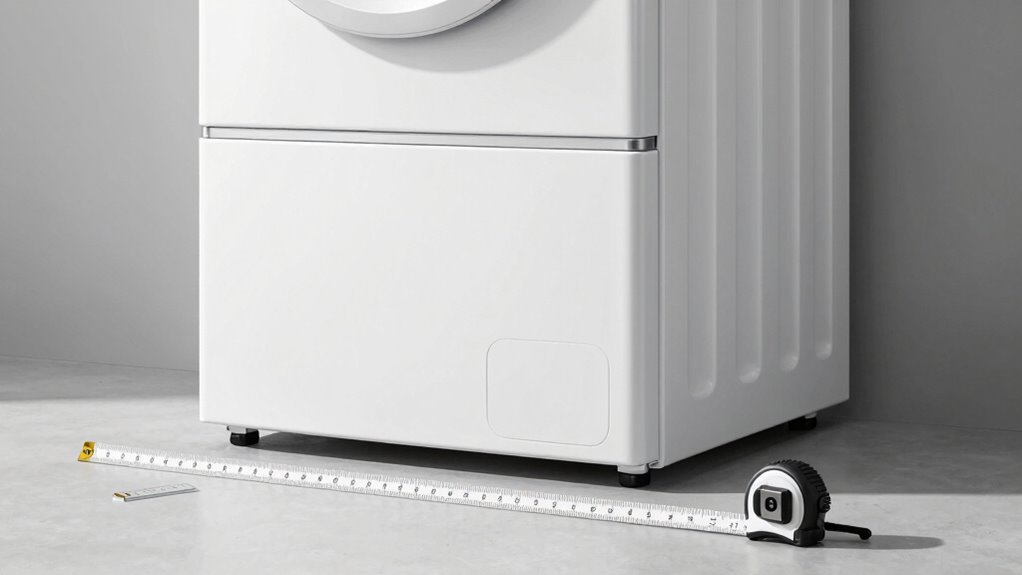
Before purchasing a stackable washer and dryer, you need to measure your space carefully to guarantee a proper fit. Start by checking the available width, height, and depth, ensuring there’s enough room for the units and easy access. Don’t forget to consider space for detergent storage—you’ll want a nearby spot for your laundry supplies without crowding the machines. Proper laundry room lighting is also essential; measure the ceiling height and placement of existing fixtures to ensure good visibility during laundry tasks. Use a tape measure to get accurate dimensions, and note any obstructions like vents or cabinetry. Double-check the manufacturer’s specifications for the appliances to confirm they match your measurements before making a purchase. This careful planning prevents surprises and guarantees a seamless installation process. Additionally, understanding space planning principles can help you maximize your laundry area’s efficiency and comfort. Incorporating appliance efficiency tips can also reduce energy consumption and improve overall performance over time. To ensure a smooth setup, consider consulting professional installation services if you’re unsure about your measurements or installation requirements. Being aware of unit dimensions ensures your space accommodates the appliances comfortably and safely. Furthermore, measuring for proper ventilation clearance can help prevent overheating and ensure safe operation of your appliances.
Ensuring Proper Clearance and Ventilation for Stackable Laundry Units
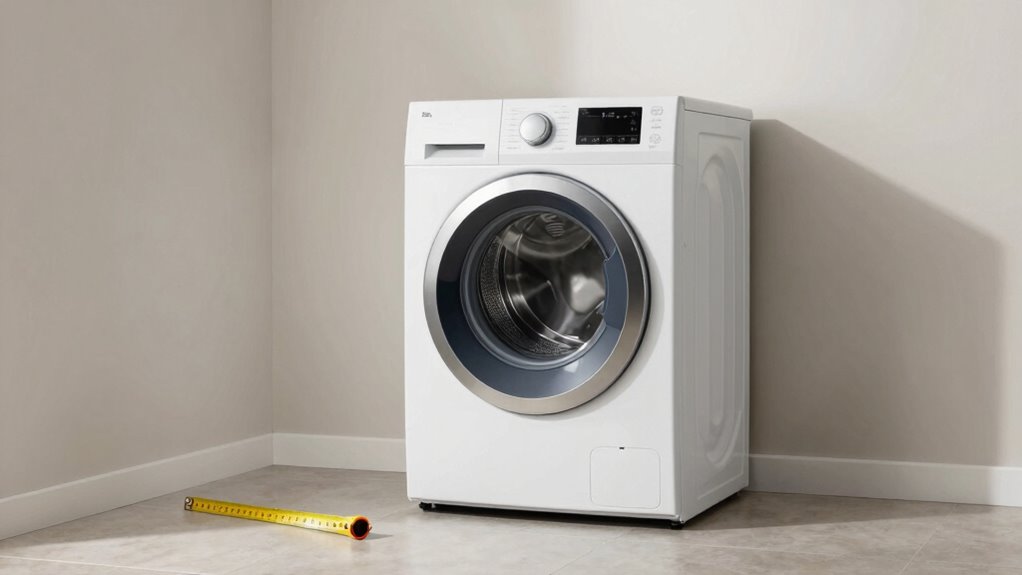
After measuring your space, it’s important to guarantee your stackable laundry units have proper clearance and ventilation. Adequate airflow prevents overheating and ensures efficiency. Make sure there’s enough room for the dryer vent to connect smoothly without kinks or obstructions. Good laundry room lighting is also vital for safety and ease of use. Additionally, proper budgeting can help you allocate funds for necessary accessories like venting kits or lighting fixtures. Considering commercial kitchen equipment standards can also guide you in creating a safe and efficient laundry area. Incorporating free floating design principles can further optimize space utilization and airflow in your laundry setup. Ensuring proper airflow management is crucial for maintaining appliance longevity and safety, especially when considering ventilation techniques that enhance overall air circulation.
Verifying Water and Power Hookups Before Installing Your Stackables

Ensuring your water and power hookups are properly verified is essential for a smooth installation process. Start by checking the plumbing connections to confirm they match your washer’s inlet and outlet requirements, and ensure there are no leaks or corrosion. For electrical requirements, verify that your outlet provides the correct voltage and amperage specified by the manufacturer. Look for grounded outlets and confirm the circuit can handle the load. If your setup involves new wiring or plumbing, consider consulting a professional to avoid errors. Properly verifying these hookups beforehand helps prevent delays, costly repairs, or damage during installation. Additionally, understanding E-bike safety principles can help you identify potential hazards in your setup. Taking these steps ensures your stackable laundry unit functions safely and efficiently right from the start, especially when considering industry trends that influence appliance compatibility and installation standards. Being aware of regulatory requirements can further ensure your setup complies with local codes and safety standards. Regular inspection of your connections and adherence to eco-friendly disposal tips can also extend the lifespan of your appliances and prevent malfunctions, reducing environmental impact.
Frequently Asked Questions
What Is the Average Height of Stackable Washer and Dryer Units?
The average height of stackable washer and dryer units is around 70 inches, but it can differ. When you’re looking at washer dimensions and dryer height, check the specific models because some are taller or shorter. Make sure to measure your space carefully to ensure the units fit comfortably. Knowing these typical dimensions helps you plan your laundry setup efficiently without surprises.
Can I Install a Stackable Washer and Dryer in a Closet?
You can install a stackable washer and dryer in your closet, but you must follow strict installation guidelines. First, guarantee the closet has enough space, including proper ventilation and clearance. You might need closet modifications, like removing shelves or adding ventilation ducts. Measure carefully before buying, and consult the manufacturer’s instructions. With proper planning, your laundry setup will be both functional and space-efficient, fitting perfectly into your closet.
Do Stackable Units Require Additional Plumbing Modifications?
Yes, stackable units often require additional plumbing modifications and may need specific electrical requirements. You might need to adjust your existing plumbing for proper water supply and drainage, especially if the setup is in a closet or tight space. Also, verify your electrical system can handle the unit’s power needs, which can vary. Checking these aspects beforehand helps prevent surprises during installation and ensures your laundry setup works smoothly.
How Much Space Should I Leave for Door Clearance?
You should leave at least 3 to 4 inches of door clearance to guarantee cabinet doors open smoothly without hitting the washer or dryer. This space allows for easy access and prevents damage to the doors or appliances. Measure carefully around your stackable unit, especially if the doors swing outward, so you can comfortably open and close them without obstruction. Proper door clearance makes your laundry setup more functional and hassle-free.
Are There Specific Ventilation Requirements for Stackable Laundry Setups?
Ventilation standards for stackable laundry setups are like breath for your appliances. You need proper exhaust venting to prevent excess humidity and mold. Make sure your dryer has adequate airflow and that your laundry area is well-ventilated, either through an exhaust fan or open windows. This guarantees safety, efficiency, and longevity for your machines, keeping your space fresh and dry while meeting all necessary ventilation requirements.
Conclusion
Before you buy your stackable laundry setup, remember to measure your space carefully, guarantee proper clearance and ventilation, and verify your water and power hookups. Did you know that 85% of laundry room issues come from improper measurements or installations? Taking these steps now can save you time, money, and frustration later. Follow these tips, and you’ll enjoy a smooth, efficient laundry experience with your new stackable units. Happy laundry days!