Even in well-designed homes, laundry backups can happen due to factors beyond your control. Buildups from grease, soap, hair, or debris gradually narrow pipes, causing blockages. Tree roots seeking moisture can infiltrate underground lines, and venting issues may create pressure imbalances. External factors like sewer overloads during heavy rain also contribute. Understanding how these internal and external forces interact helps explain why backups occur despite good plumbing systems—you’ll discover more about preventing these problems next.

Get home appliances delivered free with Prime
- Fast, free delivery on millions of items
- Prime Video, Amazon Music and more included
- Member-only deals all year
Key Takeaways
- Gradual buildup of lint, soap scum, and debris can cause clogs despite good design.
- Tree root intrusion can penetrate underground pipes, leading to blockages.
- Venting issues create pressure imbalances, hindering proper drainage.
- External factors like sewer overloads during heavy rain can cause backups.
- Aging pipes or small cracks increase vulnerability to blockages over time.
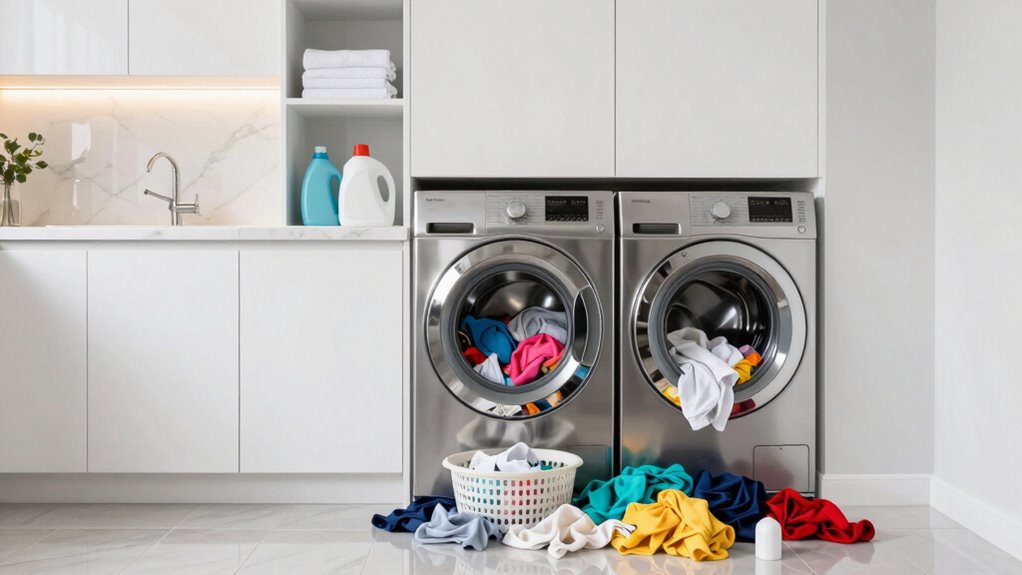
Have you ever experienced a laundry backup even in well-designed homes? It’s frustrating, especially when your house is equipped with what seems like the best infrastructure. You might think that modern plumbing systems, including smart plumbing and advanced drainage systems, would prevent such issues. However, even the most carefully planned homes can face these problems. The truth is, plumbing is complex, and backups often happen because of factors beyond just the design.
Smart plumbing systems are meant to optimize water flow and detect issues early, but they aren’t foolproof. They rely on sensors and automation to alert you to clogs or leaks, but if a blockage is severe or if debris accumulates inside the pipes, these systems might not prevent a backup. Similarly, drainage systems are designed to carry wastewater away efficiently, but they can still get overwhelmed. Over time, grease, soap scum, hair, and other debris can build up inside pipes, narrowing the passageways and causing backups. Even with high-quality materials and thoughtful layouts, these natural build-ups happen gradually and can catch homeowners off guard. Proper pipe maintenance is crucial to mitigate these issues before they lead to backups.
Smart systems help, but buildup and severe blockages can still cause unexpected plumbing backups.
Clogs in the main drain line are another common culprit. Sometimes, tree roots infiltrate underground pipes seeking moisture, creating blockages that are tough to detect until a backup occurs. These root intrusions can happen even in homes with sophisticated drainage systems, especially if the pipes are aging or have small cracks. Additionally, improper venting in the plumbing system can lead to pressure imbalances, causing wastewater to back up into laundry drains. Ventilation ensures that air flows freely through the pipes, allowing water to drain smoothly. When this airflow is obstructed, backups become more likely. External factors like municipal sewer overloads can also contribute to backups, particularly during heavy rain or flooding, overwhelming the entire system.
You also have to consider the possibility of external factors, like heavy rain or flooding, which can overload municipal sewer systems and cause backups into your home’s drainage system. Even the best internal plumbing can’t always withstand these external pressures. Regular maintenance, such as cleaning out pipes and inspecting drainage systems, is essential. Installing a clean-out or a backwater valve can provide an extra layer of protection, helping to prevent or manage backups when they occur. Additionally, understanding how advanced plumbing systems work can help you identify potential issues early. Proper pipe materials and construction techniques are crucial for longevity and preventing common problems. Staying informed about these systems enables homeowners to take proactive measures, reducing the likelihood of surprises.
In the end, no matter how advanced your plumbing might be, backups happen because of a combination of factors—clogs, tree roots, venting issues, external pressures, or aging pipes. Staying proactive with maintenance and understanding how your smart plumbing and drainage systems work can help you minimize the chances, but knowing that backups can still occur keeps you prepared to handle them quickly when they do.
As an affiliate, we earn on qualifying purchases.
Frequently Asked Questions
Can Plumbing Issues Cause Laundry Backups in New Homes?
Yes, plumbing issues can cause laundry backups in new homes. Low water pressure can slow drainage, leading to backups, while pipe materials like plastic or older metal pipes might have blockages or leaks that hinder proper flow. Even in new homes, improper installation or design flaws can cause these issues. Regular inspections and choosing quality pipe materials help prevent laundry backups caused by plumbing problems.
How Often Should Laundry Drain Lines Be Inspected?
You should inspect your laundry drain lines at least once a year. Did you know that regular drain maintenance can reduce clog risks by up to 80%? To prevent clogs, prioritize clog prevention and schedule routine inspections. Keeping an eye on your drain lines guarantees smooth drainage and minimizes backups. Consistent maintenance helps catch issues early, saving you money and hassle in the long run.
Are Laundry Backups Common in Homes With Multiple Washers?
Laundry backups are fairly common in homes with multiple washers because the increased water flow can overwhelm the drainage system. You should regularly perform washer maintenance and monitor your laundry cycle to guarantee clogs. Using proper detergent and avoiding overloading each washer helps. When backups occur, inspecting and cleaning the drain lines and venting ensures smooth operation, reducing the risk of future backups even with multiple washers running simultaneously.
What Signs Indicate a Laundry Drain Is Clogged?
Your laundry drain’s whispering warnings—slow draining water, gurgling sounds, or a foul odor—are signs of a clog. To prevent future issues, focus on clog prevention and regular drain maintenance. When water takes longer than usual to clear or backs up, it’s time to act. Addressing these signs early keeps your laundry routine smooth and prevents a backup from turning into a plumbing nightmare.
Can Laundry Backups Affect Other Plumbing Systems?
Yes, laundry backups can affect other plumbing systems. When a laundry drain is clogged, it can cause water to back up into sinks, toilets, or showers, leading to potential damage. To prevent this, you should focus on clog prevention and regular drain maintenance. Keep an eye on signs of slow drainage, and avoid overloading your washing machine to help protect your entire plumbing system from backups.
As an affiliate, we earn on qualifying purchases.
Conclusion
Even in well-designed homes, laundry backups can sneak up like an unwelcome guest. No matter how perfect your plumbing or layout, clogs and drainage issues are like weeds that can grow unnoticed. Staying vigilant with regular maintenance and mindful usage keeps your system flowing smoothly. Remember, a well-maintained drain is the highway for your laundry’s journey — when you neglect it, traffic jams happen, turning your laundry day into a frustrating standstill.
As an affiliate, we earn on qualifying purchases.
tree root intrusion pipe repair kit
As an affiliate, we earn on qualifying purchases.
As an affiliate, we earn on qualifying purchases.
NFL season / tailgating Picks
team gear
As an affiliate, we earn on qualifying purchases.