
You need better zone planning for an outdoor kitchen because it guarantees your space is safe, functional, and comfortable despite weather conditions and open exposure. Outdoor environments introduce challenges like wind, rain, and temperature swings, so you must carefully organize cooking, prep, dining, and storage zones to prevent accidents and chaos. Proper layout improves airflow, prevents odors, and enhances your hosting experience. If you keep exploring, you’ll discover how strategic design keeps your outdoor kitchen efficient and enjoyable.

Get home appliances delivered free with Prime
- Fast, free delivery on millions of items
- Prime Video, Amazon Music and more included
- Member-only deals all year
Key Takeaways
- Outdoor kitchens face weather challenges requiring designated zones for protection and durability.
- Proper zone planning enhances airflow, ventilation, and odor control in open-air environments.
- Strategic layout prevents interference between cooking, dining, and storage areas amid outdoor conditions.
- Weather-resistant materials and storage solutions are essential for outdoor durability and safety.
- Optimized zoning ensures efficient use of space and safety during outdoor gatherings, unlike controlled indoor settings.

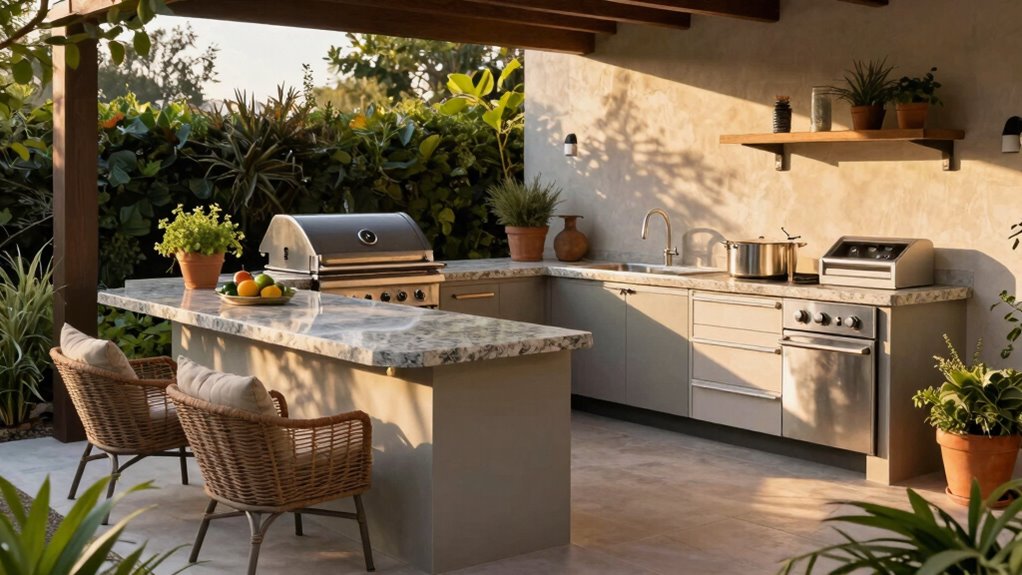
Creating an effective outdoor kitchen starts with careful zone planning to guarantee your space is functional and enjoyable. Unlike indoor kitchens, outdoor spaces are exposed to weather elements and varying conditions that demand smarter planning. You need to think about distinct zones—cooking, prep, dining, and storage—to assure each area functions smoothly without interfering with the others. A well-designed outdoor kitchen doesn’t just look good; it enhances your experience and makes hosting much easier. When you plan your dining area, consider its proximity to the cooking zone. You want it close enough for easy serving but far enough to avoid smoke or heat from the grill disturbing your guests. A comfortable dining area encourages relaxed gatherings and makes the space more inviting. Incorporate seating that withstands outdoor conditions, and consider shading options to keep everyone comfortable regardless of the weather.
Careful zone planning makes outdoor kitchens functional, enjoyable, and perfect for relaxing, weather-resistant gatherings.
Storage solutions are another critical aspect of outdoor zone planning. Unlike indoor kitchens, where cabinets and drawers are tucked away, outdoor storage needs to be weather-resistant and easily accessible. Think about incorporating built-in cabinets, weatherproof drawers, or even storage benches to keep your essentials safe from rain, sun, and dirt. Having designated storage close to your cooking and prep zones helps you avoid constant trips inside or hunting for supplies, making your outdoor experience seamless. It’s smart to also include storage for tools, utensils, and cleaning supplies in a way that keeps everything organized and within reach. Additionally, selecting weather-resistant materials for storage solutions ensures longevity and durability in the outdoor environment. Properly planning your outdoor layout can also help improve airflow and ventilation, which is essential in keeping your space comfortable and safe. Good ventilation can also help reduce lingering odors and moisture buildup that might otherwise lead to problems like mold or rust. A clutter-free space not only looks better but also reduces safety hazards, especially in unpredictable weather conditions. Moreover, a well-thought-out layout can help prevent clutter and improve safety by reducing trip hazards.
The reason outdoor kitchens need better zone planning than indoor ones is largely because of the environment. Outdoor spaces are subject to wind, rain, and temperature fluctuations that can quickly turn a poorly planned layout into a frustrating experience. Without clear zones, you risk clutter, inefficiency, and safety hazards. For example, if your storage isn’t protected from the elements, your supplies could deteriorate or become unusable. If your dining area isn’t thoughtfully positioned, you might find yourself constantly moving around, disrupting the flow of your gathering. Proper zone planning ensures that each part of your outdoor kitchen works harmoniously, making your cooking and entertaining more effortless and enjoyable.
In essence, outdoor kitchens demand a strategic approach to zoning that takes into account weather, convenience, and comfort. By carefully designing your dining area, selecting smart storage solutions, and establishing distinct zones, you create a space that’s not only functional but also a true extension of your home. This thoughtful planning allows you to maximize your outdoor living, making every gathering more enjoyable and stress-free.
weatherproof outdoor kitchen cabinets
As an affiliate, we earn on qualifying purchases.
As an affiliate, we earn on qualifying purchases.
Frequently Asked Questions
How Do Weather Conditions Affect Outdoor Kitchen Zone Planning?
Weather conditions markedly impact your outdoor kitchen zone planning. You need to take into account seasonal durability, ensuring materials can withstand temperature fluctuations, rain, and sun exposure. Wind resistance is also essential; you should position zones to minimize wind impact on cooking and seating areas. By planning zones with these factors in mind, your outdoor kitchen stays functional and durable year-round, offering a comfortable space regardless of weather changes.
What Materials Are Best for Outdoor Kitchen Zones?
You should choose materials with high durability and aesthetic appeal for outdoor kitchen zones. Stainless steel and concrete resist weather and wear, making them ideal for appliances and countertops. Natural stone or tile adds visual charm and withstands outdoor conditions. Opt for materials that resist moisture, UV rays, and temperature fluctuations, ensuring your outdoor space stays both functional and attractive over time.
How Can Lighting Be Integrated Into Outdoor Zones?
You can integrate lighting into outdoor zones by combining ambient lighting, like string lights or lanterns, with task lighting focused on cooking and prep areas. Install weatherproof fixtures that suit each zone’s function, ensuring you have enough illumination for safety and ambiance. Use dimmers to control brightness, creating a cozy atmosphere when relaxing and ample light when cooking. Thoughtful lighting enhances safety, functionality, and the overall outdoor experience.
What Safety Considerations Are Unique to Outdoor Kitchens?
They say, “Better safe than sorry,” and it’s especially true for outdoor kitchens. You must prioritize fire safety by keeping grills away from combustible materials and ensuring proper ventilation. Pest control is essential too; keep food covered and clean up spills promptly to avoid attracting insects. By planning these safety zones carefully, you reduce risks and enjoy your outdoor cooking space with peace of mind.
How Do I Incorporate Storage Efficiently in Outdoor Zones?
To incorporate storage efficiently in outdoor zones, focus on smart storage solutions like weatherproof cabinets, built-in shelves, and concealed compartments. Use space optimization techniques such as vertical storage and multi-functional furniture to maximize limited space. Consider integrating storage into existing structures, like under-counter cabinets or hidden drawers, to keep your outdoor kitchen organized and clutter-free. This approach guarantees easy access while maintaining a sleek, functional design.
outdoor storage benches waterproof
As an affiliate, we earn on qualifying purchases.
As an affiliate, we earn on qualifying purchases.
Conclusion
In the end, proper zone planning for your outdoor kitchen guarantees everything runs smoothly and feels natural. Since outdoor spaces are more exposed and varied, you can’t afford to leave things to chance. Think of it as a recipe—you need the right ingredients in the right place. When you carefully map out each zone, you’ll avoid headaches and make the most of your outdoor oasis. After all, a well-planned kitchen is the secret to truly enjoying your outdoor living space.
outdoor grilling zone planning tools
As an affiliate, we earn on qualifying purchases.
As an affiliate, we earn on qualifying purchases.
outdoor kitchen ventilation fans
As an affiliate, we earn on qualifying purchases.
As an affiliate, we earn on qualifying purchases.
Halloween Picks
halloween
As an affiliate, we earn on qualifying purchases.