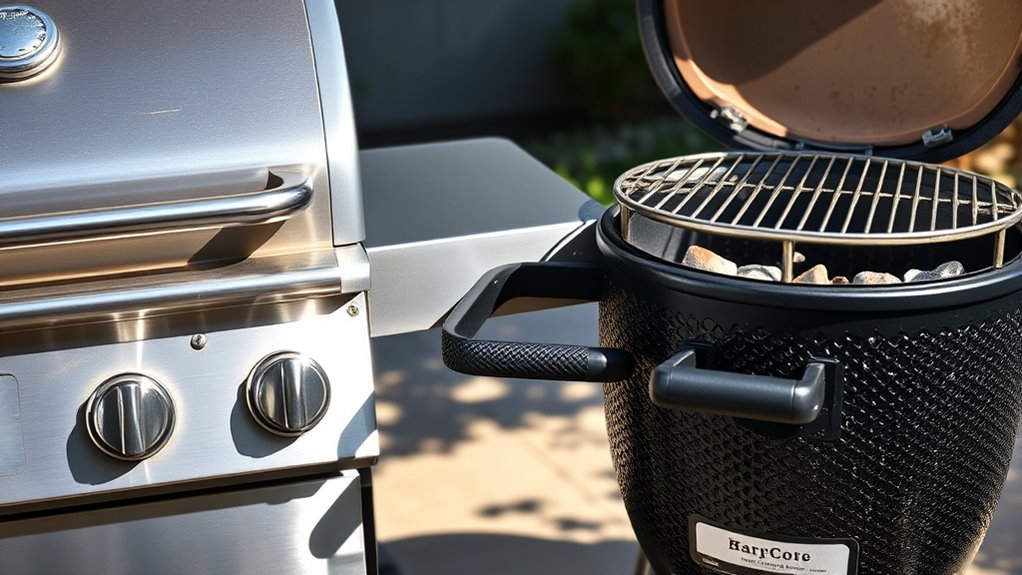

Choosing between gas and charcoal grills depends on what matters most to you. If you want quick, consistent temperatures and easy cleanup, gas grills are a great choice and produce fewer pollutants. But, if you love a smoky, richer flavor and enjoy traditional grilling, charcoal is your go-to, despite more cleanup and longer heat-up times. To find out which suits your style and needs best, explore the key differences further.

Get home appliances delivered free — and shop member deals
- Fast, free delivery on millions of items
- Access to Prime Big Deal Days deals on October 6–7
- Prime Video, Amazon Music and more included
Key Takeaways
- Charcoal grills provide a smoky, intense flavor ideal for traditional grilling, while gas grills offer quick, consistent heat with less smoke.
- Gas grills are more efficient, easier to control, and require less maintenance compared to charcoal grills.
- Charcoal grilling produces more carcinogens and has a higher environmental impact than gas grilling.
- Charcoal grills are generally more affordable upfront but incur higher ongoing fuel and cleaning costs.
- Choose based on flavor preference, convenience, environmental concerns, and budget considerations.
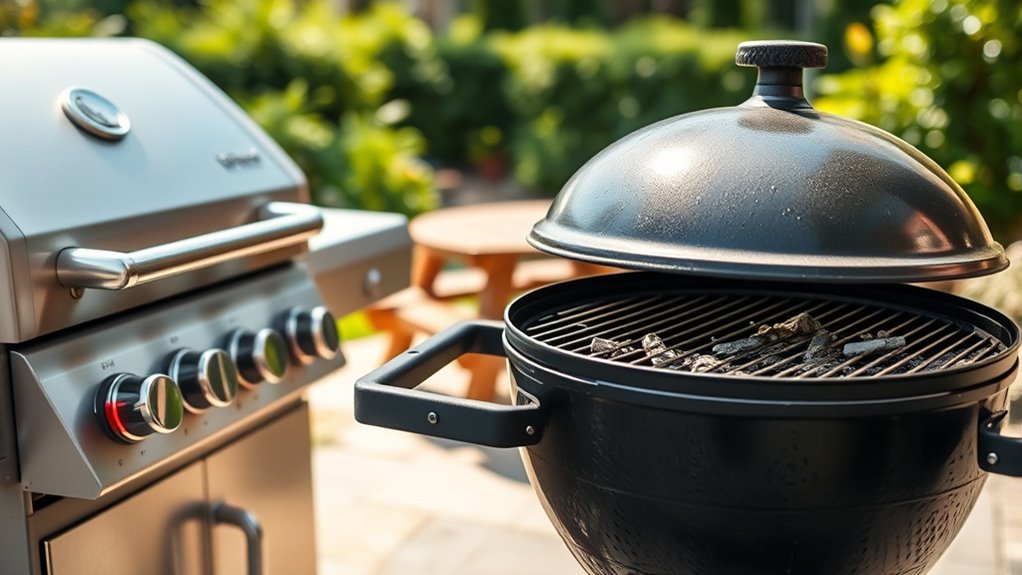
Choosing the right grill can considerably impact your outdoor cooking experience, whether you’re after bold smoky flavors or precise temperature control. When deciding between gas and charcoal, consider how each type aligns with your cooking style, budget, and environmental concerns. Charcoal grills are known for their efficiency in producing a smoky flavor, thanks to the combustion of wood or charcoal, which imparts a rich, intense taste to your food. However, they only convert about 20-35% of the original fuel into usable heat, meaning you’ll need to use more fuel to keep the fire going. In contrast, LPG gas grills boast over 90% energy efficiency, making them a more economical choice in the long run. They heat up quickly and maintain stable temperatures, giving you better control over your cooking process. Gas grills are also more environmentally friendly, producing fewer pollutants and greenhouse gases. When it comes to design and versatility, both options offer variety. Kettle grills are a classic for charcoal enthusiasts, providing a simple yet versatile setup. Charcoal grills can also be customized with various accessories or built-in features, although they tend to be larger and less portable. Gas grills are generally more compact, often equipped with features like side burners, rotisseries, and storage compartments, making them convenient for outdoor spaces with limited room. While charcoal grills are typically more affordable upfront, they require more maintenance, such as ash cleanup and soot removal, which can add to your ongoing effort and cost. Gas grills might have a higher initial price but are easier to clean and maintain, with fewer parts to replace over time. Taste plays a significant role in your choice. Charcoal grills produce a distinct smoky flavor that many BBQ lovers crave, and they can char food more intensely, which some find desirable. Gas grills can also deliver a satisfying grilled taste, mainly from fat drippings onto the heat source, but they generally lack the depth of smoke flavor characteristic of charcoal. Both types can produce delicious results, but your preference for flavor intensity might tip the scales toward one or the other. From an environmental perspective, charcoal grills have a larger carbon footprint, emitting more CO2 and pollutants like particulates. They produce roughly three times the emissions of LPG grills, which are cleaner and produce fewer harmful emissions. Health-wise, charcoal grilling generates more carcinogens, such as PAHs and HCAs, due to the smoke and high heat. Gas grilling tends to be healthier overall, with fewer carcinogens produced during cooking. Cost-wise, charcoal grills are less expensive initially, but the ongoing cost of charcoal and cleanup can add up. Gas grills are more costly upfront, but their durability, ease of use, and lower fuel costs often make them a smarter investment over time. When it comes to heat, charcoal grills excel at reaching very high temperatures suitable for searing and direct heat cooking, while gas grills offer better control and consistency, making them ideal for a range of cooking techniques. Ultimately, your choice depends on what you value most—flavor, convenience, environmental impact, or budget. Both types can produce fantastic results; it’s just about finding the one that fits your outdoor cooking lifestyle. Additionally, consider fuel efficiency when making your choice, as it can significantly impact your long-term costs and environmental footprint.
best gas grills for outdoor cooking
As an affiliate, we earn on qualifying purchases.
As an affiliate, we earn on qualifying purchases.
Frequently Asked Questions
How Do I Clean and Maintain Each Type of Grill Effectively?
To keep your grill in top shape, you should regularly clean and maintain it. For gas grills, preheat to burn off residue, scrub grates, and clean burners and interior parts thoroughly. For charcoal grills, remove ashes, scrub grates, and wipe down the interior. Always dry all parts after cleaning, and apply a light coat of oil to prevent rust. Proper maintenance guarantees even cooking and extends your grill’s lifespan.
Are There Safety Concerns Unique to Gas or Charcoal Grills?
Safety concerns are like shadows that follow grills—hidden but real. For gas grills, leaks, line issues, and operator error can cause fires or explosions. Charcoal grills pose risks of carbon monoxide poisoning and burns from embers. Both require proper placement, supervision, and maintenance. Keep flammable materials at least 10 feet away, never leave them unattended, and always have a fire extinguisher handy to stay safe.
Which Grill Type Offers Better Temperature Control?
When comparing grill types for temperature control, gas grills stand out because you can set and maintain specific temperatures easily with knobs, providing quick heat-up and steady heat distribution. Charcoal grills require more skill, as you manage airflow and charcoal placement to control heat, which fluctuates more. If you prioritize precision and convenience, gas offers better temperature control; if you enjoy a hands-on experience, charcoal can give you more flexibility.
How Do Costs Compare Over the Long Term for Each Grill?
When comparing long-term costs, gas grills usually save you money because of their lower fuel expenses and durability. Although they cost more upfront, their efficient fuel use and longer lifespan make them cheaper over time, especially if you grill often. Charcoal grills are cheaper initially but require frequent charcoal purchases and may wear out faster, leading to higher ongoing costs. So, if you grill regularly, gas is often more economical in the long run.
Can I Use Accessories Interchangeably on Both Grill Types?
Like a locksmith opening a door, you find that most accessories are specific to either gas or charcoal grills. You can often use items like thermometers or covers interchangeably if they fit properly. However, key tools like charcoal chimneys or ash catchers won’t work on gas grills, and vice versa. Innovations like hybrid systems blur this line, but generally, accessory compatibility stays true to each grill’s design.
charcoal grill with adjustable vents
As an affiliate, we earn on qualifying purchases.
As an affiliate, we earn on qualifying purchases.
Conclusion
Ultimately, choosing between gas and charcoal depends on your grilling style. Imagine Sarah, who loves quick, flavorful burgers; she swears by her gas grill for convenience. Meanwhile, Mark, a barbecue enthusiast, prefers charcoal for that smoky richness. Think about what matters most—speed or flavor—and pick what fits your lifestyle. Whichever you choose, your next cookout will be a hit. So, fire it up and enjoy delicious moments with family and friends!
As an affiliate, we earn on qualifying purchases.
As an affiliate, we earn on qualifying purchases.
NFL season / tailgating Picks
team gear
As an affiliate, we earn on qualifying purchases.