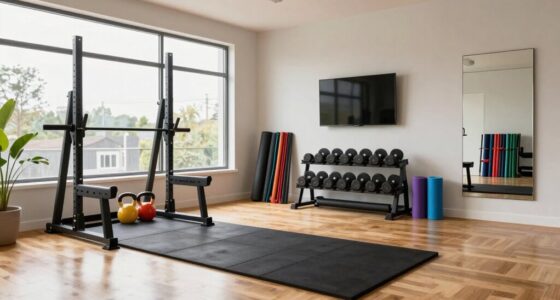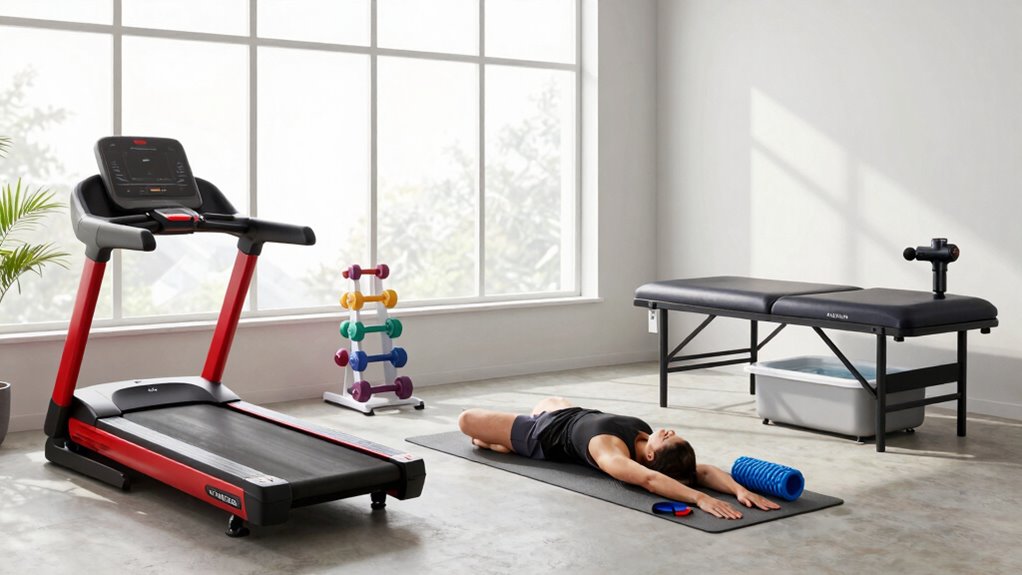

To effectively balance cardio, strength, and recovery in one room, designate specific zones for each activity to improve flow and organization. Use versatile, space-saving equipment like adjustable dumbbells and foldable benches to switch easily between exercises. Incorporate good lighting, ventilation, and relaxing elements for a comfortable atmosphere. Keep recovery tools separate and accessible to encourage proper rest. For more tips on creating an efficient workout space, keep exploring ways to optimize your setup.

Get home appliances delivered free — and shop member deals
- Fast, free delivery on millions of items
- Access to Prime Big Deal Days deals on October 6–7
- Prime Video, Amazon Music and more included
Key Takeaways
- Designate separate zones for cardio, strength, and recovery to maintain organization and flow.
- Use versatile equipment that can be easily adjusted for different exercise types.
- Incorporate proper lighting, ventilation, and calming elements to enhance both workout and recovery environments.
- Keep essential nutrition and hydration supplies accessible for quick refueling between activities.
- Allocate dedicated recovery space with comfortable mats and relaxing decor, separate from active workout zones.
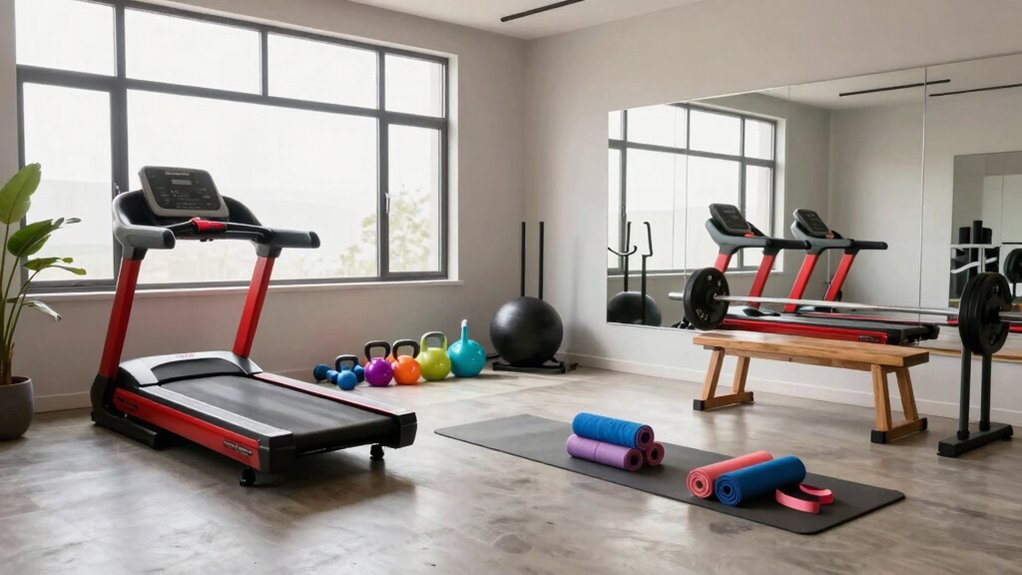
Balancing cardio, strength training, and recovery in a single room might seem challenging, but with the right approach, it’s entirely doable. The key is to create a space that encourages seamless progressions between different workout types while supporting your body’s needs. Proper nutrition planning plays a crucial role here—fueling your workouts and aiding recovery ensures you get the most out of your efforts. Keep a well-balanced mix of carbs, proteins, and healthy fats nearby, so you can quickly refuel after high-intensity sessions or strength training. Hydration is equally important; having a water station in your room helps you stay refreshed and ready for the next activity. Incorporating space optimization techniques can help you make the most of your available area without feeling cramped. Equipment versatility is your best friend when working within limited space. Instead of cluttering your room with bulky machines, opt for multi-use equipment. Adjustable dumbbells, resistance bands, kettlebells, and a foldable bench can serve multiple purposes and save space. These tools allow you to perform a wide range of exercises—from cardio bursts to strength-building moves—without needing a dedicated gym corner. For cardio, consider jump ropes, step platforms, or even a compact rowing machine that can be tucked away when not in use. This flexibility enables you to switch from running in place or jump rope to lifting weights without major rearrangements. Designing your room with space planning in mind can enhance workout flow and efficiency. Dedicate specific zones for different activities but keep enough open space to move freely. For example, set up a corner with your resistance bands and dumbbells for strength training, and keep a clear area for cardio exercises. Incorporating storage solutions that allow quick access to your equipment can also help streamline transitions and keep your space organized. Additionally, adding proper lighting not only improves visibility but also boosts motivation during your workouts. To support recovery, include a comfortable mat for stretching or foam rolling, and consider adding some calming elements like plants or soft lighting to create a relaxing atmosphere post-workout. Additionally, paying attention to ventilation and airflow can improve comfort and help prevent overheating during intense sessions.
adjustable dumbbells for space-saving workouts
As an affiliate, we earn on qualifying purchases.
As an affiliate, we earn on qualifying purchases.
Frequently Asked Questions
What Equipment Is Essential for a Balanced Workout Room?
You need essential equipment like versatile flooring options, such as rubber mats, to protect your space and reduce impact. Include compact storage solutions to keep your space organized and accessible. For a balanced workout room, prioritize a treadmill or bike for cardio, free weights or resistance bands for strength, and a foam roller or massage tools for recovery. This setup helps you seamlessly switch between exercises while maintaining safety and efficiency.
How Often Should I Switch Between Cardio, Strength, and Recovery?
You should switch between cardio, strength, and recovery workouts every 2-3 days for ideal results. Imagine Sarah, who rotates her routine to prevent plateaus—she uses versatile equipment like adjustable dumbbells and a jump rope, making her workout scheduling flexible. This approach maximizes equipment versatility, prevents burnout, and guarantees balanced progress. Keep your routine dynamic, listen to your body, and adjust the frequency based on your goals and recovery needs.
How Do I Prevent Equipment From Interfering With Different Workout Types?
To prevent equipment from interfering with your different workout types, focus on equipment organization and space optimization. Keep cardio machines, strength gear, and recovery tools in designated zones, using storage solutions like racks or shelves. Clear pathways and rotate equipment based on your workout schedule. This setup minimizes clutter, maximizes space, and guarantees you can switch seamlessly between cardio, strength, and recovery without hassle.
Can Small Space Workouts Effectively Combine All Three Elements?
Yes, small space workouts can effectively combine cardio, strength, and recovery with thoughtful multi functional design and space optimization. You can choose versatile equipment like foldable benches, adjustable weights, and compact cardio machines. Incorporate zones for different activities, using mirrors and strategic storage to maximize space. This approach allows you to seamlessly switch between workout types, ensuring a balanced routine without feeling cramped or cluttered.
What Lighting Best Supports Varied Workout Intensities?
Did you know proper lighting can boost workout motivation by up to 50%? For varied intensities, you should use a mix of ambient lighting to create a welcoming atmosphere and task lighting for focused exercises. Bright, adjustable lights help energize during cardio, while softer, dimmer options support recovery. Combining these lighting styles guarantees you stay comfortable and motivated, no matter your workout’s intensity.
As an affiliate, we earn on qualifying purchases.
Conclusion
Balancing cardio, strength, and recovery in one room is all about smart planning and listening to your body. By creating designated zones and mixing up your routines, you can maximize your workouts without feeling overwhelmed. Remember, isn’t the goal to make fitness enjoyable and sustainable? So, why not tailor your space to suit your needs and keep your motivation high? With a little effort, your workout room can become your ultimate fitness sanctuary.
As an affiliate, we earn on qualifying purchases.
resistance bands set for home gym
As an affiliate, we earn on qualifying purchases.
As an affiliate, we earn on qualifying purchases.
Halloween Picks
halloween
As an affiliate, we earn on qualifying purchases.