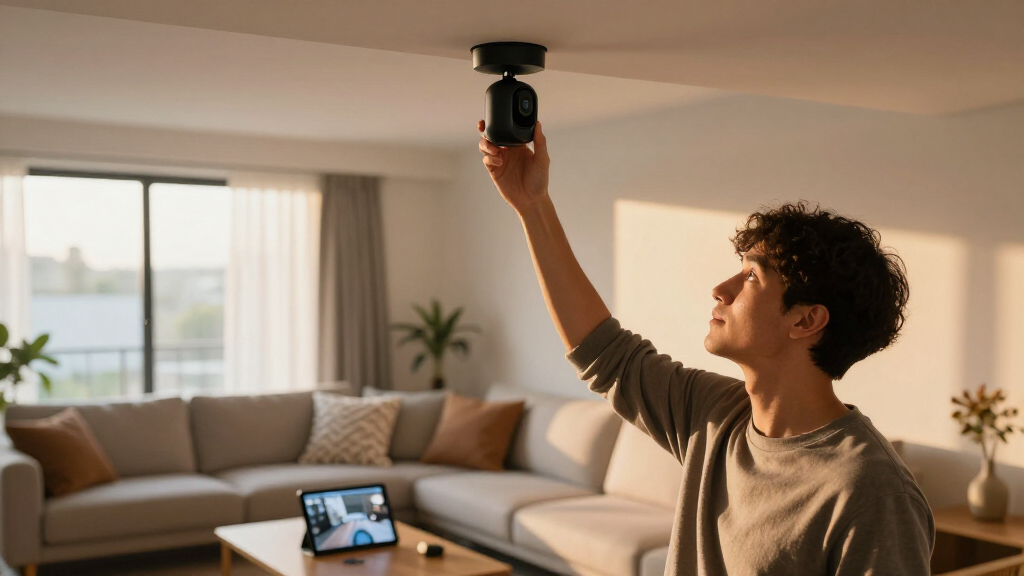

Smart home security cameras have become essential for protecting homes and loved ones, offering remote monitoring, motion alerts, and integration with smart home ecosystems. When choosing a camera, consumers often face a tradeoff between advanced features and affordability. The Arlo Pro 4 and Ring Stick Up Cam are two popular options that exemplify this decision. Arlo Pro 4 emphasizes high-resolution video, extensive features, and seamless integration, making it suitable for users seeking top-tier security. Conversely, Ring Stick Up Cam focuses on affordability, ease of setup, and reliable performance for those new to smart security or on a budget. Understanding the key differences helps buyers match their specific needs with the right device.
Open a free Amazon Business account
Business pricing, bulk buying and tax-exempt orders.
Create a free accountAs an affiliate, we earn on qualifying purchases.

Blink Outdoor 4 Wireless Smart Security Camera System
- ✔ Resolution: 1080p HD
- ✔ Battery Life: Up to 2 years
- ✔ Number of Cameras: 5

Blink Mini 2 Home Security & Pet Camera with HD Video, Color Night View, Motion Detection, Two-Way Audio, and Built-in Spotlight
- ✔ Resolution: 1080p HD
- ✔ Night Vision: Color with built-in spotlight
- ✔ Field of View: Wider

Blink Outdoor 4 Wireless Smart Security Camera System (3 Cameras, Sync Module Core)
- ✔ Battery Life: Up to 2 years
- ✔ Video Resolution: 1080p HD
- ✔ Night Vision: Infrared
This comparison explores these two cameras across crucial criteria, helping you decide whether investing in premium features or opting for a budget-friendly, straightforward solution makes more sense for your home security setup.
At a Glance
| Criteria | Arlo Pro 4 | Ring Stick Up Cam (2023) | Winner |
|---|---|---|---|
| Video Quality | 4K HDR with color night vision | 1080p HD, HDR support | A |
| Field of View | 160° wide-angle view | 110° field of view | B |
| Smart Home Integration | Works seamlessly with Alexa, Google Assistant, Apple HomeKit | Works well with Alexa and Google Assistant, integrates with Ring ecosystem | A |
| Storage Options | Cloud recordings plus local storage via base station | Cloud recordings included with optional local storage via microSD | A |
| Ease of Installation | Requires some setup but straightforward | Simple setup with existing Wi-Fi | B |
| Subscription Costs | Subscription needed for cloud storage, varies by plan | Subscription required for video history, optional Ring Protect plans | B |
| Power Options | Rechargeable battery, optional wired power | Power via rechargeable battery or wired power | B |
| Weather Resistance | Weather-resistant (IP65) | Weather-resistant (IP65) | A |
Blink Outdoor 4 Wireless Smart Security Camera System
<p>The <strong>Blink Outdoor 4</strong> stands out for its comprehensive outdoor coverage, offering five cameras that can be placed around your property. Its <strong>1080p HD live view</strong> and infrared night vision ensure clear footage day or night, while the <strong>two-year battery life</strong> minimizes maintenance. It’s a strong choice for those who want a reliable, long-lasting system, but the need for a subscription for person detection can add ongoing costs. Compared with smaller systems, this one provides a more complete outdoor security setup, though it might be overkill for smaller properties or those with simpler needs.</p>
Pros:
- Long-lasting battery life up to two years
- High-definition video with night vision
- Includes multiple cameras for extensive coverage
- Easy smartphone control
Cons:
- Person detection requires a subscription
- Additional features may incur extra costs
- Setup can be less flexible due to system size
Best for: Homeowners seeking a full outdoor security system with minimal upkeep
Not ideal for: Those on a tight budget or who prefer local storage without subscriptions
Bottom line: This pick is best for those wanting comprehensive outdoor coverage with minimal maintenance, despite subscription costs for premium features.
“This pick is best for those wanting comprehensive outdoor coverage with minimal maintenance, despite subscription costs for premium features.”
Blink Mini 2 Home Security & Pet Camera with HD Video, Color Night View, Motion Detection, Two-Way Audio, and Built-in Spotlight
<p>The <strong>Blink Mini 2</strong> is perfect for indoor security or small spaces, thanks to its compact, plug-in design. Its <strong>1080p HD video</strong> and <strong>color night vision</strong> with a built-in spotlight make it ideal for monitoring pets or entry points. The camera supports two-way audio and is compatible with Alexa, making it easy to integrate into existing smart home setups. However, many features, including continuous streaming and smart alerts, require a subscription, which can increase ongoing costs. Compared to larger outdoor cameras, this model offers simplicity and affordability but is limited to indoor or protected outdoor environments.</p>
Pros:
- High-definition video with color night vision
- Easy to install and set up
- Supports two-way audio and voice commands
- Compact and unobtrusive design
Cons:
- Subscription required for smart alerts and continuous streaming
- Limited weather resistance for outdoor use
- Weather-resistant power adapter sold separately
Best for: Indoor homeowners wanting a simple, reliable security camera
Not ideal for: Users needing outdoor or weather-resistant cameras without extra costs
Bottom line: This camera is best suited for indoor use where ease of setup and quality video are priorities, despite ongoing subscription costs.
“This camera is best suited for indoor use where ease of setup and quality video are priorities, despite ongoing subscription costs.”
Blink Outdoor 4 Wireless Smart Security Camera System (3 Cameras, Sync Module Core)
<p>The <strong>Blink Outdoor 4 (3 cameras)</strong> offers a cost-effective outdoor security solution with solid features like <strong>1080p HD live view</strong> and infrared night vision. Its <strong>up to two-year battery life</strong> makes it attractive for those who want outdoor monitoring without frequent maintenance. The system is easy to set up and works well with Alexa, but it lacks local storage options, so users rely on cloud storage, which requires a subscription after the trial period. Compared to the five-camera system, this package is better suited for smaller properties or budget-conscious users who still want reliable outdoor coverage.</p>
Pros:
- Long-lasting battery up to two years
- High-definition video with night vision
- Simple setup and integration with Alexa
- Includes three cameras for coverage
Cons:
- No local storage included
- Person detection requires subscription
- Cloud storage costs after trial
Best for: Budget-conscious users needing outdoor security for smaller areas
Not ideal for: Those requiring local storage or advanced AI features without additional costs
Bottom line: This is a solid, affordable outdoor system suitable for smaller properties, with the tradeoff of subscription reliance for advanced features.
“This is a solid, affordable outdoor system suitable for smaller properties, with the tradeoff of subscription reliance for advanced features.”
As an Amazon Associate we earn from qualifying purchases.
Key Differences
The primary distinction between the Arlo Pro 4 and Ring Stick Up Cam lies in video quality and feature depth. Arlo Pro 4’s 4K HDR resolution provides sharper images and better detail, especially useful for identifying faces or license plates at a distance. Its wider 160° field of view allows for more comprehensive coverage of larger areas without multiple cameras. The seamless integration with multiple smart home ecosystems makes it a versatile choice for tech-savvy users wanting a unified smart home system.
In contrast, the Ring Stick Up Cam offers reliable 1080p HD video, which is sufficient for general monitoring but less detailed than Arlo. Its narrower field of view may require additional cameras to cover the same area. While its integration with Ring’s ecosystem is robust and user-friendly, it doesn’t support as many third-party integrations as Arlo. Both cameras support weather resistance and flexible power options, but Ring’s slightly lower price point makes it more accessible. Overall, the decision hinges on whether high-end features and superior video quality justify paying a premium, or if basic, dependable coverage meets your needs at a lower cost.
Detailed Comparison
Video Quality (Arlo Pro 4 wins — major)
Arlo Pro 4’s 4K HDR offers clearer, more detailed footage compared to Ring’s 1080p HD. This difference is major for users needing precise identification or detailed recordings. In practice, the higher resolution helps with evidence collection, remote monitoring, and reducing blind spots, making it worth the higher price for those prioritizing image clarity.
Field of View (Arlo Pro 4 wins — moderate)
The 160° wide-angle lens of Arlo captures more area than Ring’s 110°, reducing the need for multiple cameras in larger spaces. This moderate gap can significantly simplify installation and improve coverage, especially in open or large rooms.
Smart Home Integration (Arlo Pro 4 wins — moderate)
Arlo Pro 4’s compatibility extends across Alexa, Google Assistant, and Apple HomeKit, offering greater flexibility in smart home setups. Ring primarily integrates with its own ecosystem and supports Alexa and Google Assistant, but lacks HomeKit support. For users seeking broader compatibility, Arlo is the better choice, though this difference is moderate in everyday use.
Storage Options (Arlo Pro 4 wins — moderate)
Arlo provides both cloud storage and local storage via a base station, offering more control and flexibility. Ring offers cloud storage plans but relies on optional microSD cards for local storage, which may be less seamless. This makes Arlo more advantageous for users concerned about data control and flexibility, a moderate gap in practical benefit.
Ease of Installation (Ring Stick Up Cam (2023) wins — minor)
Ring’s setup process is straightforward, especially for those already familiar with Ring devices, making it slightly easier for beginners. Arlo’s installation involves configuring the base station and camera pairing, which may take a bit longer but is still manageable. The difference is minor but could influence first-time users choosing simplicity.
Subscription Costs (Ring Stick Up Cam (2023) wins — moderate)
Both require subscriptions for full cloud storage features, but Ring’s plans are generally more affordable, making it attractive for budget-conscious users. Arlo’s plans tend to be more expensive but include additional features like local storage. For those prioritizing cost, Ring offers better value, though Arlo’s extra features might justify the higher price for premium users.
Power Options (Ring Stick Up Cam (2023) wins — minor)
Both cameras support rechargeable batteries and wired power, providing flexible installation options. Arlo’s battery life tends to be longer, especially with premium batteries, reducing maintenance. The difference is minor but can influence long-term usability.
Weather Resistance (minor difference)
Both models are rated IP65, suitable for outdoor use in various weather conditions. There is no significant difference here, and both are equally reliable for outdoor installation.
Arlo Pro 4: Pros and Cons
Pros:
- Superior 4K HDR video quality for clear, detailed footage
- Wider 160° field of view reduces blind spots
- Supports Apple HomeKit, enhancing smart home versatility
- Flexible storage options, including local storage
Cons:
- Higher price point may be prohibitive for some users
- Subscription costs are higher for cloud storage
- Slightly more complex setup process
Ring Stick Up Cam (2023): Pros and Cons
Pros:
- More affordable, making it accessible for budget-conscious buyers
- Simple, quick installation process
- Good quality 1080p HD video suitable for typical monitoring
- Lower subscription costs for cloud plans
Cons:
- Limited to 1080p resolution, less detailed footage
- Narrower field of view compared to Arlo
- Less extensive smart home ecosystem support
- No local storage options without additional hardware
Who Should Choose What
Choose Arlo Pro 4 if:
- You need the highest video quality for detailed footage
- Your home is large or requires wide coverage
- You use or plan to use Apple HomeKit
- You want flexible storage options, including local storage
Choose Ring Stick Up Cam (2023) if:
- You seek an affordable, easy-to-install camera
- Your monitoring needs are moderate, and 1080p is sufficient
- You prefer a simple setup and lower ongoing costs
- You mainly use Alexa or Google Assistant for smart home integration
Value for Money
For users prioritizing top-tier video quality, extensive smart home integration, and flexible storage, paying extra for the Arlo Pro 4 is justified. Its higher price reflects the advanced features and longer-term utility. Conversely, Ring’s affordability and simplicity make it a better value for general monitoring and budget-conscious households, sacrificing some resolution and ecosystem versatility. Overall, value depends on whether high-end features justify the additional investment.Final Verdict
The Arlo Pro 4 is the recommended choice for those who demand premium performance, detailed footage, and broad smart home compatibility, making it suitable for larger or more security-sensitive homes. The Ring Stick Up Cam offers reliable coverage at a lower cost, ideal for users with basic needs or tighter budgets. The key decision factor is whether high-resolution video and ecosystem flexibility outweigh the cost savings of the Ring.
Frequently Asked Questions
Is 4K video necessary for home security?
Not always. 4K provides clearer images, especially useful for identifying details at a distance, but 1080p is sufficient for most everyday monitoring. Consider your specific security needs and whether the extra detail justifies the cost.
Can these cameras be used indoors and outdoors?
Yes, both the Arlo Pro 4 and Ring Stick Up Cam are weather-resistant and suitable for outdoor use, as well as indoor monitoring, providing versatile coverage for your home.
Do I need a subscription for basic recording?
Both cameras require subscriptions for extended cloud storage and advanced features. Basic footage may be available locally or for a limited time without a subscription, but ongoing recording and history generally depend on paid plans.
Which camera offers better smart home compatibility?
Arlo Pro 4 supports a broader range of ecosystems, including Apple HomeKit, making it more flexible for integrated smart home setups. Ring works well with Alexa and Google Assistant but has limited third-party ecosystem support.
How often do I need to recharge the batteries?
Battery life varies based on usage, but Arlo generally offers longer battery life per charge due to its energy-efficient design. Recharge intervals may range from a few weeks to a couple of months depending on activity levels.
Fall Picks
fall essentials
As an affiliate, we earn on qualifying purchases.