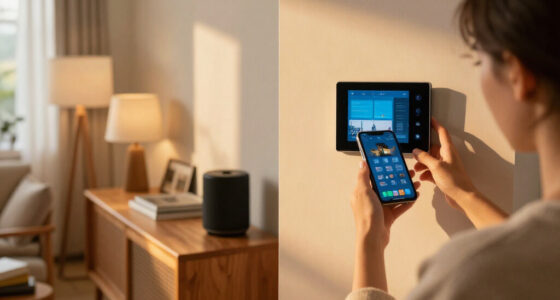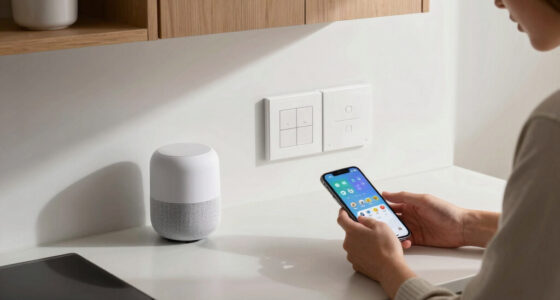
A smart display can quietly become the heart of your home because it manages all your connected devices, giving you easy control over lights, thermostats, and security cameras from one spot. It offers quick access to information like weather, reminders, and music with simple voice commands. Plus, it learns your routines to make daily tasks smoother. If you keep exploring, you’ll discover how to maximize its potential while keeping your privacy secure.

Get home appliances delivered free with Prime
- Fast, free delivery on millions of items
- Prime Video, Amazon Music and more included
- Member-only deals all year
Key Takeaways
- Smart displays centralize control of all connected devices, making household management more intuitive and convenient.
- Their visual interface provides quick access to information, routines, and smart home controls from a single hub.
- Voice recognition and adaptive learning enhance personalized experiences, encouraging regular interaction and reliance.
- They seamlessly integrate into daily routines, becoming a natural household command center.
- Privacy features and security measures foster trust, encouraging consistent use and placement in key areas.

Smart displays are quickly becoming the heart of modern homes, offering a seamless way to manage daily routines, control smart devices, and access information at a glance. With just a simple voice command, you can play your favorite music, check the weather, or get updates on your calendar. This level of convenience makes the smart display an intuitive hub for your household. You’ll find it easy to ask questions, set reminders, or even get step-by-step cooking instructions without interrupting your day. Its voice recognition technology allows your device to understand and respond to your commands naturally, creating a hands-free experience that streamlines household management. Additionally, many devices incorporate privacy considerations, allowing you to customize how and when your data is collected and used.
Smart displays simplify home management with voice commands for music, weather, reminders, and cooking tips.
However, as you rely more on voice recognition to interact with your smart display, privacy concerns naturally arise. These devices are constantly listening for their wake words, which means they’re always somewhat alert for your commands. While manufacturers implement security measures to protect your data, there’s always a risk that sensitive information could be intercepted or misused. You might worry about your conversations being recorded or stored without your full understanding. It’s essential to review privacy policies carefully and adjust settings to limit data sharing when possible. Still, the convenience of voice recognition often outweighs these concerns, especially when you’re mindful of how your information is handled. Understanding device security can help you make informed decisions about your privacy.
Your smart display becomes the central point because it connects all your smart devices, from lights and thermostats to security cameras. This integration means you can control everything from one interface, simplifying your interactions with your home’s technology. Instead of juggling multiple apps or remotes, you just speak your commands, and everything responds instantly. The display’s visual interface further enhances your experience by providing quick access to information, reminders, and controls. Over time, it learns your routines and preferences, adapting to serve you better. Device compatibility is key to ensuring your smart display can effectively manage all your connected gadgets. Additionally, ensuring device security is crucial to prevent unauthorized access and safeguard your household data. Staying informed about security updates helps maintain the integrity of your connected home ecosystem.
Despite these benefits, you might worry about privacy and data security. To mitigate this, you can disable certain features or turn off voice recognition when privacy is a top priority. Regularly updating your device’s software and using strong, unique passwords help protect your data. Ultimately, the smart display’s ability to centralize your household’s digital ecosystem makes it an indispensable tool — as long as you stay vigilant about privacy concerns. It quietly becomes the command center of your home, offering convenience and connectivity in a sleek, user-friendly package.
Products Worth Considering

Philips Hue Bridge Pro Smart Lighting Hub, 1-Pack

Levoit Eleva 300X Air Purifier with Fully Sealed HEPA Filtration and Smart Control

TCL 65-Inch R7D Series 4K UHD QLED Roku Smart TV
As an affiliate, we earn on qualifying purchases.
Frequently Asked Questions
How Secure Is My Data on a Smart Display?
Your data on a smart display is relatively secure, but it depends on the device and your settings. It uses data encryption to protect your information during transmission, and user authentication adds an extra layer of security. To keep your data safe, regularly update your device software, enable two-factor authentication, and review privacy settings. Being cautious helps prevent unauthorized access and keeps your personal info protected.
Can I Customize the Smart Display’s Appearance?
Yes, you can customize your smart display’s appearance. Many devices offer various customization options, allowing you to change wallpapers, clock styles, and widgets to match your home’s aesthetics. You can personalize display aesthetics to suit your taste, making your smart display blend seamlessly with your decor. These options let you create a more appealing and functional device, enhancing your overall experience and making your smart display a true centerpiece in your home.
What Privacy Features Does It Offer?
Think of your smart display as a vault, safeguarding your privacy with features like voice recognition that guarantees only you access certain functions. It uses data encryption to secure your information, acting as an unbreakable shield. You can control privacy settings easily, like turning off the microphone or camera when needed. This way, your personal space remains protected, making your smart display a trustworthy hub for your home.
How Does It Integrate With Existing Smart Home Devices?
Your smart display integrates seamlessly with existing smart home devices through its voice recognition and device compatibility features. You can control lights, thermostats, and security cameras effortlessly just by speaking commands. The device recognizes individual voices, ensuring personalized responses and secure access. Its compatibility spans various brands and platforms, making it easy to expand or customize your smart home setup without hassle.
Is It Suitable for Children’s Use?
Yes, a smart display can be suitable for children’s use when you prioritize child safety and set up parental controls. You can restrict access to certain content, limit screen time, and monitor activity, ensuring a safe environment. By customizing these settings, you provide a controlled and educational experience for your kids, while also giving yourself peace of mind knowing you’ve taken steps to protect them from inappropriate content and online risks.
Conclusion
Think of your smart display as the heart of your home’s symphony, quietly conducting daily life with graceful ease. Just like a maestro guides a harmonious orchestra, it brings everyone together—music, reminders, and conversations—without missing a beat. As it quietly settles into its role, your smart display becomes the steady pulse that keeps your house in perfect rhythm, making your everyday routines smoother and more connected, all from a single, unobtrusive hub.