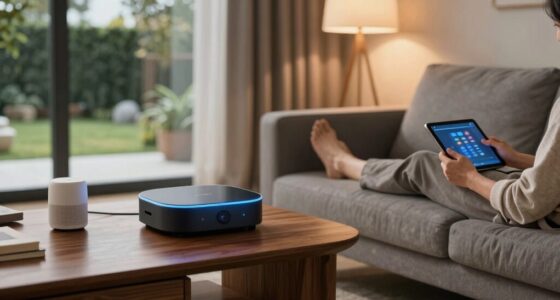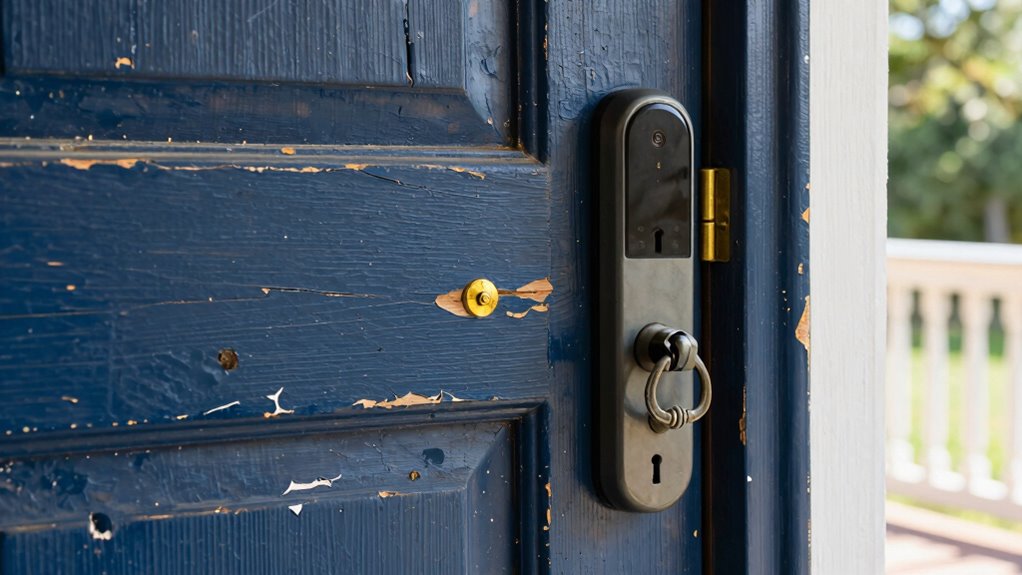

Before installing a smart lock, measure your door’s thickness and verify compatibility with existing hardware, like a deadbolt. Make certain it fits your door type and if any modifications are needed. Check that your door’s material and weather exposure suit the lock’s durability. Confirm the lock works with your smartphone or voice assistant for easier control. Taking these steps now helps prevent issues later—keep going to learn more about secure and seamless installation.

Get home appliances delivered free — and shop member deals
- Fast, free delivery on millions of items
- Access to Prime Big Deal Days deals on October 6–7
- Prime Video, Amazon Music and more included
Key Takeaways
- Measure door thickness and verify compatibility with the smart lock model.
- Ensure the existing deadbolt or hardware aligns with the lock’s installation requirements.
- Confirm the door’s material and condition support the smart lock’s mounting and operation.
- Check for sufficient space and clearance for proper lock installation and access.
- Evaluate if any modifications or additional components are needed for a secure fit.

Before you install a smart lock, evaluating your needs and understanding how the device will fit into your current security setup is vital. You want to guarantee the lock suits your lifestyle and provides the security level you require. One of the first considerations is the battery life. Smart locks rely on batteries to operate, so you need a model with a long-lasting battery that minimizes frequent replacements. Check reviews and specifications to find a lock with a reliable power source, and consider whether it has alerts to notify you when the batteries are running low. This way, you won’t be caught off guard with a lock that suddenly stops working.
Prioritize smart locks with long-lasting batteries and low-battery alerts to ensure continuous security and peace of mind.
Next, examine your door’s compatibility and the installation process. Not all doors are suitable for smart locks, especially if your door’s thickness or material doesn’t match the device’s requirements. Measure your door’s thickness and check if the lock fits snugly without requiring extensive modifications. The installation process should be straightforward; many smart locks are designed for DIY setup, but some may need professional help. Read the instructions carefully and look for models that offer clear, step-by-step guides or videos. A complicated installation can lead to errors or damage, so choosing a lock with an easy setup can save you time and frustration.
In addition, consider the type of lock you currently have. If you’re replacing an existing deadbolt, guarantee your chosen smart lock is compatible with that setup. Some models can retrofit onto existing hardware, making installation simpler. Others might require additional components or modifications, which could add to the cost and complexity. Being aware of your door hardware can help prevent surprises during installation. Additionally, understanding the smart lock features available can help you select a device that aligns with your security priorities. Familiarizing yourself with installation requirements can further ensure a smooth setup process and prevent compatibility issues.
Don’t forget to evaluate how the smart lock integrates with your overall security system. Does it work with your smartphone or voice assistant? Can you control it remotely? These features are essential if you want seamless access management. Also, consider the lock’s durability and weather resistance if your door is exposed to the elements. A sturdy, weatherproof design ensures the lock will perform reliably over time. Additionally, understanding the battery life of the smart lock helps you plan maintenance and avoid potential lockouts. Being aware of the security standards that the device meets can provide extra assurance of its reliability and safety.
Finally, think about how often you’ll need to change batteries or perform maintenance. A smart lock with a long battery life reduces the need for frequent upkeep, giving you peace of mind. Once you’ve checked these door basics, you’ll be better prepared to select a smart lock that meets your security needs and fits your door perfectly.
smart lock compatible with deadbolt
As an affiliate, we earn on qualifying purchases.
As an affiliate, we earn on qualifying purchases.
Frequently Asked Questions
Will a Smart Lock Work on All Door Types?
A smart lock won’t work on all door types because door material and lock compatibility matter. For example, metal or thick wooden doors may need specific smart lock models or additional hardware. Check the lock’s compatibility with your door’s material and thickness before buying. Some smart locks are designed for standard doors, but others require special adapters or may not fit certain materials. Always verify these factors first for a secure, proper fit.
Do I Need Professional Help to Install a Smart Lock?
They say, “A stitch in time saves nine,” so you can often handle smart lock installation yourself. For DIY installation, follow the manufacturer’s instructions carefully, but if you’re uncomfortable or encounter complications, consider locksmith assistance. While many smart locks are designed for easy setup, professional help guarantees the job’s done right, especially if your door isn’t standard or you want extra security. Trust your skills or call a pro—your choice.
How Does a Smart Lock Affect Home Security?
A smart lock enhances your home security by offering features like biometric access, which recognizes your fingerprint or face for secure entry. It also allows remote access, so you can lock or open your door from anywhere, giving you peace of mind. However, guarantee the lock’s technology is reliable and updated regularly to prevent hacking. Overall, a smart lock can boost security but requires proper setup and maintenance.
Can I Still Use a Traditional Key With a Smart Lock?
You can absolutely still use a traditional key with a smart lock—think of it as having a secret backup plan in case technology fails. Most smart locks feature key compatibility, allowing you to insert a physical key when needed. This backup option is essential for emergencies or power outages, ensuring you’re never locked out. Always verify your specific lock model’s backup options before installation to keep your home secure and accessible.
What Is the Average Lifespan of a Smart Lock?
The average lifespan of a smart lock is about 3 to 5 years, depending on battery life and durability concerns. You’ll need to replace batteries regularly to keep it functioning smoothly. High-quality models tend to be more durable and last longer, but it’s essential to monitor wear and tear. Proper maintenance, like cleaning and updating software, can also extend your smart lock’s lifespan, ensuring reliable security for years to come.
As an affiliate, we earn on qualifying purchases.
Conclusion
Before you plunge into installing that smart lock, remember it’s the gatekeeper to your castle—strong, secure, and reliable. By checking these door basics, you’re laying a solid foundation for peace of mind and seamless access. Think of it as tuning a finely crafted instrument; when everything’s in harmony, your smart lock will sing, offering both convenience and security. So, take these simple steps to make certain your home’s front door is ready for its high-tech upgrade.
smart lock with long-lasting batteries
As an affiliate, we earn on qualifying purchases.
As an affiliate, we earn on qualifying purchases.
weatherproof smart lock for outdoor door
As an affiliate, we earn on qualifying purchases.
As an affiliate, we earn on qualifying purchases.
Fall yard work Picks
leaf blowers
As an affiliate, we earn on qualifying purchases.