
TL;DR
iFixit’s teardown of Apple’s HomeView hub found that its display adhesive and the thermal bond between its heat shield and logic board made disassembly risky. The teardown also showed smaller speaker drivers in the wall-mounted model than in the tabletop version, though the two versions each cost $299 before the wall mount.
iFixit says Apple’s HomeView, a smart-home hub combining a seven-inch tablet-style display with a speaker, was difficult and risky to take apart. In its teardown, the repair site described unusually strong display adhesive and a tight thermal bond near the logic board, raising questions about how accessible repairs will be for owners.

Get home appliances delivered free with Prime
- Fast, free delivery on millions of items
- Prime Video, Amazon Music and more included
- Member-only deals all year
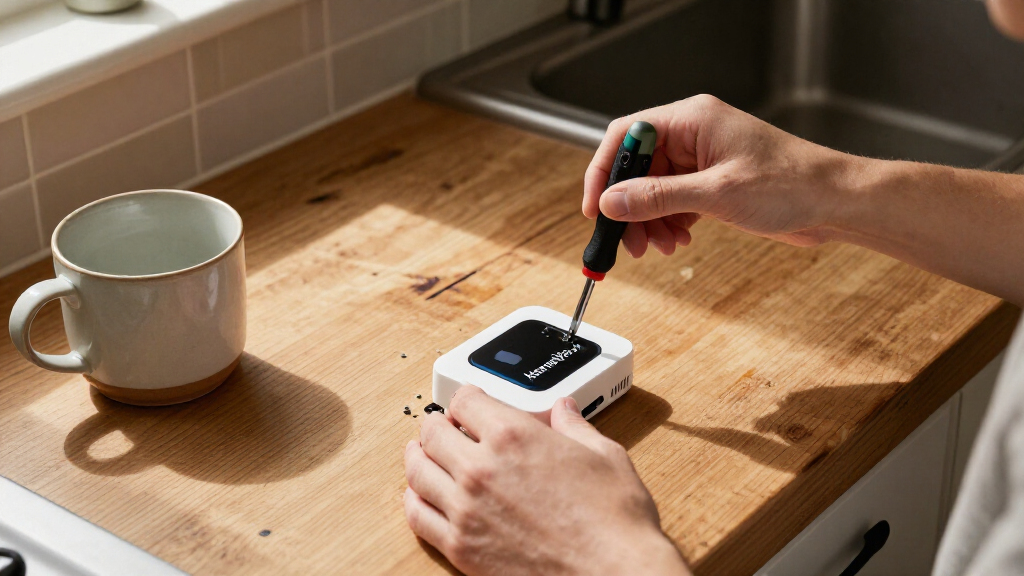
iFixit said it expected the HomeView to be relatively straightforward to disassemble after finding recent Apple iPads and HomePods easier to open for battery replacements and other repairs. The HomeView proved to be a different case. By the time the team had opened it, iFixit reported that it had ripped a connector, snapped a speaker in two and applied more force to the logic board than its technicians were comfortable with.
The display section posed the larger challenge. According to iFixit, the adhesive securing the screen held more firmly than adhesive on Apple products the team had opened recently. The teardown also found that Apple uses the HomeView’s aluminum chassis as a heat sink. Separating the heat shield from the logic board was difficult because of the thermal bond between them, which iFixit called a “remarkably risky operation.”
Those details describe what happened during iFixit’s disassembly, not a confirmed failure rate for devices in normal use. The teardown suggests that access to internal components may be challenging, but it does not establish how often HomeView owners will need repairs or how Apple’s authorized repair process will handle the device.
Why HomeView may be hard to repair What iFixit found
iFixit’s teardown found risky disassembly around the display and heat shield. The findings raise questions about repair access, but do not establish repair costs or failure rates.
Where disassembly got difficult
iFixit expected an easier teardown after recent Apple devices proved more accessible.
The screen adhesive held more firmly than on Apple products the team had opened recently.
Separating the heat shield from the logic board required force iFixit considered risky.
The team reported a ripped connector and a speaker snapped in two.
What buyers should weigh
The two configurations share a listed price, but differ in speakers and included accessories.
- $299 listed price
- Larger speaker drivers than the wall-mounted model
- $299 listed price
- Smaller speaker drivers
- Requires a separately sold mount; its price is not provided
What remains unknown
A teardown shows how this device came apart under iFixit’s examination, not how often owners will need service.
Service options
Apple’s repair methods, parts availability, and service pricing are not established by the report.
Sound differences
The report identifies smaller drivers in the wall model, but gives no listening tests or sound measurements.
Repair Access Could Be a Challenge
A device that is hard to open can make repairs more difficult, particularly when a repair requires removing the display or reaching parts behind it. The strong adhesive and bonded heat-shield assembly identified by iFixit could increase the risk of damage during disassembly and make some repairs less straightforward for independent repair shops or experienced owners.
The teardown matters to prospective buyers because ease of repair can affect the cost, time and practical options available when a component fails. But the findings do not by themselves show that the HomeView cannot be repaired, or establish what Apple will charge for service. iFixit’s account is a report on its own teardown, rather than a published repair-cost comparison or a long-term reliability study.
The teardown also raised a separate value question about the two HomeView configurations. iFixit’s video shows that the wall-mounted model has smaller speaker drivers than the tabletop version. Both models are priced at $299, while the wall-mounted option also requires a mount that is not included, according to the report. That means buyers comparing the versions may want to account for the accessory cost and the speaker differences, not just the listed price.
Products Worth Considering

Sonos Arc Ultra Dolby Atmos Soundbar, Black

Philips Hue Smart Light Starter Kit with Bridge and 4 White and Color A19 Bulbs

Dyson Airwrap i.d. Multi-Styler with Bluetooth Connectivity
As an affiliate, we earn on qualifying purchases.
What the Teardown Examined
iFixit approached the HomeView with expectations shaped by recent Apple devices. Its team had found newer iPads and HomePods easier to disassemble for tasks such as battery replacement, and expected the new hub to follow a similar pattern. The teardown instead found a design that was harder to separate, especially around the display and the heat-management components.
The HomeView is described as a seven-inch tablet attached to a smart speaker. iFixit examined both the repair challenges inside the device and differences between its tabletop and wall-mounted versions. Its video highlighted the latter models’ different speaker-driver sizes, while the accompanying teardown focused on the force and care required to open the tablet portion.
Apple’s use of the aluminum body as a heat sink is a design detail, not by itself evidence of a defect. iFixit’s criticism concerns the practical effect of the thermal bond when technicians try to separate the heat shield and logic board. The report says this arrangement may help streamline factory assembly, but does not provide evidence about Apple’s manufacturing process or confirm that assembly efficiency was the design’s intent.
““ripped a connector, snapped a speaker in two, and put more force on the poor logic board than any of us were comfortable with.””
— iFixit
Repair Costs and Methods Remain Unknown
The teardown does not establish how much Apple repairs will cost, whether the company offers replacement parts or procedures that avoid the risks iFixit encountered, or how difficult routine service will be outside a teardown setting. It also does not quantify repair times, compare the HomeView with other current hubs, or provide a broader assessment based on multiple devices.
It is also unclear how the speaker-driver differences affect sound in everyday use. iFixit’s video identifies smaller drivers in the wall-mounted version, but the supplied report gives no measurements or listening-test results. The wall model’s total price depends on the cost of its required, separately sold mount, which is not specified here.
Watch for Repair Details and Pricing
The next useful information for buyers would be Apple’s published repair options, parts availability and service pricing for the HomeView, if and when those details are provided. Those details could clarify whether the risks iFixit encountered during disassembly translate into more difficult or costly repairs through authorized channels.
For now, people comparing the two versions can weigh the $299 starting price for each model against the wall mount’s additional cost and the reported speaker-driver difference. iFixit’s teardown offers an early view of the device’s construction, but it does not answer how the product will perform over time or what repair will cost.
Source: rss
Key Questions
Why does iFixit say the Apple HomeView is difficult to repair?
iFixit reported that strong adhesive holds the display in place and that a thermal bond connects the heat shield to the logic board. The team said separating these parts was difficult and risked damaging components.
Did iFixit find that the HomeView cannot be repaired?
No. The teardown describes a challenging and risky disassembly, but it does not establish that the HomeView is impossible to repair or detail the repair methods Apple may offer.
Do the wall-mounted and tabletop HomeView models have the same speakers?
According to iFixit’s teardown video, the wall-mounted version has smaller speaker drivers than the tabletop model. The report does not provide sound measurements or listening-test results.
Do both HomeView versions cost $299?
The report says both versions are priced at $299. The wall-mounted version also requires a mount that is not included, so its total cost is higher once that accessory is added; the mount’s price is not given here.
Source: theverge.com