Integrating air quality sensors into your smart home lets you monitor pollutants like VOCs, CO2, and particulate matter in real-time. You can automate responses such as activating air purifiers or increasing ventilation to maintain a healthy environment effortlessly. Proper calibration guarantees sensor accuracy, so your data remains trustworthy for automation decisions. By understanding sensor science and best practices, you’ll optimize your system’s performance—keep going to discover how to harness these tools effectively.

Get home appliances delivered free with Prime
- Fast, free delivery on millions of items
- Prime Video, Amazon Music and more included
- Member-only deals all year
Key Takeaways
- Choose compatible air quality sensors that support your smart home platform’s connectivity protocols (e.g., Zigbee, Z-Wave, Wi-Fi).
- Integrate sensors with existing smart home hubs or controllers for seamless automation and data management.
- Calibrate sensors regularly to ensure accurate readings for reliable automation and alerts.
- Set up automation routines based on sensor data to control air purifiers, fans, or windows automatically.
- Monitor sensor data through unified dashboards or apps to analyze patterns and optimize indoor air quality strategies.

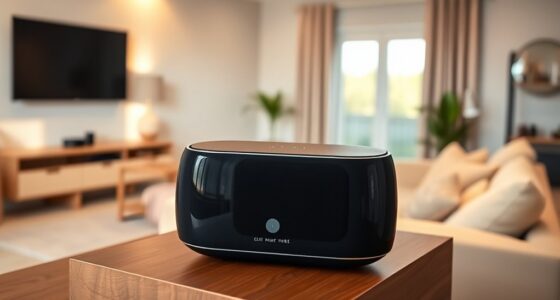
As smart home technology advances, air quality sensors have become essential for maintaining a healthy indoor environment. These devices continuously monitor air quality data, providing real-time insights into pollutants such as volatile organic compounds (VOCs), particulate matter, carbon dioxide, and humidity levels. By integrating air quality sensors into your smart home ecosystem, you gain the ability to automate responses that improve air quality, like activating air purifiers or adjusting ventilation systems automatically when sensor readings indicate poor air condition. This seamless integration makes your home not only smarter but healthier as well. Improving indoor air quality is crucial for overall wellbeing, and smart sensors make this process both efficient and effective.
Integrate air quality sensors to automate home responses and ensure a healthier indoor environment.
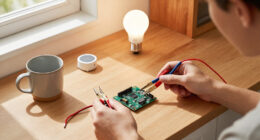
However, to guarantee that the air quality data you rely on is accurate and trustworthy, sensor calibration becomes crucial. Over time, sensors can drift from their initial calibration settings due to environmental factors or aging components. Regularly calibrating your sensors ensures they provide precise measurements, enabling your smart system to make correct decisions. Many modern sensors come with self-calibration features, but periodic manual calibration is often recommended for maintaining peak performance. Proper calibration involves comparing the sensor’s readings against a known standard and adjusting accordingly, which is simple but vital to consistent operation.
Integrating air quality sensors into your smart home isn’t just about connecting devices; it’s about creating a reliable and responsive system. You can set up your home automation platform to receive alerts if pollutant levels exceed safe thresholds, prompting immediate action or user notifications. Additionally, integrating sensors with other smart devices allows for sophisticated routines—such as increasing ventilation when CO2 levels rise or activating air purifiers when particulate matter reaches a certain point. These automated responses ensure your indoor air remains clean without requiring manual intervention, providing peace of mind and a healthier living environment.
Another advantage of integration is data analysis over time. With consistent air quality data, you can identify patterns related to daily routines, seasonal changes, or specific activities that impact indoor air quality. This information helps you make informed decisions, like improving ventilation during cooking or avoiding certain products that release VOCs. Coupling this data with sensor calibration records ensures that your analysis remains accurate and meaningful, reinforcing the importance of proper maintenance. Additionally, understanding the science behind sensor accuracy can help you select the best devices for your needs and ensure long-term reliable performance.
Products Worth Considering

Samsung 85 M80H Series Mini LED 4K Smart TV (2026)

Philips Hue Large Smart Light Tube, Black – White and Color Ambiance LED Color-Changing Light – 1 Pack

Shark Navigator Robot Vacuum with Self-Empty Base, Dark Grey (RV2120AE)
As an affiliate, we earn on qualifying purchases.
Frequently Asked Questions
How Do Air Quality Sensors Impact Energy Consumption?
Air quality sensors can slightly increase your home’s energy consumption because they require power to operate and communicate with your smart system. However, their sensor integration promotes energy efficiency by enabling your HVAC system to adjust based on real-time air quality data. This targeted control reduces unnecessary heating, cooling, or ventilation, ultimately saving energy while maintaining a healthier indoor environment. So, the benefits often outweigh the minimal energy use of the sensors.
Can Sensors Differentiate Between Indoor and Outdoor Pollutants?
Your sensors can definitely differentiate between indoor pollution and outdoor pollutants. They use advanced algorithms and specific filters to analyze pollutant types, enabling precise Indoor outdoor differentiation. This accuracy helps prevent indoor pollution from being masked by outdoor air, and vice versa. By smartly identifying pollutants, your system optimizes air quality management, making your home healthier — it’s like having a superhero fighting off harmful pollutants from every corner!
Are There Privacy Concerns With Continuous Air Monitoring?
Yes, there are privacy concerns with continuous air monitoring. You might worry about data security, as sensitive information about your home environment gets collected and stored. It is crucial to choose sensors with strong encryption and clear data policies. Be aware of who has access to your data and how it’s used. By staying informed and selecting reputable devices, you can protect your privacy while enjoying improved air quality monitoring.
How Often Should Air Quality Sensors Be Calibrated?
They say, “A stitch in time saves nine,” and that applies to sensor accuracy too. You should calibrate your air quality sensors every 3 to 6 months to guarantee reliable readings. Regular calibration maintains ideal sensor accuracy, helping you trust the data and make informed decisions about your home’s air quality. Keep a schedule to prevent drift and ensure your smart home remains a healthy space for everyone.
What Is the Typical Lifespan of an Air Quality Sensor?
You can expect an air quality sensor to last around 3 to 5 years, depending on its sensor durability and operating conditions. Regular maintenance and calibration can extend its lifespan, but eventually, you’ll need to evaluate replacement frequency as the sensor’s accuracy declines over time. Keep an eye out for signs like inconsistent readings or decreased sensitivity, which indicate it’s time to replace your sensor for reliable air monitoring.
Conclusion
By integrating air quality sensors into your smart home, you’re taking a vital step toward healthier living. These devices work seamlessly with your system, providing real-time data and automating responses to keep your environment safe. Remember, don’t put all your eggs in one basket—diversify your smart home setup for maximum protection. With sensors on your side, you can breathe easy, knowing you’ve covered all the bases for a cleaner, safer living space.