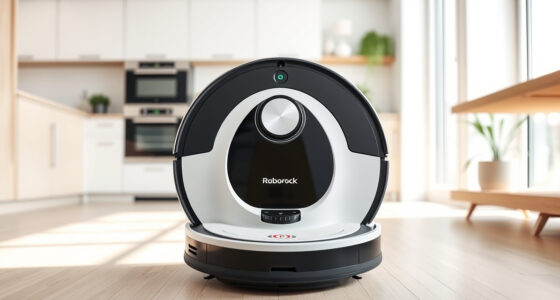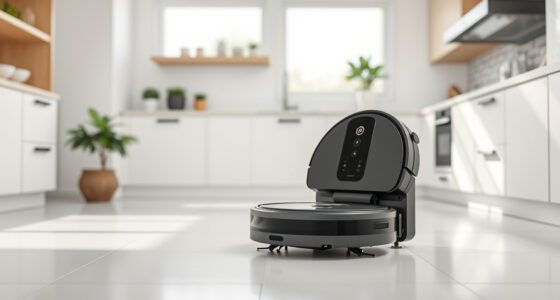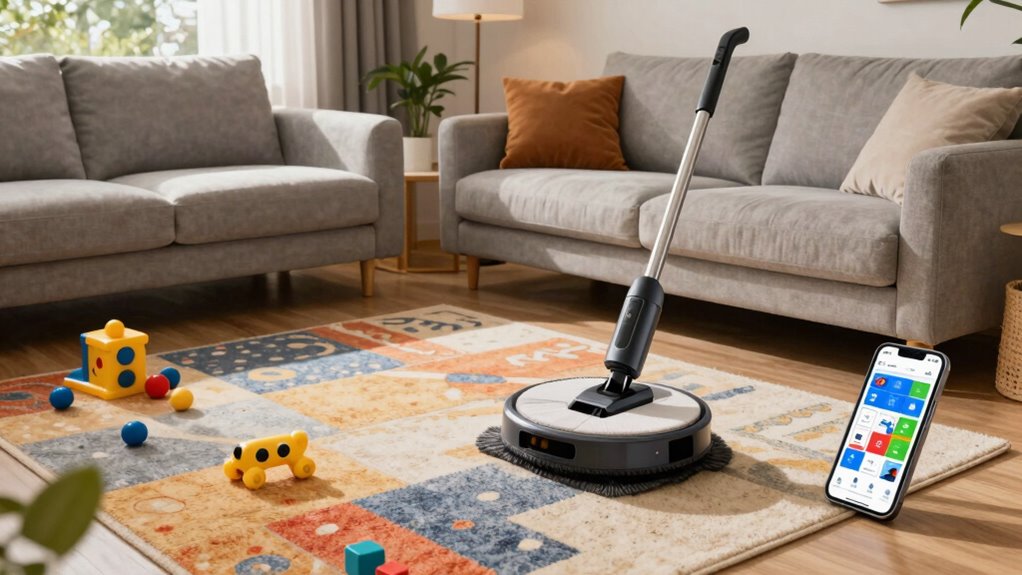

To get the best results from automated mopping, you need a smarter room strategy. Organize your space to avoid obstacles and guarantee clear pathways, which helps the machine move efficiently. Plan your cleaning zones and use boundary markers to focus on high-traffic or mess-prone areas. Adjust your setup regularly to match household activity. If you want to discover more ways to optimize your cleaning system, keep exploring how good planning maximizes efficiency and lifespan.

Get home appliances delivered free with Prime
- Fast, free delivery on millions of items
- Prime Video, Amazon Music and more included
- Member-only deals all year
Key Takeaways
- Automated moppers require optimized room layouts to navigate efficiently and avoid obstacles effectively.
- Smarter room strategies help prevent missed spots and ensure thorough cleaning coverage.
- Proper space organization minimizes obstructions, reducing the risk of device malfunctions or damage.
- Zone restrictions and virtual boundaries focus cleaning on high-priority areas, improving efficiency.
- Adapting room configurations enhances device performance and extends the lifespan of automated mopping systems.

Automated mops rely on programmed routines to keep your floors clean regularly. Setting an appropriate schedule ensures that your floors don’t accumulate dirt or grime, especially in high-traffic areas. You might want to schedule cleanings during times when you’re not home or when the house is less active. This way, the robot can work uninterrupted, covering more ground without interruptions or the need for your supervision. Additionally, adjusting schedules based on your home’s activity levels can prevent overworking the robot or missing critical cleaning windows. Incorporating robot navigation into your setup can further enhance its efficiency, especially when combined with a thoughtful room strategy. But even with perfect schedules and clean pathways, a smarter room strategy involves designing your space to complement the robot’s capabilities. For instance, placing frequently used furniture in a way that doesn’t obstruct the robot’s path can considerably enhance its efficiency. Using boundary markers or virtual walls can also help restrict the robot to specific zones, ensuring it concentrates on high-traffic areas or delicate surfaces. This strategic planning reduces the chances of the robot wasting time in less important areas or bumping into obstacles. Proper space organization can significantly improve the robot’s effectiveness and longevity. Being mindful of obstacle placement and potential hazards can further enhance the robot’s performance. Developing a smart technology integration plan can also help your system adapt better to changing conditions in your home. Creating a cleaning schedule based on your household’s unique needs can optimize the robot’s performance and reduce unnecessary runs. In essence, automated mopping systems are powerful tools that can keep your floors spotless with minimal effort. But to truly maximize their potential, you need to develop a smarter room strategy. Proper organization, well-planned cleaning schedules, and thoughtful space design work hand-in-hand with robot navigation to deliver a cleaner home. It’s about creating an environment where technology can operate at its best, giving you more time and less hassle. With a little planning, your automated mopping system becomes not just a device, but a reliable partner in maintaining your home’s cleanliness.
automated mopping robot boundary markers
As an affiliate, we earn on qualifying purchases.
As an affiliate, we earn on qualifying purchases.
Frequently Asked Questions
How Do Different Flooring Types Affect Automated Mopping Efficiency?
Different flooring types considerably impact automated mopping efficiency due to flooring compatibility and surface sensitivity. Hard surfaces like tile and sealed hardwood allow the mop to glide smoothly, ensuring thorough cleaning. Conversely, delicate floors such as unsealed wood or laminate require gentle settings to avoid damage. You should adjust the robot’s settings based on the surface to optimize cleaning, prevent harm, and maintain the longevity of your flooring.
Can Automated Moppers Adapt to Cluttered or Dynamic Room Layouts?
Automated moppers struggle with cluttered or dynamic room layouts, but with effective clutter management, they can adapt better. You should clear pathways and secure loose items to enhance room adaptability. Modern models are improving in obstacle detection, yet they still benefit from a smarter room strategy. Regularly updating the layout and removing obstacles helps the robot navigate efficiently, ensuring thorough cleaning without interruptions or damage.
What Safety Features Are Essential for Automated Mopping Devices?
You need to guarantee your automated mopping device has safety sensors like obstacle detection and fall sensors, which actively prevent accidents. An emergency stop button is essential, allowing you to immediately halt operation if issues arise. Investigating these features reveals they reduce risks, but their effectiveness depends on proper maintenance and calibration. Prioritizing these safety features creates a safer environment, giving you peace of mind during cleaning sessions.
How Often Should Automated Mops Be Maintained for Optimal Performance?
You should follow a regular maintenance schedule, ideally checking and cleaning your automated mop weekly. Cleaning frequency depends on usage; if you mop daily, a thorough clean twice a week is recommended. Regularly empty the water tank, clean the brushes, and inspect for debris. This routine guarantees peak performance, prevents malfunctions, and extends the device’s lifespan. Staying consistent with maintenance keeps your automated mopping device efficient and effective.
Do Automated Mopping Systems Integrate With Smart Home Ecosystems?
Yes, automated mopping systems can integrate with your smart home ecosystem, making your cleaning routine feel almost magical. With voice command and app control, you can summon your mop from across the house or schedule cleanings effortlessly. Imagine telling your smart speaker, “Start mopping,” and watching it spring into action—it’s like having your own personal cleaning genie, turning chores into a seamless, high-tech experience.
robot vacuum and mop zone restriction kits
As an affiliate, we earn on qualifying purchases.
As an affiliate, we earn on qualifying purchases.
Conclusion
To maximize your automated mopping system’s potential, you need a smarter room strategy. Did you know that 60% of dirt ends up in just a few high-traffic zones? By focusing on these areas, you can guarantee a cleaner home with less effort. Remember, a tailored approach helps your robot work smarter, not harder. So, plan your room layouts wisely, and enjoy a fresher, more efficient clean every time.
As an affiliate, we earn on qualifying purchases.
automated mopping schedule timer
As an affiliate, we earn on qualifying purchases.
As an affiliate, we earn on qualifying purchases.
Halloween Picks
halloween
As an affiliate, we earn on qualifying purchases.