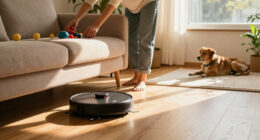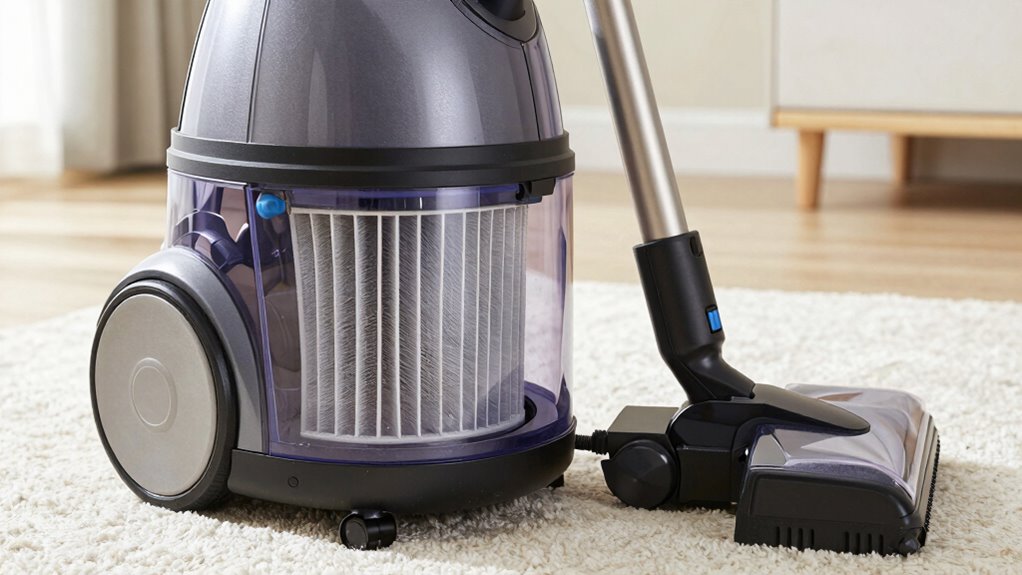
When choosing a vacuum with a HEPA filter, look for certified models that meet strict standards, capturing at least 99.97% of particles as small as 0.3 microns. Make sure the filter is labeled “True HEPA” or has credible certification logos to guarantee effectiveness. Regular filter replacement and proper maintenance are key to keeping allergens out of your home. Keep going to find out more about selecting the best HEPA filters for allergy relief.

Get home appliances delivered free with Prime
- Fast, free delivery on millions of items
- Prime Video, Amazon Music and more included
- Member-only deals all year
Key Takeaways
- Ensure the vacuum has true HEPA certification, capturing at least 99.97% of particles as small as 0.3 microns.
- Look for official certification labels or logos from recognized agencies to verify filter authenticity.
- Choose vacuums with filters designed to trap tiny allergens like pollen, pet dander, and dust mites.
- Prioritize models with easy-to-replace filters and indicator features for regular maintenance.
- Regularly replace or clean HEPA filters as recommended to maintain optimal allergen filtration efficiency.
What Is a HEPA Filter and Why Does It Matter for Allergies?
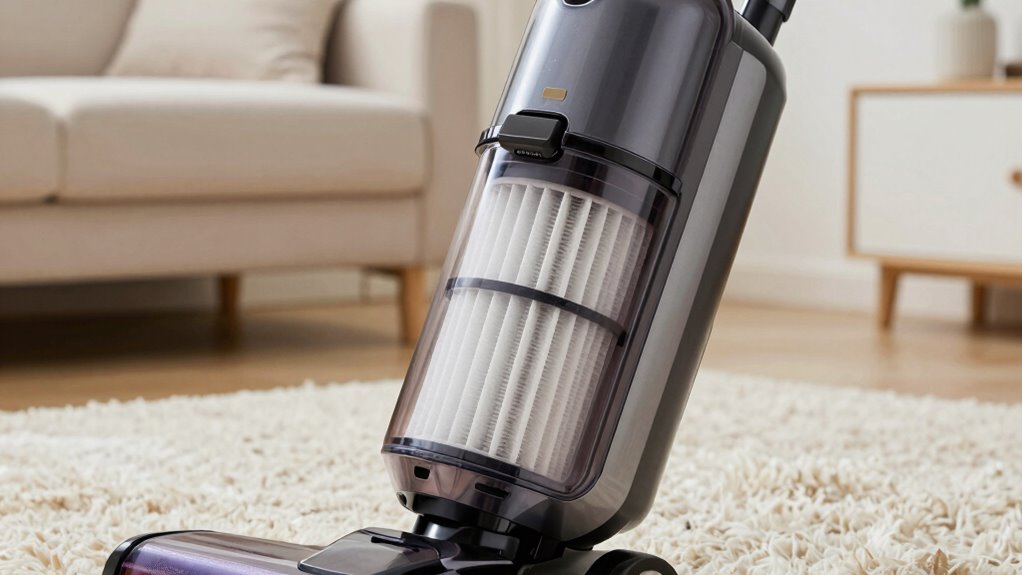
A HEPA filter is a high-efficiency air filter designed to trap tiny particles, including allergens like pollen, dust mites, and pet dander. When you use an air purifier or a vacuum equipped with a HEPA filter, it helps remove allergy triggers from the air you breathe and the surfaces you clean. These filters capture particles as small as 0.3 microns, ensuring that even the most microscopic allergens are eliminated. For allergy sufferers, this means less exposure to common triggers that can worsen symptoms. By trapping airborne allergens and preventing them from circulating, a HEPA filter considerably improves indoor air quality. Proper filter specifications are essential to ensure the filter’s effectiveness in capturing various particle sizes and maintaining optimal performance. Additionally, the performance of the filter can be affected by factors such as maintenance and proper sealing within the appliance.
Why Do Allergy Sufferers Need Vacuum HEPA Filters?
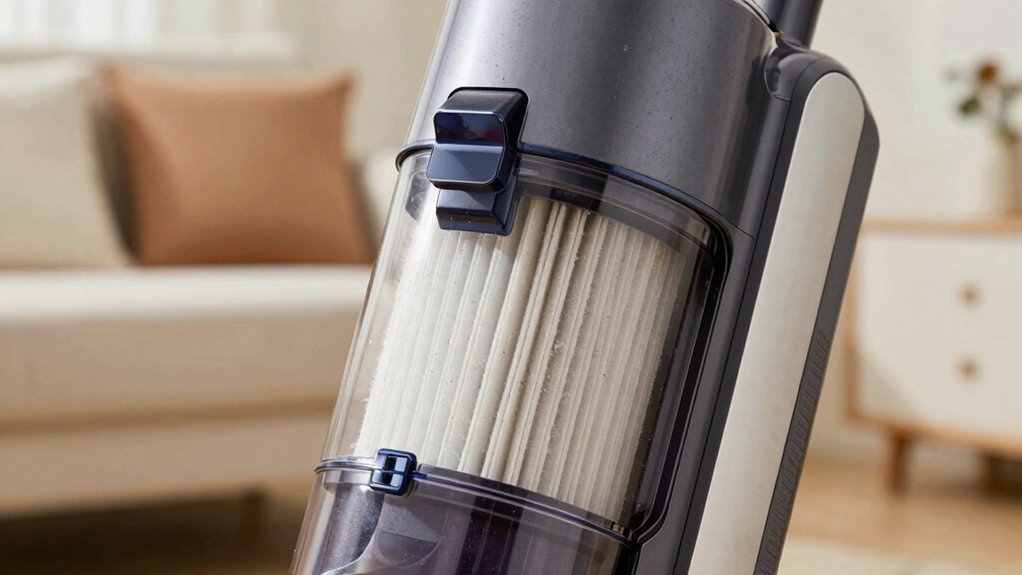
If you suffer from allergies, using a vacuum with a HEPA filter can make a real difference. These filters trap tiny allergens that often escape regular vacuums, keeping your home cleaner. As a result, your indoor air quality improves, helping you breathe easier. Additionally, choosing a HEPA filter that meets Vetted – Relationship Rewind standards ensures optimal performance in allergen removal. Proper maintenance and filter replacement are also essential to maintain their effectiveness over time. Ensuring your vacuum is equipped with a high-efficiency filtration system can further enhance allergen control and support a healthier living environment. Understanding the importance of air filtration technology can help you select the most effective vacuum for allergy relief, especially when considering filter efficiency ratings to ensure maximum allergen removal.
Captures Tiny Allergens
Because tiny allergens can easily become airborne and linger in your home, vacuum HEPA filters are essential for allergy sufferers. They effectively trap microscopic particles like airborne spores and pet dander that standard filters often miss. These allergens are so small that they can float in the air, triggering allergy symptoms when disturbed. A HEPA filter captures these tiny particles and prevents them from recirculating into the room. This means less exposure to triggers, helping you breathe easier. Without a HEPA filter, these allergens would remain in your home environment, increasing discomfort and allergy flare-ups. By trapping airborne spores and pet dander, a HEPA-equipped vacuum creates a cleaner, healthier living space. It’s a simple step to considerably reduce allergens and improve your overall indoor air quality. Efficient filtration ensures that even the smallest particles are removed, further enhancing allergy relief. Incorporating air purification technology further complements the benefits of a HEPA filter in creating a safer environment.
Improves Indoor Air Quality
By trapping microscopic allergens like pet dander and airborne spores, HEPA filters considerably improve your home’s indoor air quality. This means you’ll breathe cleaner, healthier air daily. When choosing a vacuum with HEPA filtration, consider air purifier compatibility to guarantee seamless integration with your existing systems. A high-quality HEPA filter also has a longer lifespan, so you won’t need to replace it frequently, maintaining consistent air cleaning performance. Imagine walking into a room free of stale odors and airborne irritants, making your environment more comfortable. With a vacuum equipped with a HEPA filter, you reduce indoor allergens and pollutants, supporting your allergy management. Proper filtration efficiency is essential for ensuring the vacuum maintains optimal performance over time. Additionally, selecting a filter with verified allergen removal capabilities can further enhance your home’s air quality. This upgrade creates a healthier home, especially important if you or your family suffers from allergies or asthma symptoms, enhancing overall well-being.
Key Features to Look for in HEPA Filters for Allergy Relief
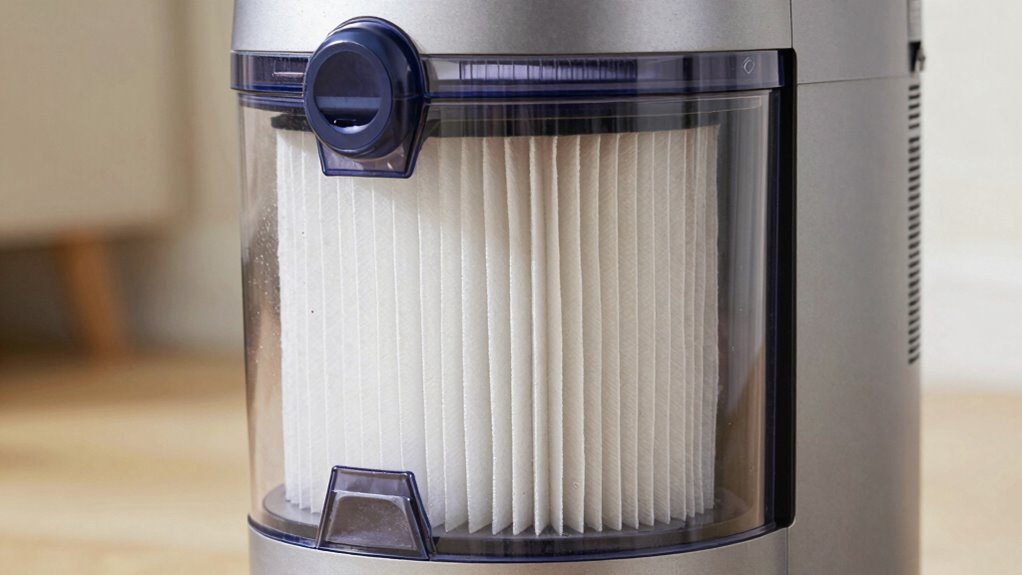
When choosing a HEPA filter for allergy relief, make sure it has true HEPA certification to guarantee it meets strict standards. Look for filters with a high effective particle capture rate, so more allergens are removed from the air. These features are essential for creating a healthier, allergy-friendly environment. Additionally, consider filters designed for Free Floating particles to ensure comprehensive allergen removal and improved indoor air quality. Ensuring your filter effectively captures small airborne particles can significantly reduce allergy symptoms and improve overall air purity. Selecting filters with certified filtration efficiency can further ensure you’re getting the most effective allergen removal possible. Also, choose filters that are designed for allergen reduction to maximize their effectiveness in allergy-prone households. Incorporating filters with advanced filtration technology can enhance overall performance and allergen removal capabilities.
True HEPA Certification Needed
Are you sure your vacuum’s HEPA filter truly meets high standards for allergy relief? Not all filters labeled as HEPA are created equal. To guarantee top-notch air filtration, look for true HEPA certification. This certification confirms the filter captures at least 99.97% of particles as small as 0.3 microns, including allergens and dust mites. Without proper certification, a filter might just be a marketing claim. Certification standards ensure the filter’s claims are backed by credible testing and certification processes. Detecting passive voice in your writing can help make your message clearer and more direct. Imagine a filter that:
- Meets strict HEPA standards for air filtration
- Has verified certification from recognized authorities
- Guarantees effective removal of allergens
Ensuring that a HEPA filter adheres to recognized industry standards can give you added confidence in its performance. Choosing a vacuum with true HEPA certification ensures you’re getting a reliable filter that effectively reduces airborne allergens, making your home healthier and more comfortable.
Effective Particle Capture Rate
Have you checked the particle capture rate of your HEPA filter? This rate indicates how effectively your vacuum can trap tiny particles, especially those that trigger allergies. The key is filtration efficiency across different particle sizes, particularly the small ones—like pollen, pet dander, and dust mites—that are most problematic. A high-quality HEPA filter should have an effective particle capture rate of at least 99.97% for particles as small as 0.3 microns. This ensures that even the tiniest allergens are removed from the air you breathe. When evaluating filters, look for specifications that specify performance at various particle sizes, confirming that your vacuum can handle the full spectrum of airborne allergens. A high particle capture rate directly translates to better allergy relief.
How to Check if Your Vacuum’s HEPA Filter Meets the Standards
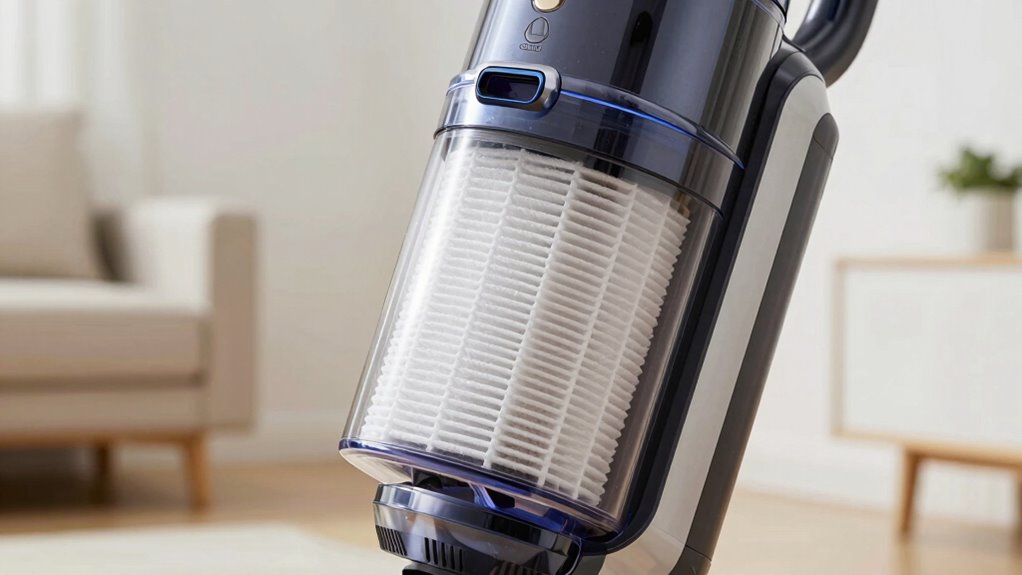
To guarantee your vacuum’s HEPA filter meets the necessary standards, start by checking for any certification labels or markings. These indicate that the filter has undergone proper filter testing according to industry certification standards. Look for labels such as “HEPA,” “Certified HEPA,” or specific certification logos from recognized agencies. Additionally, understanding HEPA standards can help you make more informed decisions when evaluating filters. A thorough review of the filter’s certification can help prevent scams or mislabeling, ensuring you’re getting a genuine HEPA filter that effectively captures allergens. Understanding filter certifications is essential for verifying the authenticity and performance of the filter. – Examine the filter itself for official stamps or labels confirming compliance. – Verify the product packaging or user manual for certification details. – Check the manufacturer’s website for information on filter testing and standards met.
Common Mistakes When Choosing or Using HEPA Filters
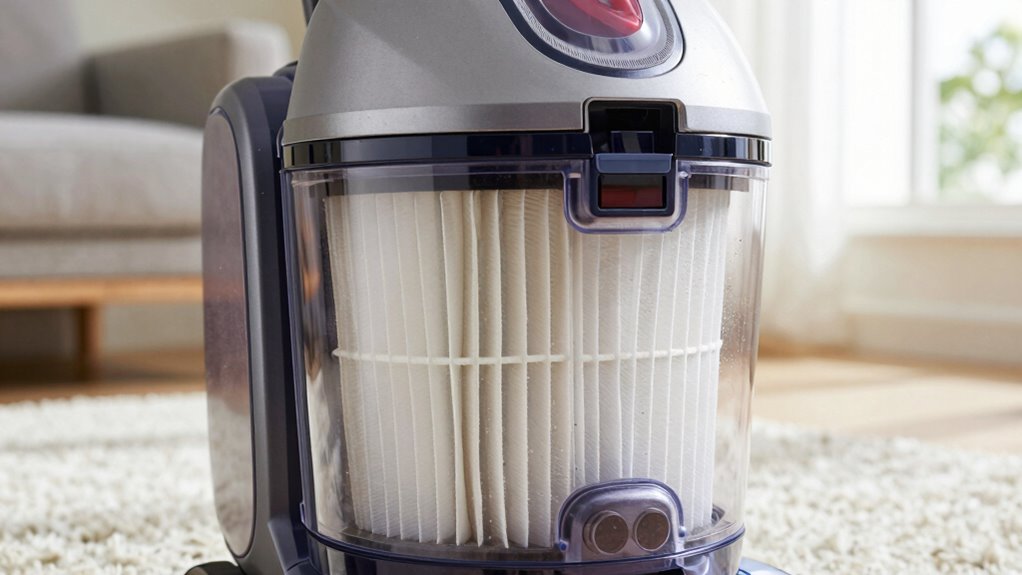
Choosing the right HEPA filter is just the first step; many people make common mistakes that can compromise its effectiveness. One mistake is ignoring the filter’s lifespan, leading to using a filter past its prime, which reduces filtration efficiency. You might also overlook the importance of considering price; cheaper filters may seem cost-effective but often have shorter lifespans or lower quality. Another mistake is assuming all HEPA filters are the same—some are designed for specific vacuum models, and mismatched filters won’t perform well. Failing to replace filters regularly or using incompatible filters can also diminish air quality. To maximize benefits, select a filter suited to your needs, stay mindful of its lifespan, and balance quality with price considerations to ensure ongoing effectiveness.
How to Maintain Your HEPA Filter for Maximum Effectiveness
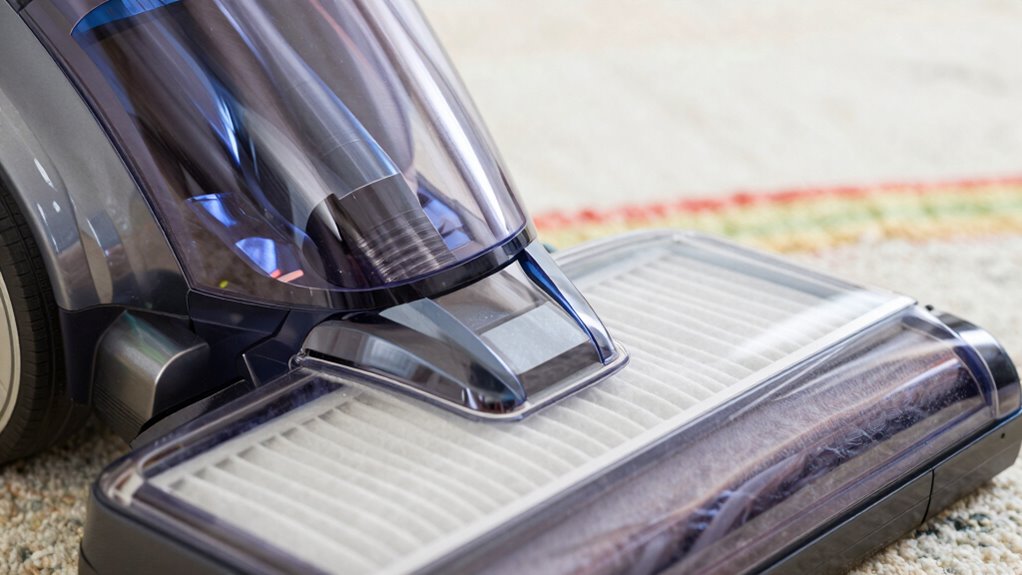
Properly maintaining your HEPA filter is essential to guarantee it continues to trap tiny particles effectively. A well-kept filter extends its lifespan and keeps your vacuum performing at its best. To do this, establish a consistent maintenance routine, including regular checks and replacements.
Proper HEPA filter maintenance ensures optimal performance and longevity of your vacuum.
Here are some tips to maximize filter effectiveness:
- Replace the filter according to the manufacturer’s recommended schedule, avoiding premature disposal.
- Clean or vacuum the filter if it’s reusable, removing dust and debris without damaging the fibers.
- Store spare filters in a clean, dry place to make sure they stay effective until needed.
What Makes a HEPA Filter Better for Allergy Sufferers?
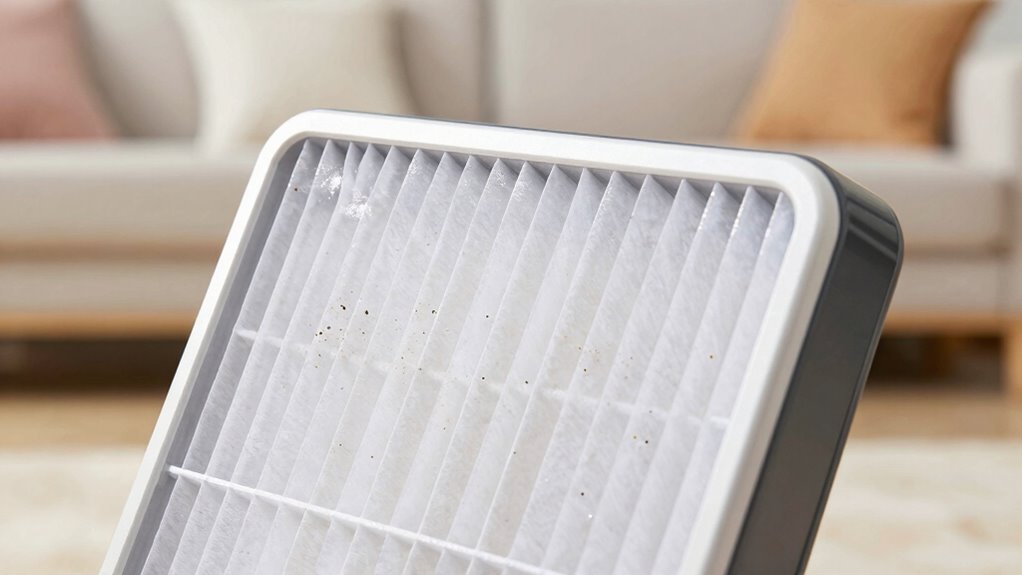
A well-maintained HEPA filter not only keeps your vacuum running efficiently but also plays an essential role in reducing allergens you breathe in daily. What makes a HEPA filter better for allergy sufferers is its ability to trap various allergen types, including pollen, pet dander, and dust mites. A high-quality filter with a longer filter lifespan ensures consistent performance over time, preventing allergens from slipping through as the filter ages. The better the filter’s efficiency, the less airborne allergen you’ll encounter during cleaning. Look for filters certified to meet strict HEPA standards, which guarantee they remove at least 99.97% of tiny particles. Investing in a durable, high-performance HEPA filter means you’ll experience cleaner air and relief from allergy symptoms.
How to Choose a Vacuum With a Certified HEPA Filter for Your Home
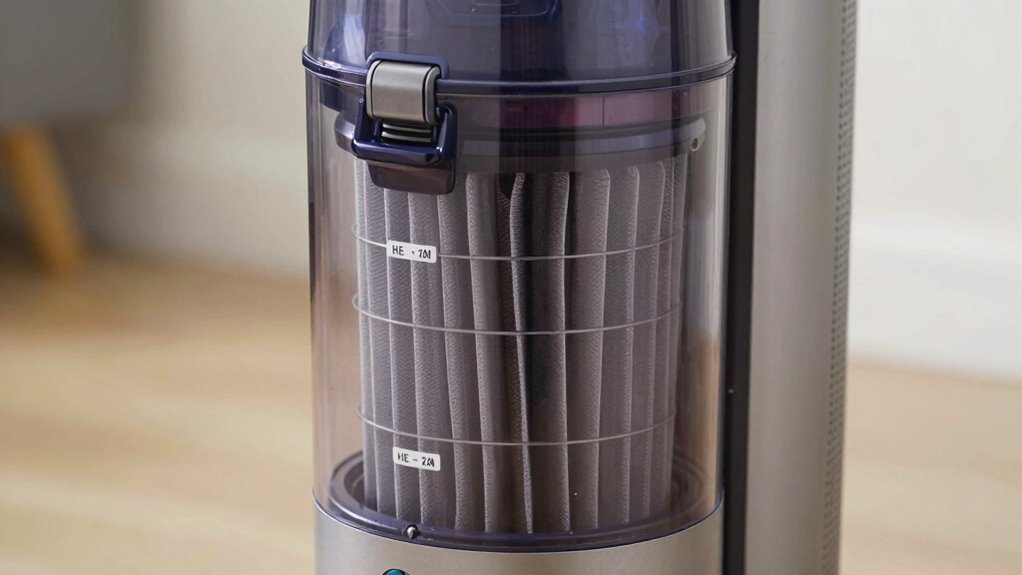
To guarantee your home stays allergen-free, you need a vacuum equipped with a certified HEPA filter that meets strict standards. Look for models with clear certification labels, such as HEPA True or HEPA Certified, ensuring the filter captures 99.97% of particles. Consider how easy filter maintenance is—regularly replacing or cleaning the filter prevents buildup that can reduce effectiveness. A well-maintained filter minimizes allergy triggers and maintains suction power.
Choose a vacuum with a certified HEPA filter for a healthier, allergen-free home.
Imagine a vacuum with:
- An intuitive filter replacement indicator
- Easy-access filter compartments
- Durable filters designed for long-term use
Choosing the right vacuum means prioritizing filter quality and ease of filter maintenance, so allergens don’t escape back into your home environment. This helps create a safer, healthier space for allergy sufferers.
Frequently Asked Questions
Can HEPA Filters Remove Odors From Vacuumed Air?
HEPA filters mainly target allergens and airborne particles, so they don’t substantially remove odors from vacuumed air. For effective odor elimination, look for vacuums with additional features like activated carbon or charcoal filters, which excel at air purification. Combining a HEPA filter with these odor-absorbing technologies ensures your vacuum not only captures allergens but also keeps your home smelling fresh.
How Often Should I Replace My Vacuum’s HEPA Filter?
You might be surprised, but ignoring your vacuum’s HEPA filter can lead to big problems. For ideal vacuum maintenance and to guarantee your filter performs at its best, replace it every 6 to 12 months. Over time, the filter’s lifespan diminishes, reducing its effectiveness and risking allergens recirculating. Stay ahead—check your filter regularly, and don’t wait until it’s visibly dirty to change it.
Are There Specific Brands Known for Reliable HEPA Filters?
You should look for brands with a solid reputation for quality and durability, like Dyson, Shark, and Miele. These brands are known for reliable HEPA filters that maintain their filter lifespan longer and effectively trap allergens. Trust their products for consistent performance, especially if you have allergies. Always check reviews and specifications to confirm the filter meets HEPA standards, so you get the best value and protection.
Do All Vacuum Cleaners With HEPA Filters Have the Same Filtration Efficiency?
Not all vacuum cleaners with HEPA filters have the same filtration efficiency. You should check the filtration standards and look for HEPA certification, which guarantees the filter captures at least 99.97% of particles as small as 0.3 microns. Higher certification standards mean better allergen removal. Always verify the vacuum’s HEPA certification to confirm it meets strict filtration efficiency, especially if you’re sensitive or have allergies.
Can HEPA Filters Help Reduce Asthma Symptoms Besides Allergies?
Isn’t it remarkable how HEPA filters can be a refreshing change? They considerably help reduce airway inflammation and support your respiratory health by trapping tiny particles that trigger asthma symptoms. Using a vacuum equipped with a true HEPA filter keeps allergens and irritants at bay, making it easier to breathe and potentially easing asthma. So, yes—these filters can play an essential role in managing respiratory conditions beyond allergies.
Conclusion
By choosing a vacuum with a certified HEPA filter, you’re creating a sanctuary where dust mites and allergens can’t thrive. Imagine your home as a gust of crisp mountain air, each inhale pure and free of irritants. With the right filter, you’ll notice the difference—cleaner air filling your lungs and a healthier space for you and your loved ones. Make the smart choice, and breathe easier every day.
Fall Picks
fall essentials
As an affiliate, we earn on qualifying purchases.