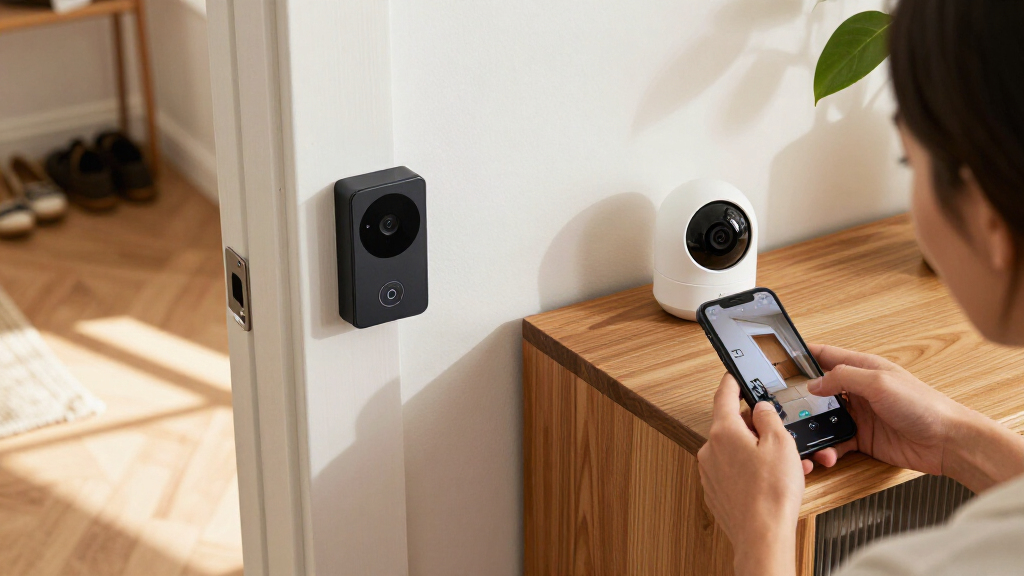

The best smart home security device for most homes is the Ring Alarm 8-Piece Home and Business Security System, because it covers multiple doors and windows out of the box while leaving room to expand later. Renters and budget-conscious buyers get more immediate value from the Blink Outdoor 4 three-camera system, which delivers wire-free outdoor monitoring without a contract. At the other end, the Ring Alarm Pro 14-Piece Kit doubles as a Wi-Fi 6 router, and the Reolink 16-channel PoE systems offer serious property coverage with no subscription fees at all. The main tradeoff in this category is convenience versus long-term cost: subscription-based systems like Ring and Blink are easy to set up and monitor, while local-storage systems from Reolink and eufy cost more upfront but almost nothing over time. Coverage scale matters too, since a one-bedroom apartment needs a very different setup than a large home or small business. Keep reading for the full breakdown of which device fits which situation.

Get home appliances delivered free with Prime
- Fast, free delivery on millions of items
- Prime Video, Amazon Music and more included
- Member-only deals all year
Complete the kit


Key Takeaways
- Subscription economics were the single biggest differentiator: Ring and Blink hardware is cheap upfront but monthly fees compound, while Reolink PoE systems and the eufy alarm kit cost nothing ongoing after purchase.
- The four Ring Alarm kits ranked in order of coverage scale, with the 8-piece kit hitting the sweet spot for most homes, while the 14-piece kits only make sense for larger properties or businesses.
- Cameras and alarm systems solve different problems, and the best setups combine both — the Blink Outdoor 4 covers the yard while the Ring Alarm or eufy kit protects entry points.
- Wired options like the Reolink 16-channel systems and the Blink Wired Floodlight demand more installation effort but deliver reliability and image quality that battery cameras can’t match.
- Single-purpose devices like the Tapo T31 sensor kit and the Orbitell video doorbell ranked lower overall only because of narrow scope, not poor quality — they’re excellent add-ons rather than standalone solutions.
| Blink Outdoor 4 Wireless Security Camera System, 3 Cameras |  | Best Multi-Camera Value | Camera count: 3 | Video resolution: 1080p HD | Night vision: Infrared | VIEW LATEST PRICE | See Our Full Breakdown |
| 21-Piece Wi-Fi Home Alarm System with Alexa Compatibility |  | Best Full-House Sensor Coverage | Included pieces: 21 | Connectivity: 2.4 GHz Wi-Fi | Compatible devices: Amazon Alexa, Smart Life, Tuya | VIEW LATEST PRICE | See Our Full Breakdown |
| Reolink Argus PT Ultra 4K Solar-Powered Wireless Outdoor Security Camera |  | Best Premium Camera | Resolution: 4K (8MP) | Power: Battery with 3W solar panel | Connectivity: 2.4GHz and 5GHz Wi-Fi | VIEW LATEST PRICE | See Our Full Breakdown |
| Blink Wired Floodlight Security Camera, 2600 Lumens, White |  | Best for Driveways and Dark Yards | Lighting: 2600 lumens LED | Video: 1080p HD live view | Night view: Color | VIEW LATEST PRICE | See Our Full Breakdown |
| eufy Security 5-Piece Home Alarm Kit |  | Best Beginner Alarm Kit | Included components: HomeBase, keypad, motion sensor, 2 entry sensors | Installation: DIY with included mounts | Monthly fees: None | VIEW LATEST PRICE | See Our Full Breakdown |
| Ring Alarm 5-Piece Wireless Security System Kit |  | Best Starter Alarm System | Included components: Base station, keypad, contact sensor, motion detector, range extender | Connectivity: Wireless | App control: Ring app | VIEW LATEST PRICE | See Our Full Breakdown |
| Ring Alarm 8-Piece Home and Business Security System |  | Best for Small Homes | Kit size: 8 pieces | Included components: Base station, keypad, 4 contact sensors, motion detector, range extender | Recommended home size: 1–2 bedrooms | VIEW LATEST PRICE | See Our Full Breakdown |
| Ring Alarm 14-Piece Wireless Security System Kit |  | Best for Whole-Home Coverage | Kit contents: 1 base station, 2 keypads, 8 contact sensors, 2 motion detectors, 1 range extender | Recommended home size: 2–4 bedrooms | Connectivity: Wireless | VIEW LATEST PRICE | See Our Full Breakdown |
| Ring Alarm Pro 14-Piece Kit with Built-In eero Wi-Fi 6 Router |  | Best Premium Security Hub | Kit contents: 1 Alarm Pro base station, 2 keypads, 8 contact sensors, 2 motion detectors, 1 range extender | Router: Built-in eero Wi-Fi 6 | Wi-Fi speed: Up to 900 Mbps | VIEW LATEST PRICE | See Our Full Breakdown |
| Tapo T31 Smart Door and Window Sensor Starter Kit with Hub, 3 Sensors |  | Best Budget Entry Sensor Kit | Included sensors: 3 Tapo T110 contact sensors | Included hub: 1 Tapo H100 Smart Hub with built-in chime | Wireless protocol: Sub-G | VIEW LATEST PRICE | See Our Full Breakdown |
| Reolink 16-Channel 12MP PoE Security Camera System with 4TB HDD |  | Best for Large Property Coverage | Model: RLK16-1200D8-A | Video Resolution: 12MP (4512 × 2511) | Cameras Included: 8 | VIEW LATEST PRICE | See Our Full Breakdown |
| Reolink 16CH 4K Security Bullet Camera System with 4TB HDD (RLK16-800B8) |  | Best Wired Value for Whole-Home Recording | Model: RLK16-800B8 | Resolution: 4K Ultra HD (8MP) | Channels: 16CH NVR | VIEW LATEST PRICE | See Our Full Breakdown |
| Orbitell 1080p Wireless Wi-Fi Video Doorbell Camera |  | Best Budget Front-Door Sentry | Resolution: 1080p | Connectivity: 2.4GHz Wi-Fi only | Storage: Cloud (AES-128 encrypted) | VIEW LATEST PRICE | See Our Full Breakdown |
| smart home security device | Connectivity |
|---|---|
| Blink Outdoor 4 Wireless Secur | — |
| 21-Piece Wi-Fi Home Alarm Syst | 2.4 GHz Wi-Fi |
| Reolink Argus PT Ultra 4K Sola | 2.4GHz and 5GHz Wi-Fi |
| Blink Wired Floodlight Securit | — |
| eufy Security 5-Piece Home Ala | — |
| Ring Alarm 5-Piece Wireless Se | Wireless |
| Ring Alarm 8-Piece Home and Bu | — |
| Ring Alarm 14-Piece Wireless S | Wireless |
| Ring Alarm Pro 14-Piece Kit wi | Ethernet, Wi-Fi, Z-Wave, Bluetooth; cellular backup with subscription |
| Tapo T31 Smart Door and Window | — |
| Reolink 16-Channel 12MP PoE Se | Wired PoE |
| Reolink 16CH 4K Security Bulle | PoE (Power over Ethernet) |
| Orbitell 1080p Wireless Wi-Fi | 2.4GHz Wi-Fi only |
More Details on Our Top Picks
Blink Outdoor 4 Wireless Security Camera System, 3 Cameras
Three wire-free cameras in one box make this the easiest way to blanket a whole property without touching a drill or a wiring diagram. The standout spec is up to two years of battery life per camera, which sets it apart from the solar-dependent Reolink Argus PT Ultra — no panel placement puzzles, just mount and forget. Compared with the Blink Wired Floodlight, you trade bright lighting and continuous power for total placement freedom. The tradeoff is the subscription wall: person detection and cloud clip storage require a paid plan, and the included Sync Module Core doesn’t support local storage, so there’s no free workaround. Resolution also tops out at 1080p, which is fine for identifying a visitor but lags the 4K Reolink for detail like faces at distance.
Pros:- Up to two years of battery life per camera with batteries included
- Three cameras plus Sync Module in a single package
- Two-way audio and dual-zone enhanced motion detection
- Works with Alexa for voice control and live view
Cons:- Person detection and cloud storage require a paid subscription
- Sync Module Core doesn’t support local storage, so there’s no free clip storage option
Best for: Homeowners who want to cover a front yard, driveway, and backyard with multiple cameras and no wiring at all
Not ideal for: Buyers who refuse to pay a subscription — without a plan you lose person detection and stored clips
- Camera count:3
- Video resolution:1080p HD
- Night vision:Infrared
- Audio:Two-way talk
- Battery life:Up to 2 years (6 AA Energizer lithium batteries included)
- Motion detection:Dual-zone enhanced
- Local storage:Not supported with included Sync Module Core
- Compatibility:Alexa
Our verdict“This kit makes the most sense for anyone who wants broad multi-camera coverage with near-zero maintenance, as long as they’re comfortable paying for cloud storage.”
21-Piece Wi-Fi Home Alarm System with Alexa Compatibility
Where the eufy 5-piece kit covers a front door and one room, this 21-piece kit secures nearly every opening in an average home — door and window contact sensors plus PIR motion detection, all reporting to a single hub. The 120 dB siren is loud enough to be genuinely disruptive to an intruder, something camera-only picks like the Blink Wired Floodlight can only approximate with a smaller built-in chime. A 48-hour battery backup means a power cut doesn’t disable the system, and there are no monthly fees. The catch: everything rides on 2.4 GHz Wi-Fi, so a large home or a router far from the hub can produce dropped connections, and the listed video resolution doesn’t correspond to any described camera — this is a siren-and-sensor system, not a surveillance one.
Pros:- 21 pieces cover far more entry points than 5-piece starter kits
- No SIM card, contract, or monthly fees required
- 120 dB siren plus app push notifications and voice control
- Up to 48 hours of battery backup during outages
Cons:- Depends entirely on 2.4 GHz Wi-Fi reliability
- No actual camera included despite a video resolution spec
Best for: Owners of small-to-medium homes who want every door and window monitored without professional installation or fees
Not ideal for: Houses with weak 2.4 GHz coverage or anyone expecting built-in cameras — this system detects but doesn’t record
- Included pieces:21
- Connectivity:2.4 GHz Wi-Fi
- Compatible devices:Amazon Alexa, Smart Life, Tuya
- Siren volume:120 dB
- Sensor range:Up to 330 feet
- Battery backup:Up to 48 hours
- Control methods:App, push button, remote, voice
Our verdict“The strongest pick here for whole-home intrusion detection on a budget, provided your Wi-Fi reaches every corner of the house.”
Reolink Argus PT Ultra 4K Solar-Powered Wireless Outdoor Security Camera
This is the image-quality ceiling of the wireless picks: 4K recording with color night vision, versus 1080p on both Blink cameras. The 355° pan and 140° tilt mean one camera can replace two or three fixed units — a genuine cost argument against the three-camera Blink Outdoor 4 bundle if your priority is detail over coverage redundancy. The attached 3W solar panel largely eliminates charging stops, and person/vehicle/pet detection with custom zones cuts false alerts without a subscription. Two honest tradeoffs: storage needs a separately purchased microSD card (though that’s a one-time cost, not recurring), and pan-tilt mechanics plus solar positioning give it a bulkier footprint than the sleek fixed-mount Blink Outdoor 4.
Pros:- 4K resolution with color night vision and motion spotlight
- Solar panel removes routine battery charging
- 355° pan and 140° tilt replace multiple fixed cameras
- Person, vehicle, and pet detection with local microSD storage — no subscription
Cons:- microSD card sold separately, so it’s not usable out of the box without an extra purchase
- Larger and more conspicuous than compact fixed cameras
Best for: Detail-focused buyers who want to capture faces and license plates and prefer one camera that can sweep a wide area
Not ideal for: Rental tenants or anyone wanting a subtle, minimal-looking camera on a small entry — it’s noticeably larger than compact wire-free models
- Resolution:4K (8MP)
- Power:Battery with 3W solar panel
- Connectivity:2.4GHz and 5GHz Wi-Fi
- Pan / Tilt:355° / 140°
- Night vision:Color with motion spotlight
- Detection:Person, vehicle, and pet with custom zones
- Storage:microSD card (purchased separately)
Our verdict“This model is the pick when image detail and subscription-free local storage matter more than discreet looks or spread-out coverage.”
Blink Wired Floodlight Security Camera, 2600 Lumens, White
The 2600-lumen floodlight is the whole point here — no other camera in this lineup actively illuminates an area the way this one does, and the color night view beats the Blink Outdoor 4’s infrared grayscale when you need to see what color car pulled in. Because it’s wired into existing outdoor wiring, there’s no battery to swap and no solar panel to position, making it more set-and-forget than the Reolink Argus PT Ultra in that one respect. But the wiring requirement cuts both ways: renters and homes without a junction box are simply out. Like the Blink Outdoor 4, it gates person detection and clip storage behind a subscription, and the Sync Module for local storage is another separate purchase, so the true cost runs higher than the box suggests.
Pros:- 2600 lumens of motion-activated lighting doubles as a deterrent
- Color night view instead of infrared-only grayscale
- Built-in siren and customizable dual-zone motion detection
- Wired power means no battery or solar maintenance ever
Cons:- Requires existing outdoor wiring and a compatible junction box
- Person detection and cloud clips need a subscription; Sync Module and local storage media sold separately
Best for: Homeowners with existing outdoor wiring above a driveway or side yard who want bright deterrence, not just recording
Not ideal for: Renters or anyone without a junction box — the wired design is a hard requirement, not an option
- Lighting:2600 lumens LED
- Video:1080p HD live view
- Night view:Color
- Audio:Two-way with built-in siren
- Motion detection:Dual-zone, customizable
- Power:Wired to existing outdoor wiring
- Compatibility:Alexa
Our verdict“The right choice for a dark driveway where lighting matters as much as footage — skip it if you can’t hardwire.”
eufy Security 5-Piece Home Alarm Kit
This is the least intimidating entry into whole-home alarm ownership: HomeBase, keypad, motion sensor, and two entry sensors, mounted with included hardware and managed through a single app, with no monthly fees ever. Compared with the 21-piece Wi-Fi system, the appeal is simplicity — five components, one evening of setup, no sensor sprawl — but coverage is the obvious gap: two entry sensors protect exactly two openings, so a home with multiple ground-floor windows will outgrow it fast. Unlike the Ring Alarm kits elsewhere in this roundup, there’s no monitoring upgrade path at all, which cuts both ways: nothing to pay, but also no professional backup if an alarm fires while you’re unreachable. The keypad is the underrated piece, letting household members arm and disarm without fumbling for a phone.
Pros:- Simple DIY installation with included mounts and keypad arming
- No monthly fees for alerts or system use
- App notifications for both motion and entry breaches
- Keypad allows arm/disarm without a smartphone
Cons:- Only two entry sensors included, limiting coverage to two openings
- No optional professional monitoring path if you want backup
Best for: Apartment dwellers or first-time alarm buyers who want to secure a door and one room with zero ongoing cost
Not ideal for: Multi-entry homes — two sensors can’t cover more than a front and back door without buying extras
- Included components:HomeBase, keypad, motion sensor, 2 entry sensors
- Installation:DIY with included mounts
- Monthly fees:None
- Alerts:eufy Security app notifications for motion or breaches
- Control:Keypad and app
Our verdict“The cleanest starting point for small spaces and alarm beginners, as long as two door/window sensors actually covers your entry points.”
Ring Alarm 5-Piece Wireless Security System Kit
This five-piece kit is the simplest entry point into a full Ring Alarm setup, covering one door and one motion zone straight out of the box. Compared with the Ring Alarm 8-Piece Kit, it costs less upfront but leaves most doors and windows unmonitored until you buy extra contact sensors — a cost that adds up quickly. The base station, keypad, and range extender are identical to the larger kits, so there’s no penalty for starting small. The real tradeoff is the subscription wall: professional monitoring, Alexa voice control, and remote arming all sit behind a Ring Protect plan, which makes the true cost of ownership higher than the box suggests. For a renter or someone securing a single entry point, that’s an acceptable compromise.
Pros:- Includes all five core components needed for a working alarm
- Fully expandable with additional Ring sensors and accessories
- Mobile notifications and app-based monitoring included
- Same base hardware as Ring’s larger kits, so no capability ceiling
Cons:- Professional monitoring and Alexa control require a paid subscription
- Only one contact sensor and one motion detector included
- Add-on sensors are sold separately and needed for real coverage
Best for: Renters and first-time buyers who want a proven alarm platform they can grow into over time
Not ideal for: Homeowners with multiple entry points — you’ll spend heavily on add-on sensors and might as well buy a bigger kit
- Included components:Base station, keypad, contact sensor, motion detector, range extender
- Connectivity:Wireless
- App control:Ring app
- Voice assistant compatibility:Alexa
- Expandability:Additional sensors and accessories sold separately
- Professional monitoring:Available with compatible Ring Protect subscription
Our verdict“Buy this if you want the Ring ecosystem at its cheapest entry point and plan to expand gradually; skip it if you need whole-home coverage on day one.”
Ring Alarm 8-Piece Home and Business Security System
The eight-piece kit hits a sweet spot for one- and two-bedroom homes, supplying four contact sensors so front door, back door, and ground-floor windows can all be protected without immediate add-on purchases. Compared with the five-piece kit, the extra sensors close the biggest gap in Ring’s lineup; compared with the 14-piece kit, it avoids paying for hardware a small space won’t use. Ring also positions this kit for small business use, which makes sense given the sensor count. The familiar caveat applies: remote arming, backup connectivity, and 24/7 monitoring are all subscription features, so the hardware alone gives you a loud local alarm rather than a monitored service. If you want camera-free perimeter protection for a modest home, this is the balanced choice.
Pros:- Four contact sensors cover multiple doors and windows out of the box
- Mobile notifications and device monitoring through the Ring app
- Expandable with additional sensors as needs grow
- Optional professional monitoring suits home or business use
Cons:- Remote arming, backup connectivity, and monitoring all require a subscription
- Additional sensors beyond the included four are sold separately
Best for: Owners of one- to two-bedroom homes or small shops who want multi-entry coverage without buying add-ons immediately
Not ideal for: Larger homes with three or more bedrooms — the four sensors won’t stretch far enough and the 14-piece kit offers better value per sensor
- Kit size:8 pieces
- Included components:Base station, keypad, 4 contact sensors, motion detector, range extender
- Recommended home size:1–2 bedrooms
- Monitoring:Optional 24/7 professional monitoring via Ring Protect Plan
- App:Ring app
- Voice control:Alexa, with Ring Protect subscription
Our verdict“The right-sized Ring kit for compact homes — enough sensors to matter on day one without paying for a larger home’s hardware.”
Ring Alarm 14-Piece Wireless Security System Kit
Stepping up to the 14-piece kit gets you eight contact sensors, two motion detectors, and two keypads — enough to protect a two- to four-bedroom home with a keypad upstairs and down, which is a genuine convenience the smaller kits can’t match. Compared with the 8-Piece Kit, the value argument is straightforward: buying those extra sensors individually costs more than the difference between kits, so bigger homes save money here. Compared with the Alarm Pro 14-Piece Kit, you give up the built-in eero router but avoid reconfiguring your entire network around the security system. The subscription dependency remains the main drawback — cellular backup and professional monitoring both sit behind Ring Protect — but for hardware coverage per dollar, this is Ring’s most complete package.
Pros:- Eight contact sensors and two motion detectors cover large homes immediately
- Dual keypads allow arming from multiple floors or entry points
- Expandable with additional Ring sensors and accessories
- Optional professional monitoring and cellular backup available
Cons:- Remote arming, cellular backup, monitoring, and Alexa control all require a subscription
- Add-on sensors for further expansion are sold separately
Best for: Families in two- to four-bedroom homes who want every ground-floor door and window monitored from day one
Not ideal for: Small apartments — most of the eight sensors will sit in a drawer, and the 5-piece kit covers the same need for less
- Kit contents:1 base station, 2 keypads, 8 contact sensors, 2 motion detectors, 1 range extender
- Recommended home size:2–4 bedrooms
- Connectivity:Wireless
- App control:Ring app
- Alexa compatible:Yes; subscription required
- Professional monitoring:Available with compatible Ring Protect Plan
Our verdict“The best hardware-per-dollar choice for larger homes that need full perimeter coverage without piecemeal sensor shopping.”
Ring Alarm Pro 14-Piece Kit with Built-In eero Wi-Fi 6 Router
The Alarm Pro takes the standard 14-piece kit and swaps the base station for one with a built-in eero Wi-Fi 6 router supporting speeds up to 900 Mbps across 1,500 sq. ft. That’s the pitch: one device handling both network and security, with a 24-hour rechargeable battery backup keeping the alarm live during outages. Compared with the standard Ring Alarm 14-Piece Kit, the tradeoff is structural — the Pro is designed to replace your existing router and connect directly to your modem, which means reworking your network setup and potentially buying eero extenders for larger homes. Cellular backup also requires the subscription, which undercuts some of the resilience the battery suggests. For tech-forward households already planning a mesh upgrade, the consolidation is genuinely appealing; for everyone else, it’s complexity without clear benefit.
Pros:- Built-in eero Wi-Fi 6 router supports speeds up to 900 Mbps
- Up to 24 hours of rechargeable battery backup during power outages
- App-guided installation simplifies setup
- Full 14-piece sensor load covers large homes out of the box
Cons:- Must replace your existing router and connect directly to the modem
- Cellular backup, monitoring, and remote features require a subscription
- Wi-Fi extenders and additional sensors are sold separately
Best for: Tech-minded homeowners planning a router upgrade anyway, who want security and Wi-Fi consolidated in one hub
Not ideal for: Households happy with their existing router — the mandatory network rework adds hassle without meaningful security benefit
- Kit contents:1 Alarm Pro base station, 2 keypads, 8 contact sensors, 2 motion detectors, 1 range extender
- Router:Built-in eero Wi-Fi 6
- Wi-Fi speed:Up to 900 Mbps
- Coverage:Up to 1,500 sq. ft.
- Battery backup:Rechargeable, up to 24 hours
- Connectivity:Ethernet, Wi-Fi, Z-Wave, Bluetooth; cellular backup with subscription
- Warranty:1-year limited warranty
Our verdict“A smart two-in-one for households ready to rebuild their network around it; overkill for anyone who just wants an alarm system.”
Tapo T31 Smart Door and Window Sensor Starter Kit with Hub, 3 Sensors
Not everyone needs a full alarm — sometimes you just want to know when a door or window opens. The Tapo T31 kit covers exactly that with three contact sensors and a hub that doubles as a 90 dB chime, at a fraction of a Ring Alarm kit’s complexity. Where the Ring Alarm 5-Piece Kit is a true security system with professional monitoring options, the Tapo is an awareness layer: real-time notifications, customizable alarms, and smart home automations rather than dispatch services. Its platform support is actually broader than Ring’s — Matter, Alexa, Google Home, Apple HomeKit, and SmartThings all work, and the CR2032 batteries last up to two years. The limitations are real though: the sensors are useless without the Tapo hub, and everything requires a 2.4 GHz network. For supplemental coverage or a first dip into smart security, it’s an easy recommendation.
Pros:- Three sensors plus a hub with built-in 90 dB chime included
- Works with Matter, Alexa, Google Home, Apple HomeKit, and SmartThings
- CR2032 batteries rated for up to two years
- Tool-free magnetic or adhesive mounting
Cons:- Sensors cannot operate without the Tapo hub
- Requires a 2.4 GHz Wi-Fi network
- No path to professional monitoring like Ring’s subscription options
Best for: Budget-conscious buyers and smart home tinkerers who want entry monitoring and automations across multiple platforms
Not ideal for: Anyone wanting real intrusion protection — there’s no professional monitoring, siren-driven deterrence is limited to 90 dB, and coverage stops at three openings
- Included sensors:3 Tapo T110 contact sensors
- Included hub:1 Tapo H100 Smart Hub with built-in chime
- Wireless protocol:Sub-G
- Maximum connected devices:64 sensors, switches, and buttons
- Alarm volume:90 dB
- Battery:CR2032, up to 2 years
- Compatibility:Matter; Alexa, Google Home, Apple HomeKit, Samsung SmartThings
Our verdict“The cheapest credible way to add open/close alerts and automations to a smart home — just don’t mistake it for a monitored alarm.”
Reolink 16-Channel 12MP PoE Security Camera System with 4TB HDD
For anyone securing a full-size property with eight or more camera positions, this system makes the most sense. The 12MP resolution is a real step up from the sibling Reolink RLK16-800B8 — 4512 × 2511 pixels means you can crop into a frame and still read a license plate, where 4K footage starts to blur faster. Color night vision with motion-activated spotlights also gives it an edge over the RLK16-800B8’s standard night mode when identifying faces after dark. Compared with the Reolink Argus PT Ultra, you give up wireless convenience but gain 24/7 recording to a local 4TB drive instead of relying on batteries or cloud clips. The tradeoffs are real: the default 20 fps frame rate makes fast motion look slightly choppy, and despite 24-channel expansion support, only 16 cameras can actually be PoE or plug-in Wi-Fi units.
Pros:- 12MP resolution captures detail well beyond standard 4K systems
- Color night vision with configurable motion-activated spotlights
- Person, vehicle, and pet detection cuts down irrelevant alerts
- Local 4TB storage with motion, scheduled, and 24/7 recording options
Cons:- 24-channel expansion is capped at 16 PoE or plug-in Wi-Fi cameras
- Default 20 fps frame rate is lower than smoother 30 fps competitors
Best for: Homeowners with large properties who want many wired camera positions, local storage, and maximum detail for identifying people and vehicles
Not ideal for: Renters or anyone unwilling to run Ethernet cable through walls — the wired PoE design demands permanent installation
- Model:RLK16-1200D8-A
- Video Resolution:12MP (4512 × 2511)
- Cameras Included:8
- NVR Channels:16 PoE ports; expandable to 24 channels
- Storage:4TB HDD
- Connectivity:Wired PoE
- Night Vision:Color night vision, 100 ft range
- Viewing Angle:93 degrees
- Compatibility:iOS, Android, Windows, macOS
Our verdict“This is the pick if you need to blanket a large property in high-detail wired cameras with everything stored locally.”
Reolink 16CH 4K Security Bullet Camera System with 4TB HDD (RLK16-800B8)
This option stands out as the practical middle ground in the wired Reolink lineup: you still get eight cameras, 4K clarity, smart person and vehicle detection, and a 4TB drive recording around the clock. Compared with the Reolink RLK16-1200D8-A, the resolution drop from 12MP to 8MP matters most if you plan to digitally zoom into footage often — for general monitoring of doors, driveways, and yards, 4K holds up well. Unlike the Reolink Argus PT Ultra, there are no batteries to recharge and no reliance on cloud storage, which appeals to buyers who want footage that lives on their own hardware. The tradeoffs are the ecosystem lock-in: cameras only work with Reolink PoE NVRs, and there is no Alexa or Wi-Fi camera support, so smart-home integrators will feel boxed out. Installation, at least, is genuinely simple with a single-cable PoE connection running up to 330 feet.
Pros:- 4K footage with enough clarity for useful digital zoom
- Smart detection of people and vehicles reduces false alarms
- Single-cable PoE installation supports runs up to 330 feet
- 4TB HDD supports continuous recording and expands to 16TB
Cons:- No compatibility with Wi-Fi cameras or Alexa smart-home devices
- Cameras are proprietary and only function with Reolink PoE NVRs
Best for: Homeowners who want an eight-camera, 24/7 locally recorded system without paying for maximum resolution
Not ideal for: Smart-home enthusiasts who want Alexa routines or Wi-Fi camera flexibility — this system is fully locked to its own NVR
- Model:RLK16-800B8
- Resolution:4K Ultra HD (8MP)
- Channels:16CH NVR
- Storage:4TB HDD (expandable to 16TB)
- Connectivity:PoE (Power over Ethernet)
- Max Cable Length:Up to 330 ft
- Warranty:2 years
Our verdict“A strong wired pick for buyers who prioritize continuous local recording over smart-home integration and extreme resolution.”
Orbitell 1080p Wireless Wi-Fi Video Doorbell Camera
Not everyone needs an eight-camera fortress — sometimes a single well-designed doorbell camera answers the front-door question. This model’s AI motion detection distinguishes people from vehicles and animals, the same filtering trick that makes the full Reolink systems pleasant to live with, but here in a simple wireless package. The pre-capture recording means you see the moments before an event triggered, not just after — useful for catching a package thief’s approach. Compared with the Blink Wired Floodlight Camera, this is easier to install since it runs on Wi-Fi without hardwiring, though it trades away the floodlight illumination. Resolution is a modest 1080p, well below the Reolink systems’ 4K and 12MP, so fine detail at a distance is limited. The bigger caution: it connects to 2.4GHz networks only, and the cloud storage that powers its best features likely requires a subscription, an ongoing cost the wired NVR setups avoid entirely.
Pros:- AI detection filters animals and vehicles to cut false alerts
- Pre-capture recording catches the moments before an event triggers
- Four-LED night vision performs well after dark
- IP65 weather-resistant housing handles outdoor exposure
Cons:- 2.4GHz-only Wi-Fi rules out many newer router configurations
- Cloud storage features likely require a paid subscription
Best for: Renters and first-time buyers who want simple AI-filtered monitoring of their front door without wiring or a full camera system
Not ideal for: Owners of modern mesh routers running 5GHz-only networks, or buyers who refuse recurring cloud subscription costs
- Resolution:1080p
- Connectivity:2.4GHz Wi-Fi only
- Storage:Cloud (AES-128 encrypted)
- Audio:Two-way talk
- Night Vision:4 infrared LEDs
- Weather Resistance:IP65
- Smart Features:AI motion detection, pre-capture recording
Our verdict“A sensible low-commitment entry point for front-door security, as long as you have 2.4GHz Wi-Fi and accept possible subscription costs.”

How We Picked
I evaluated every device in this lineup against four buyer-relevant criteria. First was total cost of ownership: not just the sticker price, but what monitoring, cloud storage, or subscription plans add over three years of use. Second was coverage and scalability — how many entry points, cameras, or zones each kit handles out of the box and how easily it expands. Third was installation burden, since a system you never install protects nothing; battery and wireless options scored well for renters, while wired systems earned credit for reliability only if the setup effort was justified. Fourth was ecosystem fit, meaning Alexa compatibility, app quality, and how well each device plays with a broader smart home.
The ranking logic follows a simple principle: the best overall picks are the ones that balance all four criteria for the widest range of buyers, while specialized picks rank by how completely they serve their niche. That’s why mid-size alarm kits sit near the top, expandable systems fill the middle, and single-purpose devices like doorbell cameras and sensor starter kits round out the list — not because they’re inferior products, but because they answer narrower questions. Every product here earned its place by being the right answer for someone; the job of this guide is matching you to the right one.
Factors to Consider When Choosing Best Smart Home Security Devices
Before picking a specific product, it helps to understand the structural decisions that shape every smart home security purchase. These are the factors that determine whether a system will still work for you three years from now, not just on day one.Subscription Versus Local Storage
The most expensive mistake in this category is comparing hardware prices while ignoring the subscription. A camera that looks inexpensive can cost several times its purchase price in cloud storage fees over a few years, while a system with local storage — like a PoE NVR with a hard drive or an alarm kit with a base station siren — costs essentially nothing to keep running. The tradeoff is genuine, though: subscriptions buy convenience, professional monitoring options, and cloud backups if a burglar steals or destroys the recorder itself. Local storage means you own your footage, but you’re responsible for it. My rule of thumb: if you’re protecting a primary residence with real valuables, subscription monitoring is often worth it; if you’re covering a vacation property, driveway, or small business where you’ll check footage yourself, local storage wins on cost almost every time.
Coverage Scale: Buy for the Home You Have
Alarm kits come in 5-, 8-, 14-, and 21-piece configurations, and the size you choose should map to your entry points, not your ambition. Count your ground-floor doors and windows before buying anything — that number, plus a keypad and motion sensor, tells you the kit size you actually need. Undersizing forces you to buy expansion sensors immediately, which erases any savings from the smaller kit. Oversizing leaves you paying for contact sensors sitting in a drawer. A common pattern I see is buyers assuming they need the biggest kit when a mid-size kit plus one or two add-on sensors later is cheaper and just as complete. Coverage also applies to cameras: one doorbell or floodlight camera covers one angle, and gaps between cameras are exactly where incidents go unrecorded.
Wireless Convenience Versus Wired Reliability
Battery-powered and Wi-Fi cameras install in minutes, but they demand ongoing attention — battery swaps, charging rotations, and susceptibility to Wi-Fi dropouts. Wired options like PoE camera systems and wired floodlight cameras require running cable or drilling, which stops many buyers cold, but they deliver uninterrupted power, a stable connection, and typically better image quality because they never throttle to conserve battery. Solar panels, like the ones on the Reolink Argus PT Ultra, sit in between and work well for hard-to-reach mounting spots with decent sun exposure. The honest framing: wired is a weekend project with years of payoff, wireless is a five-minute job with monthly maintenance. Renters should almost always choose wireless; homeowners planning to stay put should seriously weigh the wired route.
Ecosystem Lock-In and Voice Assistant Compatibility
Every product in this roundup works with at least one voice assistant, but the depth of integration varies enormously. Ring devices integrate tightly with Alexa, eufy’s app ties into its broader ecosystem, and Reolink largely stays independent — which is a feature if you dislike ecosystem dependency and a limitation if you want everything controllable from one dashboard. Before buying, check which assistant your household actually uses and whether the device supports routines, not just basic voice commands. Lock-in cuts both ways: staying within one brand makes automations seamless and expansion simple, but switching later means replacing hardware. If you already own Ring or Blink devices, staying in that family usually beats a marginally better standalone product from another brand.
Professional Monitoring: Do You Actually Need It?
Self-monitoring means your phone gets the alert — which is useless if you’re on a plane or your phone is on silent. Professional monitoring means a call center verifies the alarm and dispatches emergency services, typically for a monthly fee, and it’s the difference between a siren and an actual response. Many systems offer it optionally, which is the most flexible arrangement: you can self-monitor while you’re home and activate professional coverage for travel. For businesses, the calculus shifts, since after-hours incidents almost always happen when nobody’s watching a phone. Don’t pay for 24/7 monitoring on a cabin you visit monthly, and don’t rely on self-monitoring for a house left empty all day — matching the monitoring level to your actual occupancy pattern is where the value is.
Image Quality: Where More Megapixels Stop Mattering
Resolution sells cameras, but it doesn’t always protect them. The jump from 1080p to 4K matters when you need to identify a face across a driveway or read a license plate at a property line — detail that holds up when you zoom into recorded footage. Beyond that, extra megapixels eat storage space, strain wireless bandwidth, and often arrive at the cost of low-light performance, which is when most incidents actually occur. A well-lit 2K camera with good night vision frequently outperforms a cheap 4K camera in the dark. Match resolution to distance: doorbells and entry cameras rarely need more than 1080p or 2K, while long-driveway or perimeter cameras justify 4K or 12MP. Also check whether the camera records continuously or only on motion events, because resolution means nothing if the camera wasn’t recording when it counted.
Frequently Asked Questions
Should I start with an alarm system or cameras first?
Start with whatever addresses your most likely risk. If your concern is break-ins while you’re away, an alarm system with door and window sensors — like the Ring Alarm 8-piece or eufy 5-piece kit — detects entry before anyone gets inside, which is the moment that matters most. Cameras are better when you need evidence, want to monitor deliveries, or need to see what’s happening remotely. In practice, the strongest setups layer both: an alarm kit on entry points plus outdoor cameras covering approaches. If budget forces a choice, sensors first, cameras second, because a siren and alert at the point of entry does more to interrupt a break-in than footage you’ll review afterward.
Are Reolink PoE systems worth the installation effort compared to wireless cameras?
For homeowners planning to stay put, almost always yes. PoE systems run power and data over a single cable, so once installed they never need battery changes, never drop off Wi-Fi, and store footage locally on the included hard drive with no monthly fees. Over three to five years, the subscription savings alone often exceed the price difference versus wireless camera packs. The catch is real, though: you need to run cable to each camera location, which means drilling, attic or wall work, and ideally a centralized spot for the recorder. Renters and anyone unwilling to do that labor should skip PoE entirely — that’s what the Blink Outdoor 4 or Reolink Argus PT Ultra exist for.
What’s the actual difference between the Ring Alarm 8-piece, 14-piece, and Pro kits?
The differences come down to coverage count and one big hardware feature. The 8-piece kit covers a typical home — a door or two, several windows, a motion sensor, keypad, and range extender — and suits most buyers. The 14-piece kits add more contact sensors and a second keypad, which makes sense for larger homes, homes with many ground-floor windows, or small businesses with multiple entry points. The Pro version swaps the base station for one with a built-in eero Wi-Fi 6 router, so it replaces your existing router rather than sitting alongside it. If your Wi-Fi is already solid, the standard 14-piece kit is the smarter buy; if you’re due for a router upgrade anyway, the Pro effectively bundles two purchases into one.
Can I avoid monthly subscription fees entirely without sacrificing security?
Yes, but you trade convenience for control. Local-storage systems — the Reolink PoE NVRs, the eufy alarm kit’s siren-based deterrence, and cameras supporting microSD cards — record and alert without any recurring fee. What you give up is cloud backup, professional monitoring dispatch, and the polish of continuous feature updates that subscription revenue funds. A practical middle path is a local-storage system for footage plus an optional, cancellable monitoring plan on your alarm during travel. Also remember that without cloud storage, a stolen or destroyed recorder takes your evidence with it, so mount NVRs and hubs somewhere concealed rather than next to the front door.
Is a video doorbell enough security on its own?
For an apartment with a single entry door, a doorbell like the Orbitell 1080p can genuinely be sufficient, since it covers the only way in and lets you see and speak to anyone at the door. For a house, no — a doorbell covers one angle of one entrance and does nothing for windows, back doors, or side gates. The most common gap I see is homeowners treating a doorbell as a security system when it’s really a perimeter awareness tool. Treat it as a layer: the doorbell handles package theft and visitor screening, while sensors and cameras handle actual intrusion detection. If you can only buy one device for a single-entry dwelling, a doorbell is a defensible choice; for anything larger, it’s an add-on, not a foundation.
Conclusion
After comparing all thirteen devices, the right choice depends less on which product is objectively best and more on what you’re protecting and how long you’ll keep the system. For the best overall pick, the Ring Alarm 8-Piece Kit covers a typical home’s entry points out of the box, expands easily, and keeps monitoring optional rather than mandatory. For the best value, the Blink Outdoor 4 three-camera system delivers wire-free outdoor coverage at a low entry cost, though you should budget for the subscription if you want recorded clips. For the best premium setup, the Ring Alarm Pro 14-Piece Kit combines whole-home alarm coverage with a built-in Wi-Fi 6 router, effectively replacing two devices with one.
For beginners, the eufy 5-Piece Alarm Kit and the 21-piece Alexa-compatible system both offer straightforward setup with no wiring, making them ideal first systems for renters or anyone who wants protection running the same evening. For specific needs: the Reolink 16-channel PoE systems suit large properties and businesses that want subscription-free 4K coverage and don’t mind running cable; the Reolink Argus PT Ultra fits hard-to-wire spots with sun exposure; the Blink Wired Floodlight pairs deterrence with surveillance at a driveway or side yard; and the Tapo T31 sensor kit and Orbitell doorbell are excellent, inexpensive expansions to an existing system rather than standalone solutions. Whichever direction you take, the worst choice is no system at all — start with the layer that covers your biggest gap, and build from there.