
Editorial update log
November 17, 2026:
Deal update: RoundupForge price history now flags ASIN B075BF6V58 on amazon.com as below its typical tracked range. RF labels the deal as all_time_low.
Exact pricing remains intentionally gated through the live Grimfaste price module in the article.
Smart thermostats differ more than their spec sheets suggest, and the gap between a $100 budget model and a learning flagship comes down to sensors, automation, and how much setup work you’re willing to do. The ecobee Smart Thermostat Premium earns my best overall pick for pairing remote sensor support with built-in air quality monitoring and voice control, while the Google Nest Learning Thermostat (4th Gen) stands out for genuinely hands-off scheduling that adapts to your routine. On the value end, the Amazon Smart Thermostat delivers reliable app control and geofencing at a fraction of the flagship price, though it demands a C-wire and skips room sensors entirely. The main tradeoff across this category: cheaper models do remote control well but leave comfort uneven in multi-room homes, while premium models fix that but cost several times more. Keep reading for the full breakdown of all 15 models.

Get home appliances delivered free with Prime
- Fast, free delivery on millions of items
- Prime Video, Amazon Music and more included
- Member-only deals all year
Complete the kit


Key Takeaways
- Sensor support is the single biggest differentiator: only the ecobee Premium/Enhanced and Nest Learning (4th Gen) include or support remote temperature sensors, which is what actually fixes hot-and-cold-room problems in multi-room homes.
- The Amazon Smart Thermostat and Sensi Lite cover the essentials — app control, scheduling, geofencing — for buyers who don’t need sensors or built-in voice assistants, making them the strongest pure-value picks.
- Learning capability exists on a spectrum: the Nest Learning Thermostat builds schedules automatically, the Nest Thermostat (Snow/Charcoal) only offers guided suggestions, and everything else relies on manual or app-based programming.
- C-wire requirements split the lineup: several picks (Amazon Smart Thermostat, most Honeywell models) require one, while ecobee models ship with a power-extender kit that works with most systems lacking a C-wire — a decisive factor for older homes.
- Mid-range models like the Honeywell RTH9585WF and Sensi ST55 hit a practical sweet spot of color touchscreens and flexible scheduling, but neither adds anything the budget picks don’t — pay more only if you want sensors or true learning.
| Honeywell Home RTH9600WF Smart Color Thermostat, Wi-Fi Programmable Touchscreen, ENERGY STAR, Alexa Compatible |  | Best Display | Brand: Honeywell Home | Model: RTH9600WF | Connectivity: Wi-Fi | VIEW LATEST PRICE | See Our Full Breakdown |
| Sensi Lite Wi-Fi Smart Thermostat, Alexa Compatible, ENERGY STAR Certified, ST25 | 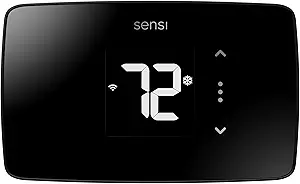 | Best Budget Pick | Model: ST25 | Connectivity: Wi-Fi, 2.4 GHz | Control Methods: App, touch, voice | VIEW LATEST PRICE | See Our Full Breakdown |
| Honeywell Home T5 Smart Wi-Fi Thermostat |  | Best for Geofencing | Brand: Honeywell Home | Connectivity: Wi-Fi | Certification: ENERGY STAR | VIEW LATEST PRICE | See Our Full Breakdown |
| Sensi Smart Wi-Fi Thermostat (ST55) |  | Best for Easy Installation | Model: ST55 | Connectivity: Wi-Fi | Voice Assistant: Alexa | VIEW LATEST PRICE | See Our Full Breakdown |
| ProStat PSP4273RT Smart Thermostat, Wi-Fi Touchscreen, 7-Day Programmable |  | Best for Complex HVAC Systems | Connectivity: Wi-Fi | Display: Touchscreen | Programming: 7-day programmable | VIEW LATEST PRICE | See Our Full Breakdown |
| ecobee Smart Thermostat Enhanced, Programmable Wi-Fi Thermostat |  | Best for Voice Assistant Flexibility | HVAC compatibility: Compatible with 90% of HVAC systems | Connectivity: Wi-Fi | Smart home compatibility: Amazon Alexa, Google Assistant, Apple HomeKit, SmartThings | VIEW LATEST PRICE | See Our Full Breakdown |
| Honeywell Home RTH9585WF Wi-Fi Smart Color Thermostat, Gray |  | Best Display and Design | Connectivity: Wi-Fi | Programming: 7-day programmable | Display: Color touch screen, customizable | VIEW LATEST PRICE | See Our Full Breakdown |
| Google Nest Thermostat – Smart Programmable Wi-Fi Thermostat (Snow) |  | Best for Energy Savings Guidance | Connectivity: Wi-Fi | C-wire: Works without C-wire in most homes; required for heating-only, cooling-only, zone-controlled, and heat pump systems | Smart home compatibility: Google Assistant, Alexa, Matter-certified voice assistants | VIEW LATEST PRICE | See Our Full Breakdown |
| Amazon Smart Thermostat (Pack of 2, C-Wire Required) |  | Best Value for Multi-Zone Homes | Quantity: Pack of 2 | Connectivity: Wi-Fi | Smart home compatibility: Amazon Alexa | VIEW LATEST PRICE | See Our Full Breakdown |
| Amazon Smart Thermostat with Alexa and Ring Compatibility |  | Best for Alexa and Ring Households | Compatibility: Alexa and Ring | Connectivity: Wi-Fi | Wiring requirement: C-wire required | VIEW LATEST PRICE | See Our Full Breakdown |
| Google Nest Learning Thermostat (4th Gen) with Nest Temperature Sensor (2nd Gen), Obsidian |  | Best Overall | Generation: 4th gen thermostat with 2nd gen temperature sensor | Color: Obsidian | System compatibility: Most 24V systems: gas, electric, oil, forced air, heat pump, radiant | VIEW LATEST PRICE | See Our Full Breakdown |
| ecobee Smart Thermostat Premium with Smart Sensor |  | Best Premium Features | Connectivity: Wi-Fi | Voice assistants: Siri and Alexa built-in | Smart speaker: Yes, integrated | VIEW LATEST PRICE | See Our Full Breakdown |
| Honeywell Home X2S Smart Wi-Fi Thermostat, White |  | Best for Scheduling Control | Certification: ENERGY STAR, Matter Certified | Compatibility: Up to 2H/2C conventional, 2H/1C heat pump, hot water, forced air (gas, oil, electric) | Incompatible systems: Electric baseboard heat (120-240V) | VIEW LATEST PRICE | See Our Full Breakdown |
| ecobee Smart Thermostat Essential, Wi-Fi, ENERGY STAR Certified |  | Best Value in the ecobee Lineup | Connectivity: Wi-Fi | Certification: ENERGY STAR | System compatibility: 85% of systems; most 24 VAC HVAC equipment | VIEW LATEST PRICE | See Our Full Breakdown |
| Google Nest Thermostat – Smart Programmable Wi-Fi Thermostat (Charcoal) |  | Best Budget Pick | Color: Charcoal | Connectivity: Wi-Fi 2.4/5GHz, Bluetooth Low Energy | C wire: Not required in most homes; required for heating-only, cooling-only, zoned, and heat pump systems | VIEW LATEST PRICE | See Our Full Breakdown |
| smart thermostat | Connectivity | Certification |
|---|---|---|
| Honeywell Home RTH9600WF Smart | Wi-Fi | ENERGY STAR |
| Sensi Lite Wi-Fi Smart Thermos | Wi-Fi, 2.4 GHz | ENERGY STAR |
| Honeywell Home T5 Smart Wi-Fi | Wi-Fi | ENERGY STAR |
| Sensi Smart Wi-Fi Thermostat | Wi-Fi | ENERGY STAR |
| ProStat PSP4273RT Smart Thermo | Wi-Fi | — |
| ecobee Smart Thermostat Enhanc | Wi-Fi | — |
| Honeywell Home RTH9585WF Wi-Fi | Wi-Fi | Energy Star |
| Google Nest Thermostat | Wi-Fi | Energy Star |
| Amazon Smart Thermostat | Wi-Fi | Energy Star |
| Amazon Smart Thermostat with A | Wi-Fi | Energy Star |
| Google Nest Learning Thermosta | — | — |
| ecobee Smart Thermostat Premiu | Wi-Fi | — |
| Honeywell Home X2S Smart Wi-Fi | — | ENERGY STAR, Matter Certified |
| ecobee Smart Thermostat Essent | Wi-Fi | ENERGY STAR |
| Google Nest Thermostat | Wi-Fi 2.4/5GHz, Bluetooth Low Energy | — |
More Details on Our Top Picks
Honeywell Home RTH9600WF Smart Color Thermostat, Wi-Fi Programmable Touchscreen, ENERGY STAR, Alexa Compatible
Where most budget smart thermostats settle for a plain LCD — like the Sensi Lite ST25 — the RTH9600WF makes the thermostat a visual centerpiece with a customizable high-definition color touchscreen that can match your wall color or décor. Beyond looks, it backs up the display with genuinely useful intelligence: Smart Response learning figures out how long your home takes to reach a setpoint and starts heating or cooling early, so comfort arrives on schedule instead of late. Compatibility runs deep, covering forced air, hot water, steam, and heat pumps with electric backup. The tradeoff is power: a C-wire is required, period, which means some homeowners will need an electrician before this thing ever lights up. Compared with the Honeywell T5, you give up geofencing but gain the premium screen and broader system support.
Pros:- Customizable HD color touchscreen blends with any décor
- Smart Response learning delivers comfort at the scheduled time
- Broad compatibility with forced air, hot water, steam, and heat pump systems
- ENERGY STAR certified with energy-saving tips and rebate eligibility
Cons:- C-wire is required with no battery fallback
- Incompatible with 120-240V electric baseboard heating
Best for: Homeowners who want a thermostat that looks as smart as it acts, especially those with hot water, steam, or heat pump systems
Not ideal for: Renters or DIY-first buyers — the mandatory C-wire can turn a weekend project into a professional installation call
- Brand:Honeywell Home
- Model:RTH9600WF
- Connectivity:Wi-Fi
- Display:Customizable high-definition color touchscreen
- Voice Assistants:Amazon Alexa, Google Assistant, Microsoft Cortana
- Power Requirement:C-wire required
- Compatible Systems:Forced air (gas, oil, electric), hot water, steam, heat pumps with electric backup
- Certification:ENERGY STAR
Our verdict“This pick makes the most sense for buyers who value a premium, décor-matching display and already have the wiring to support it.”
Sensi Lite Wi-Fi Smart Thermostat, Alexa Compatible, ENERGY STAR Certified, ST25
The Sensi Lite proves you don’t need to pay premium prices for the core smart thermostat experience. Unlike the Honeywell RTH9600WF, which demands a C-wire outright, the ST25 runs on included AAA batteries in most systems, making it one of the easiest models here to install yourself — the built-in level and app walkthrough mean a screwdriver is about all you need. You still get the features that matter: geofencing, scheduling, usage reports, and voice control through Alexa and Google Assistant. The compromises are real, though. The LCD display looks basic next to color-screen rivals, and Wi-Fi is limited to 2.4 GHz, which can mean weaker performance on mesh networks that steer devices to 5 GHz bands. Heat pump owners should also note the C-wire requirement creeps back in for their systems.
Pros:- Battery power means no C-wire needed in most systems
- True DIY installation with built-in level and app guidance
- Geofencing and scheduling features usually reserved for pricier models
- Privacy policy does not sell personal information or use it for targeted ads
Cons:- LCD display feels dated compared with color touchscreen rivals
- Only supports 2.4 GHz Wi-Fi networks
Best for: First-time smart thermostat buyers and renters who want app control and geofencing without a wiring project
Not ideal for: Heat pump owners or households on 5 GHz-only networks, since the C-wire requirement and band limitation undermine its two biggest advantages
- Model:ST25
- Connectivity:Wi-Fi, 2.4 GHz
- Control Methods:App, touch, voice
- Voice Assistants:Amazon Alexa, Google Assistant
- Power Source:Battery (2 AAA included) or C-wire
- Compatible Systems:Air conditioner, boiler, furnace, heat pump
- Certification:ENERGY STAR
Our verdict“The Sensi Lite is the low-friction entry point for anyone who wants smart scheduling and remote control on a basic HVAC system.”
Honeywell Home T5 Smart Wi-Fi Thermostat
The T5’s standout trick is geofence-based control: it uses your phone’s location to heat or cool the house only when someone is actually heading home, a feature the cheaper Sensi Lite ST25 also offers but the T5 executes with more polish through its Auto Home and Away Mode. Over a full season, that location awareness is what drives its advertised 8-16% savings on heating and cooling bills, and monthly energy reports show exactly where the money is going. Utility rebates and demand response rewards can offset the purchase cost further. The weakness is flexibility: unlike the RTH9600WF with its rich color touchscreen, the T5’s hardware is plain and functional, and a C-wire adapter may be required depending on your system. Heating-only oil furnace owners without a C-wire are out of luck entirely.
Pros:- Geofencing and Auto Home/Away Mode automate real energy savings
- ENERGY STAR certified with 8-16% potential bill savings
- Flexible 7-day scheduling for varied weekly routines
- Eligible for utility rebates and demand response rewards
Cons:- C-wire power adapter may be required depending on system
- Plain display and hardware compared with color-screen rivals
Best for: Commuters and households with unpredictable schedules who want the thermostat to react to coming and going automatically
Not ideal for: Owners of heating-only oil furnace systems without a C-wire, who simply cannot use it
- Brand:Honeywell Home
- Connectivity:Wi-Fi
- Certification:ENERGY STAR
- Scheduling:7-day flexible scheduling
- Smart Features:Geofence technology, Auto Home and Away Mode
- Energy Savings:8-16% on heating and cooling bills
- Power:C-wire power adapter may be required
Our verdict“If your household’s schedule changes daily and you want savings without micromanaging schedules, the T5 earns its spot.”
Sensi Smart Wi-Fi Thermostat (ST55)
Installation anxiety kills more smart thermostat purchases than price does, and the ST55 exists to solve exactly that. The app-guided setup with a built-in bubble level walks you through wiring step by step, and a common wire is not required in most applications — a bigger deal than it sounds, since models like the Honeywell T5 often need a C-wire adapter. It’s also sized to fit the footprint of a traditional thermostat, so you’re not patching and repainting the wall after swapping it in. Feature-wise it sits between the Sensi Lite and pricier rivals: you get remote access, flexible scheduling, usage reports, and equipment alerts, but there’s no geofencing and voice control is Alexa-only, where the Sensi Lite adds Google Assistant support. Think of it as the reliable workhorse rather than the feature leader.
Pros:- App-guided DIY installation with built-in leveling bubble
- Fits the wall space of a traditional thermostat
- Equipment alerts and maintenance reminders protect your HVAC system
- Privacy policy does not sell personal information
Cons:- No geofencing, unlike the Sensi Lite or Honeywell T5
- Common wire may still be required for some installations
Best for: Homeowners replacing an old programmable thermostat who want a painless, wire-it-yourself upgrade
Not ideal for: Smart home enthusiasts who want geofencing or multi-assistant voice control — this model covers the basics and stops there
- Model:ST55
- Connectivity:Wi-Fi
- Voice Assistant:Alexa
- Installation:DIY; common wire not required in most applications
- Features:Flexible scheduling, remote access, usage reports, equipment alerts, maintenance reminders
- Certification:ENERGY STAR
Our verdict“The ST55 is the safest swap-in choice for buyers prioritizing a smooth self-install over cutting-edge features.”
ProStat PSP4273RT Smart Thermostat, Wi-Fi Touchscreen, 7-Day Programmable
Every other thermostat in this lineup is built for a standard single-stage furnace or air conditioner; the ProStat PSP4273RT is built for the complicated equipment everyone else ignores. Its headline capability is dual fuel management — it automatically switches between a heat pump and gas furnace to always burn the cheaper fuel, a function nothing else in this roundup offers. Add support for up to 4 heating and 2 cooling stages, independent multi-zone control, and whole-home humidification and dehumidification, and it’s clear this is a contractor-grade tool wearing a consumer touchscreen. The cost of that depth is complexity: buyers with ordinary single-stage systems will find setup overwhelming and the advanced features wasted, and multi-zone installations will almost certainly need a professional. Compared with the Honeywell RTH9600WF, you trade décor-friendly polish for genuine HVAC muscle.
Pros:- Automatic dual fuel selection always chooses the most efficient fuel source
- Multi-stage and multi-zone control reduces temperature swings
- Integrated humidity management for whole-home comfort
- Proactive email alerts catch equipment faults before they become repairs
Cons:- Setup complexity is overkill for simple HVAC systems
- Multi-zone configurations likely require professional installation
Best for: Owners of dual fuel heat pump plus gas furnace setups, multi-stage equipment, or zoned homes who need real control logic
Not ideal for: Anyone with a basic single-stage furnace and one zone — the complexity and cost buy nothing you’d ever use
- Connectivity:Wi-Fi
- Display:Touchscreen
- Programming:7-day programmable
- Heating Stages:Up to 4
- Cooling Stages:Up to 2
- Multi-Zone Support:Yes
- Dual Fuel Compatible:Yes (heat pump + gas furnace)
- Humidity Control:Humidification, dehumidification, and reheat
- Alerts:Email alerts for equipment faults, filter changes, and temperature/humidity extremes
Our verdict“This model is better suited to homes with sophisticated, multi-stage, or dual fuel HVAC systems than to typical buyers.”
ecobee Smart Thermostat Enhanced, Programmable Wi-Fi Thermostat
This model stands out for playing nicely with every major voice ecosystem — Alexa, Google Assistant, Apple HomeKit, and SmartThings — which is rare at this tier. Compared with the Google Nest Thermostat, it also includes a Power Extender Kit in the box, so homes without a C-wire aren’t immediately stuck. Occupancy-based adjustments and claimed savings of up to 26% annually give it real automation muscle for the money. The tradeoff: room-by-room comfort, one of ecobee’s signature strengths, requires SmartSensors sold separately, which pushes the true cost closer to the ecobee Smart Thermostat Premium. HVAC compatibility is broad but still worth verifying before ordering.
Pros:- Works with Alexa, Google Assistant, Apple HomeKit, and SmartThings
- Includes Power Extender Kit for homes without a C-wire
- Occupancy and schedule-based automatic adjustments
- 3-year warranty backs the hardware
Cons:- SmartSensors for room-by-room comfort are sold separately
- HVAC compatibility should be verified before purchase
Best for: Households split between Apple and Android users who need one thermostat that works with every ecosystem
Not ideal for: Buyers wanting multi-room temperature balancing out of the box, since SmartSensors cost extra
- HVAC compatibility:Compatible with 90% of HVAC systems
- Connectivity:Wi-Fi
- Smart home compatibility:Amazon Alexa, Google Assistant, Apple HomeKit, SmartThings
- Remote control:ecobee app for smartphone, tablet, and Apple Watch
- Included accessories:Power Extender Kit (PEK), trim kit
- Warranty:3 years
- Energy savings claim:Up to 26% per year on heating and cooling
- Additional sensors:Compatible with SmartSensors, sold separately
Our verdict“The smartest middle-ground pick if your household spans multiple voice ecosystems and you might add room sensors later.”
Honeywell Home RTH9585WF Wi-Fi Smart Color Thermostat, Gray
Where most entries here chase minimalism, this model leans into being a statement piece on the wall — a customizable color touchscreen you can match to your décor. That display is genuinely better for households that still adjust the thermostat by hand rather than only through an app. Compared with the Amazon Smart Thermostat, it offers richer feedback: local weather forecasts, monthly energy reports, and smart alerts for filter and humidifier maintenance. The catch is wiring — a C-wire is required with no extender kit included, and it won’t work with 120-240V electric baseboard heat at all. Voice support also stops at Alexa and Google Home, leaving Apple households out.
Pros:- Customizable color touch screen blends with décor
- 7-day programmable scheduling with utility demand response support
- Energy Star certified with monthly energy reports
- Smart alerts for filter and humidifier maintenance
Cons:- C-wire required with no extender kit included
- Incompatible with electric baseboard heating (120-240V)
- Some setups may need professional installation
Best for: Homeowners who want a thermostat that looks intentional in a visible hallway or living room and who still prefer touchscreen control
Not ideal for: Apple HomeKit users or homes with electric baseboard heating and no C-wire
- Connectivity:Wi-Fi
- Programming:7-day programmable
- Display:Color touch screen, customizable
- C-wire required:Yes
- Works with:Amazon Alexa, Google Home
- Certification:Energy Star
- Compatible systems:Forced air (gas, oil, electric), hot water and steam, heat pumps with electric backup
- Incompatible:Electric baseboard heat (120-240V), heating-only oil furnaces without C-wire
Our verdict“The pick when wall presence matters as much as features — provided your wiring and heating system cooperate.”
Google Nest Thermostat – Smart Programmable Wi-Fi Thermostat (Snow)
This option makes the most sense for buyers whose priority is lowering bills without managing schedules manually. Auto-away shuts down heating and cooling when the house empties, and the Savings Finder actively suggests schedule tweaks — a more hands-off approach than the 7-day programming you manage yourself on the Honeywell Home RTH9585WF. It also runs without a C-wire in many homes, unlike the Honeywell or the Amazon Smart Thermostat, though heat pumps and zone-controlled systems still need one. Matter support future-proofs it across voice platforms. Two real gaps: there’s no lock feature for keeping kids or guests from cranking the heat, and it’s less polished for Apple-centric setups than the ecobee Enhanced.
Pros:- Energy Star certified with auto-away and Savings Finder recommendations
- Works without a C-wire in most homes
- Matter-certified compatibility with Google Assistant and Alexa
- HVAC monitoring sends alerts and maintenance reminders
Cons:- Heat pump, zone-controlled, and single-function systems may still need a C-wire or power accessory
- No lock feature to restrict local adjustments
- Voice control requires a separate compatible smart speaker or display
Best for: Set-and-forget savers who want the thermostat to suggest energy cuts rather than program everything themselves
Not ideal for: Renters or households with kids and guests, since the missing lock feature invites unwanted adjustments
- Connectivity:Wi-Fi
- C-wire:Works without C-wire in most homes; required for heating-only, cooling-only, zone-controlled, and heat pump systems
- Smart home compatibility:Google Assistant, Alexa, Matter-certified voice assistants
- App:Google Home app (Android and iOS)
- Certification:Energy Star
- Lock feature:No
Our verdict“The best choice if passive energy savings matter more than hands-on programming or display flash.”
Amazon Smart Thermostat (Pack of 2, C-Wire Required)
A two-pack changes the math: this pick is built for homes with two HVAC zones or a house plus a garage apartment, where buying two premium units gets expensive fast. Each unit carries Honeywell Home internals — the same engineering lineage as the pricier RTH9585WF — but strips the experience down to Alexa voice control, app scheduling, and guided DIY installation. Compared with the ecobee Enhanced, you give up HomeKit, Google Assistant, occupancy sensing, and any included power extender. The C-wire requirement is firm for both units, so older homes without proper wiring at every location should check before committing to the pair.
Pros:- Two units in one pack for multi-zone coverage
- Built on Honeywell Home thermostat technology
- Guided DIY installation through the app
- Comfort zones possible with select Alexa devices
Cons:- C-wire required with no extender included
- Alexa-only smart home compatibility
- Comfort zone features depend on owning select Alexa devices
Best for: Owners of two-zone homes or rental units who want smart control in multiple places without paying twice for premium features
Not ideal for: Homes without a C-wire at every installation point, or anyone outside the Alexa ecosystem
- Quantity:Pack of 2
- Connectivity:Wi-Fi
- Smart home compatibility:Amazon Alexa
- Control methods:Alexa voice control, schedules, Alexa app
- Power requirement:C-wire required
- Installation:DIY guided installation
- Certification:Energy Star
Our verdict“The cheapest path to smart temperature control in two places at once, as long as Alexa runs your home and your wiring is ready.”
Amazon Smart Thermostat with Alexa and Ring Compatibility
This model earns its spot by tying climate control into the Ring security ecosystem — a combination no other entry here offers. If you already run Ring cameras and Alexa speakers, this thermostat can adjust temperature based on presence detection from compatible devices, effectively giving it occupancy-style automation without buying the separate sensors the ecobee Enhanced needs. Guided DIY installation through the Alexa app keeps setup approachable, and possible utility rebates soften the cost. The tradeoffs mirror the two-pack version: a hard C-wire requirement, no HomeKit or Google Assistant support, and automation that only reaches its potential if you’ve already invested in the Alexa device family.
Pros:- Integrates with both Alexa and Ring ecosystems
- Presence-based temperature adjustments using compatible devices
- Guided DIY installation via the Alexa app
- May qualify for energy provider rebates
Cons:- C-wire required
- Automatic adjustments only work with compatible Alexa devices
- Locked out of Google Assistant and Apple HomeKit
Best for: Ring security users with Alexa speakers who want presence-based heating and cooling from devices they already own
Not ideal for: Google Home or Apple households, and homes lacking a C-wire
- Compatibility:Alexa and Ring
- Connectivity:Wi-Fi
- Wiring requirement:C-wire required
- Features:Schedules, remote control, and automatic temperature adjustments
- Installation:DIY installation guided by the Alexa app
- Certification:Energy Star
- Energy savings:ENERGY STAR thermostats save an average of $90 annually per EPA estimates
Our verdict“A natural add-on if Ring and Alexa already anchor your smart home, and a limited pick for everyone else.”
Google Nest Learning Thermostat (4th Gen) with Nest Temperature Sensor (2nd Gen), Obsidian
This option stands out for true hands-off automation: it learns household routines and preferred temperatures over time, then adapts without anyone touching a schedule. Compared with the Google Nest Thermostat (Charcoal), the 4th-gen Learning model adds a 60% larger display with Dynamic Farsight and ships with a second-generation temperature sensor, which helps even out hot and cold rooms — something the cheaper Nest simply can’t do out of the box. Compared with the ecobee Smart Thermostat Premium, it trades the built-in speaker and air quality monitoring for tighter Google Home integration and a more refined look on the wall. The tradeoff: buyers with heating-only, zoned, or unusual systems should verify compatibility first, and C-wire needs vary by home.
Pros:- Learns routines and adapts automatically — no manual scheduling
- Includes a room sensor to manage hot and cold spots
- Broad compatibility with most 24V systems including heat pumps
- Works with Google Home, Alexa, Siri, and Matter
Cons:- Compatibility should be verified before purchase
- C-wire requirements vary depending on the home’s wiring
Best for: Homeowners deep in the Google Home ecosystem who want a thermostat that programs itself and fixes room-to-room temperature swings
Not ideal for: Budget-focused buyers or homes with niche HVAC setups, since this is the priciest tier of smart thermostat and compatibility checks are mandatory
- Generation:4th gen thermostat with 2nd gen temperature sensor
- Color:Obsidian
- System compatibility:Most 24V systems: gas, electric, oil, forced air, heat pump, radiant
- C wire:Not required in most homes
- Smart home compatibility:Google Home, Alexa, Siri, Matter
- Display:60% larger display with Dynamic Farsight
Our verdict“This pick makes the most sense for buyers who want the most self-sufficient, polished smart thermostat available and are willing to pay for it.”
ecobee Smart Thermostat Premium with Smart Sensor
Where the Nest Learning Thermostat (4th Gen) focuses on learning your schedule, this model bets on sheer capability: built-in Siri and Alexa voice control, an integrated smart speaker, an air quality monitor with alerts, and radar-based occupancy detection that preheats or precools before anyone asks. The included remote SmartSensor mirrors what Nest charges extra for at the sensor level, and the Power Extender Kit means most homes without a C-wire can still install it themselves — a sharper package than the Honeywell Home X2S, which hard-requires a C-wire. The real drawback is subscription creep: smoke-alarm sound detection sits behind a paid ecobee Smart Security plan, and Siri needs an Apple home hub to shine.
Pros:- ENERGY STAR certified with potential savings up to 26% on annual energy bills
- Built-in Siri and Alexa plus a smart speaker — no separate hub needed
- Air quality monitoring with alerts and filter change reminders
- DIY-friendly install with Power Extender Kit and 3-year warranty
Cons:- Some features like smoke alarm sound detection require a paid subscription
- Siri requires an Apple home hub; doorbell viewing needs separate hardware
Best for: Tech-forward homeowners who want voice control, air quality insights, and occupancy-based automation in one wall unit
Not ideal for: Buyers who dislike recurring subscriptions or don’t want an always-listening speaker on their wall
- Connectivity:Wi-Fi
- Voice assistants:Siri and Alexa built-in
- Smart speaker:Yes, integrated
- Air quality monitor:Built-in
- SmartSensor:Included
- Energy certification:ENERGY STAR
- HVAC compatibility:95% of HVAC systems
- Power Extender Kit:Included for homes without a C-wire
- Warranty:3 years
Our verdict“The most feature-dense option here — ideal if you want a thermostat that doubles as a smart home command center, less so if you just want temperature control.”
Honeywell Home X2S Smart Wi-Fi Thermostat, White
Not everyone wants a thermostat that ‘learns’ — some buyers want to set the schedule themselves and trust it to stick. That’s where this model separates itself from the Nest Learning Thermostat: it offers four scheduling modes (7-day, 5-1-1, 5-2, or 1-week) so shift workers and households with irregular weeks keep full control. Compared with the Amazon Smart Thermostat elsewhere in this roundup, the X2S adds Matter certification, humidity monitoring, and interchangeable white and gray accents for wall-matching. The friction points are real, though: it hard-requires a C-wire, unlike the ecobee Premium or Nest options, and it won’t work with 120–240V electric baseboard heat at all.
Pros:- Four flexible scheduling modes for irregular or fixed routines
- Matter certified — works with Alexa, Google Assistant, and Apple HomeKit
- Auto-away mode, filter reminders, and indoor humidity monitoring
- Interchangeable white and gray accent pieces to match decor
Cons:- C-wire (24 VAC) required with no extender kit included
- Incompatible with 120-240V electric baseboard heat
Best for: Schedule-driven households — especially those with set workweeks or shift patterns — who want explicit programming rather than learning algorithms
Not ideal for: Homes without a C-wire or with electric baseboard heating, since neither limitation has a workaround here
- Certification:ENERGY STAR, Matter Certified
- Compatibility:Up to 2H/2C conventional, 2H/1C heat pump, hot water, forced air (gas, oil, electric)
- Incompatible systems:Electric baseboard heat (120-240V)
- Voice assistants:Amazon Alexa, Google Assistant, Apple HomeKit
- Wi-Fi:2.4 or 5GHz (802.11 b/g/n)
- Power:C-wire required (24 VAC)
- Warranty:2 years
Our verdict“A strong middle-ground pick for buyers who value deliberate scheduling and multi-platform support over learning automation — provided the wiring cooperates.”
ecobee Smart Thermostat Essential, Wi-Fi, ENERGY STAR Certified
This model is better suited to buyers who want the ecobee app experience and ecosystem compatibility without paying Premium prices. Unlike the ecobee Smart Thermostat Premium, it drops the built-in speaker, voice assistants, air quality monitoring, and bundled sensor — but keeps ENERGY STAR certification, humidity detection, and time-of-use preheating and precooling, which can shift energy use to cheaper hours. Compared with the Google Nest Thermostat (Charcoal), it offers a color touchscreen and Apple HomeKit support that Nest lacks, though its 85% system compatibility trails ecobee’s own Premium claim of 95%. The catch is unbundling: the Power Extender Kit and SmartSensor are sold separately, so C-wire-free homes should factor that in.
Pros:- Schedule assistant balances comfort and energy savings automatically
- Works with Apple HomeKit, Google Assistant, and Alexa
- Supports gas, oil, electric, dual fuel, heat pump, and boiler systems
- Time-of-use preheating and precooling can cut costs on variable-rate plans
Cons:- Power Extender Kit sold separately for homes without a C-wire
- SmartSensor and trim kit are optional extras, not included
Best for: Buyers who want core smart thermostat features with broad ecosystem support at a mid-tier price
Not ideal for: Homes without a C-wire who don’t want to buy the extender kit separately, or anyone expecting room sensors in the box
- Connectivity:Wi-Fi
- Certification:ENERGY STAR
- System compatibility:85% of systems; most 24 VAC HVAC equipment
- Supported systems:Gas, oil, electric, dual fuel, forced air, heat pump, boilers
- Smart home compatibility:Apple HomeKit, Google Assistant, Alexa
- Controls:Color touchscreen and ecobee app
- C-wire:Power Extender Kit available separately
Our verdict“A smart choice for buyers who want ecobee’s platform without the Premium feature load — just budget for the accessories your wiring demands.”
Google Nest Thermostat – Smart Programmable Wi-Fi Thermostat (Charcoal)
Compared with its sibling, the Nest Learning Thermostat (4th Gen), this model strips away the learning engine, the large Farsight display, and the bundled room sensor — and that’s exactly the point. It keeps the features that matter most to first-time smart thermostat buyers: ENERGY STAR certification, automatic Eco mode that turns itself down when you leave, remote scheduling through the Google Home app, and HVAC monitoring alerts that flag maintenance issues before they become repair bills. Next to the ecobee Smart Thermostat Essential, it works without a C-wire in more homes but loses HomeKit support and a color touchscreen. One gap worth flagging: there’s no lock feature, so rentals or homes with curious kids may want more control.
Pros:- ENERGY STAR certified with automatic Eco energy savings
- Remote control and scheduling via the Google Home app
- HVAC monitoring alerts and maintenance reminders
- No C wire needed in most homes
Cons:- C wire or power accessory required for heat pump, heating-only, cooling-only, and zoned systems
- No lock feature; voice control requires a separate smart device
Best for: First-time buyers and Google Home households who want dependable smart savings without premium pricing
Not ideal for: Heat pump, zoned, or heating-only systems — those require a C wire or power accessory — and anyone needing a screen lock for rentals
- Color:Charcoal
- Connectivity:Wi-Fi 2.4/5GHz, Bluetooth Low Energy
- C wire:Not required in most homes; required for heating-only, cooling-only, zoned, and heat pump systems
- App:Google Home (Android/iPhone)
- Voice compatibility:Google Assistant, Matter-certified voice assistants
- Lock feature:No
Our verdict“The sensible entry point into smart climate control — skip it only if your system needs a C wire or you want a tamper-proof lock.”

How We Picked
I ranked these 15 smart thermostats on the factors that actually change the ownership experience: compatibility flexibility (C-wire handling, HVAC system support), sensor and zoning support, automation and learning capability, usability of the app and interface, and long-term value relative to what each model gives up. Models that solve real comfort problems — uneven room temperatures, unpredictable schedules — ranked above models that simply add Wi-Fi to a programmable thermostat, because remote control alone is now table stakes at every price point.
The ranking logic follows a clear hierarchy: full-featured flagships with sensor ecosystems sit at the top, capable mid-range models with strong apps fill the middle, and dependable budget picks round out the list without pretending to compete on features they lack. Each pick was compared directly against its closest neighbors — the three ecobee models against each other, the two Nest models, the four Honeywell/Sensi options — so the differences within brands are as visible as the differences between them.
| smart thermostat | Connectivity | Certification |
|---|---|---|
| Honeywell Home RTH9600WF Smart | Wi-Fi | ENERGY STAR |
| Sensi Lite Wi-Fi Smart Thermos | Wi-Fi, 2.4 GHz | ENERGY STAR |
| Honeywell Home T5 Smart Wi-Fi | Wi-Fi | ENERGY STAR |
| Sensi Smart Wi-Fi Thermostat | Wi-Fi | ENERGY STAR |
| ProStat PSP4273RT Smart Thermo | Wi-Fi | — |
| ecobee Smart Thermostat Enhanc | Wi-Fi | — |
| Honeywell Home RTH9585WF Wi-Fi | Wi-Fi | Energy Star |
| Google Nest Thermostat | Wi-Fi | Energy Star |
| Amazon Smart Thermostat | Wi-Fi | Energy Star |
| Amazon Smart Thermostat with A | Wi-Fi | Energy Star |
| Google Nest Learning Thermosta | — | — |
| ecobee Smart Thermostat Premiu | Wi-Fi | — |
| Honeywell Home X2S Smart Wi-Fi | — | ENERGY STAR, Matter Certified |
| ecobee Smart Thermostat Essent | Wi-Fi | ENERGY STAR |
| Google Nest Thermostat | Wi-Fi 2.4/5GHz, Bluetooth Low Energy | — |
Factors to Consider When Choosing Smart Thermostats
Before settling on a specific model, it helps to understand the bigger picture: what separates a smart thermostat from a programmable one, where the money actually goes, and which specs matter for your particular home. These are the factors I’d weigh before buying.Wiring and Compatibility Come First
The most common smart thermostat mistake is buying before checking the wiring. Many models — including the Amazon Smart Thermostat and several Honeywell picks in this lineup — require a C-wire (common wire) to power their Wi-Fi radios, and without one they’ll drop offline, drain batteries, or fail to install at all. Homes built before the mid-2000s often lack this wire, which quietly eliminates half the options on the market. Some brands include a power-extender kit in the box, which is why ecobee models are consistently the safer bet for older HVAC systems. Before ordering anything, pull your current thermostat off the wall, photograph the wiring, and check the manufacturer’s online compatibility tool — ten minutes of checking beats a return shipment and a frustrated afternoon.
Room Sensors: The Feature That Actually Changes Comfort
A thermostat only knows the temperature at the wall where it’s mounted, which is rarely representative of the whole house. If your bedroom runs hot while the living room freezes, remote sensors are the feature that fixes it — they let the system average readings across rooms or prioritize the room you’re actually in. In this lineup, only the ecobee ecosystem and the Nest Learning Thermostat (4th Gen) support this, and it’s the honest reason their flagship models cost more. Buyers in small apartments with one central location will never notice the difference, which is why budget picks remain legitimate choices for them. But anyone in a multi-story home should treat sensor support as a requirement, not a luxury, and budget accordingly.
Learning vs. Scheduling: Know How Much Effort You Want
Not all ‘smart’ thermostats learn, and the marketing blurs this distinction. A learning thermostat like the Nest 4th Gen observes when you come and go and builds its own schedule over a week or two — great for households with irregular routines. A programmable smart thermostat, which describes most of this list, still needs you to set a schedule manually or in the app; the ‘smart’ part is remote access, geofencing, and voice control. Neither approach is objectively better: learning models trade transparency for convenience, and some owners find auto-adjustments annoying rather than helpful. If your week follows a predictable pattern, a manually programmed schedule often outperforms an algorithm anyway. Match the capability to your actual routine, not to the feature list.
Ecosystem Lock-In Is Real
Every thermostat in this roundup works with Alexa, and most work with Google Home, but depth of integration varies. The Amazon Smart Thermostat treats Alexa as a first-class citizen, with Ring camera tie-ins that no competitor matches; the Nest models integrate most deeply with the Google Home app; and ecobee plays reasonably well with everything while pushing its own app experience. If you’ve already invested in one ecosystem’s speakers, cameras, and routines, choosing the matching thermostat usually means fewer app-switching headaches and more reliable automations. That said, don’t overpay for ecosystem features you won’t use — a Ring doorbell alone doesn’t justify the Amazon model if you’d otherwise benefit from ecobee’s sensors. Buy for the ecosystem you actually live in today, not the one you might adopt someday.
Where Your Money Goes — and Where It Doesn’t
Price tiers in this category track closely with three things: sensor support, display quality, and built-in speakers/air quality monitors. What doesn’t improve much with price is the core function — switching your HVAC on and off — which is why a budget model can genuinely deliver most of the energy savings of a flagship. Energy Star certification appears across the entire price range here, so treat it as a baseline rather than a differentiator. The sweet spot for most buyers is the middle tier, where you get a color touchscreen and solid app without paying for a speaker you already own three of. Pay premium prices only for sensors and learning, the two features that measurably change comfort and savings.
Rental Homes and Multi-Unit Considerations
If you rent or own a multi-unit property, your decision criteria shift. Landlords buying in bulk — which is exactly what the two-pack Amazon Smart Thermostat targets — care about low per-unit cost, simple resets between tenants, and standardized app management, not premium features. Renters face the opposite constraint: you need a model that installs cleanly, restores the original thermostat when you leave, and ideally works without a C-wire if the building’s wiring is dated. Voice assistant dependence is another wrinkle in shared spaces, since a thermostat with a built-in speaker in a hallway may not suit everyone’s privacy preferences. Match the purchase to who will actually live with the device, not just who buys it.
Frequently Asked Questions
Do I need a C-wire for a smart thermostat, and what happens if I don’t have one?
It depends entirely on the model. Thermostats like the Amazon Smart Thermostat and most Honeywell options in this lineup require a C-wire to power their displays and Wi-Fi radios consistently — without one, they may cycle off, lose connection, or refuse to install. ecobee sidesteps the problem by including a power-extender kit that harvests power from existing wires, making it the go-to choice for older homes. The Nest models can often run without a C-wire on many systems, though performance is less consistent with them installed that way. Check your wiring before buying anything: it’s the single most common reason smart thermostat installs fail or get returned.
Is the Nest Learning Thermostat worth the premium over the regular Nest Thermostat?
Only if you want the learning and sensor capabilities, because those are the real differences. The standard Nest Thermostat offers the same app, basic scheduling guidance, and ecosystem integration at roughly half the cost, but it never builds schedules on its own and doesn’t support remote sensors. The 4th Gen Learning model programs itself based on your routines and works with the included second-generation temperature sensor, which fixes the uneven-comfort problem in larger homes. For a small apartment with a predictable schedule, the cheaper model is the smarter buy. For a family household with irregular comings and goings across multiple rooms, the Learning model earns its price.
What separates the three ecobee models from each other?
Think of them as a feature ladder. The Essential covers app control, scheduling, and geofencing without extras — it competes directly with budget picks. The Enhanced adds remote sensor support, which is the feature that actually improves whole-home comfort, making it the value pick of the three. The Premium layers on a built-in speaker with voice assistant, air quality monitoring, and a sharper display. All three share the same core platform and power-extender kit, so compatibility is identical. If you’re choosing between them, decide whether sensors and air quality data matter to you — if not, the Essential does everything the Premium does where it counts.
Can a smart thermostat actually save me money, and which features drive the savings?
Yes, but the savings come from specific behaviors, not the thermostat’s price tag. The biggest levers are geofencing or occupancy detection that prevents heating or cooling an empty house, and schedules that let temperatures drift when you’re asleep or away. A basic ENERGY STAR certified model like the Sensi Lite captures most of this, which is why spending more doesn’t automatically mean saving more. Sensor-based models add savings by heating only the rooms you occupy, and learning models save by eliminating the human error of forgetting to program schedules. Expect the realistic payback window to run several years at typical energy prices, so buy the features you want for comfort first and treat savings as the bonus.
Are the Honeywell and Sensi models still worth buying against newer competitors?
They are, if you value dependable hardware and straightforward scheduling over cutting-edge automation. The Honeywell RTH9585WF and RTH9600WF offer polished color touchscreens and flexible 7-day programming that many buyers find more intuitive than app-only control, and Sensi models are known for simple installation and reliable performance. What they lack is any path to room sensors, learning capability, or air quality monitoring — their ceiling is lower than ecobee’s or Nest’s flagships. Compared with the Amazon Smart Thermostat, they justify their higher price mainly through the touchscreen interface and more granular scheduling. They’re best for buyers who want a set-it-and-forget-it device rather than a smart-home hub on the wall.
Conclusion
The right pick here depends less on specs and more on what kind of home — and homeowner — you have. For best overall, the ecobee Smart Thermostat Premium is the most complete package: sensors, voice control, and air quality monitoring in one device. The ecobee Smart Thermostat Enhanced is my best value for larger homes because it keeps sensor support while dropping the extras you probably don’t need. For pure budget value, the Amazon Smart Thermostat (or the two-pack for landlords) delivers the core smart experience without padding. The Google Nest Learning Thermostat (4th Gen) is the best premium pick for anyone who wants zero-maintenance scheduling, and the Sensi Lite is the best beginner option thanks to its painless setup. Honeywell’s color touchscreen models suit buyers who prefer on-device control, the ProStat PSP4273RT covers basic 7-day programming needs, and the standard Nest Thermostat fits Google-centric small households. Whatever you choose, confirm your wiring first — the best thermostat in this lineup is the one that actually works on your wall.