Welcome to our comprehensive 2026 home appliances and smart devices checklist, designed specifically for homeowners looking to upgrade their living spaces with the latest technology. Whether you’re new to smart home integration or a seasoned enthusiast, this guide will help you identify essential devices that enhance comfort, efficiency, and convenience.
Our checklist is organized into key categories, each focusing on different aspects of a smart home ecosystem. We provide detailed insights into what makes each product stand out, common pitfalls to avoid, and practical tips on compatibility and sizing. Use this guide as a trusted resource to make informed decisions and create a seamlessly connected home environment.
To get the most out of this checklist, review each section carefully, paying special attention to the ‘lookFor’ tips and verdicts. Consider your specific needs, home layout, and existing devices to select the best options for your space. Happy smart shopping!
Smart Speakers
While we don’t specify a particular smart speaker model here, choosing the right smart speaker is essential for voice control and smart home integration. When selecting a device, consider compatibility with your existing smart ecosystem, audio quality, and privacy features. Keep in mind that some speakers work better in larger spaces, offering richer sound, while others excel in smaller rooms with focused voice recognition.
Common mistakes include opting for a device solely based on brand recognition or ignoring the ecosystem compatibility. For example, an Amazon Echo might be ideal if you primarily use Alexa, but it’s less compatible with Google Assistant or Apple HomeKit. To ensure seamless operation, verify compatibility with your current smart devices and consider whether you want features like multi-room audio, smart routines, or privacy controls.
What to look for:
- Compatibility with existing smart home devices
- Voice recognition accuracy
- Sound quality and volume range
- Privacy and security features
- Ease of setup and use
Robot Vacuums
The iRobot Roomba Plus 575 Robot Vacuum & Mop Combo offers a versatile cleaning solution, combining vacuuming and mopping functions in one device. This model is designed to save time and keep your floors spotless with minimal effort. When choosing a robot vacuum, consider factors like navigation technology, battery life, and compatibility with your smart home ecosystem.
Common mistakes include underestimating the importance of size and clearance, which can prevent the device from cleaning under furniture, or ignoring the need for app control and scheduling features. It’s also crucial to check whether the vacuum has a good mapping system to avoid missed spots or repeated cleaning in the same area. Proper maintenance, such as regularly replacing filters and brushes, will prolong your device’s lifespan and performance.
What to look for:
- Effective navigation and mapping capabilities
- Battery life suitable for your home size
- Compatibility with smart home apps
- Easy maintenance and filter replacement
- Strong suction power
iRobot Roomba Plus 575 Robot Vacuum & Mop Combo

The iRobot Roomba Plus 575 is an AI-powered robot vacuum and mop designed for deep cleaning in busy homes. It features powerful suction, advanced obstacle avoidance, edge cleaning, and automatic emptying for up to 3 months, making floor maintenance effortless.
Pros:
- Powerful suction and deep scrubbing capabilities for thorough cleaning
- Advanced AI obstacle avoidance and mapping for efficient navigation
- Automatic debris emptying and mop pad cleaning for hands-free operation
- Compact design fits under furniture and reaches low-clearance spaces
Cons:
- Complex setup may require initial configuration
- Higher price point may not be suitable for all budgets
- Dependence on electronic components could lead to maintenance issues
Best for: Effortless home cleaning
Not ideal for: Limited navigation or mop functionality
Bottom line: Choose a robot vacuum that balances convenience, performance, and smart features.
Air Purifiers
The Coway Airmega 400/400S Air Purifier Replacement Filter Set, Max 2 Gree ensures your air stays fresh and healthy, especially in environments prone to allergens or pollutants. Replacement filters are a critical component for maintaining the purifier’s efficiency over time. When selecting an air purifier, consider the size of your space, filter type, and CADR ratings for smoke, dust, and pollen.
Common mistakes include neglecting to replace filters regularly or choosing a device that isn’t rated for your room size. Proper fit and filter compatibility are essential to prevent air leaks and ensure optimal performance. Additionally, look for features like filter lifespan indicators, quiet operation, and smart controls if available. Regular maintenance is key to keeping your air quality high and your device functioning effectively.
What to look for:
- Compatibility with your purifier model
- Effective filtration stages (HEPA, activated carbon)
- Ease of replacing filters
- Filter lifespan indicator
- Suitable for room size
Coway Airmega 400/400S Air Purifier Replacement Filter Set, Max 2 Green True HEP
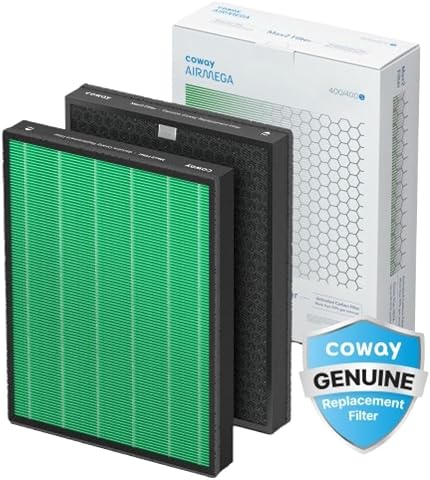
This genuine Coway filter set is compatible with the Airmega 400 and 400S models. It includes a HEPA filter that captures 99.97% of airborne particles and an activated carbon filter that reduces VOCs and household odors, lasting up to one year with a replacement indicator.
Pros:
- Genuine Coway filter ensures reliable performance
- Effective at removing allergens, VOCs, and odors
- Long-lasting filter with a convenient replacement indicator
Cons:
- Designed specifically for certain Coway models
- Replacement cost may add up over time
Best for: Air quality improvement
Not ideal for: Incompatible or hard-to-replace filters
Bottom line: Choose replacement filters that fit your purifier and meet your air quality needs.
Smart Lighting
The Govee LED Smart Light Bulbs, 1000LM Color Changing A19 Bulbs with Wi-Fi bring vibrant, customizable lighting to your home. These bulbs are ideal for creating ambiance, adjusting brightness, and setting moods with a simple app or voice command. When selecting smart lighting, consider compatibility with your existing smart hub, color range, brightness levels, and energy efficiency.
Common mistakes include choosing bulbs with limited color options or brightness, which can hinder your desired effect. Also, ensure the bulbs are compatible with your Wi-Fi network and voice assistants. Proper placement and fixture compatibility are important, especially for dimmable or color-changing features. Investing in quality bulbs with reliable connectivity will provide a seamless lighting experience and help you avoid flickering or connection issues.
What to look for:
- Compatibility with your smart home system
- Color range and brightness levels
- Energy efficiency and longevity
- Ease of control via app or voice
- Dimmable and scheduling features
Govee LED Smart Light Bulbs, 1000LM Color Changing A19 Bulbs with Wi-Fi & Blueto

These Govee smart bulbs offer 1000 lumens of brightness with 16 million color options and dimmable settings. Controlled via the Govee Home App or voice assistants like Alexa and Google Assistant, they support 54 scene modes and sound-reactive lighting.
Pros:
- High brightness (1000 lumens) with vibrant color options
- Voice and app-controlled via Alexa/Google Assistant
- Energy-efficient (9W equivalent to 75W incandescent)
- Supports sound-reactive lighting and scene modes
Cons:
- Presets only work with Wi-Fi connection
- Not compatible with smart switches
- Bluetooth control limited to basic functions
Best for: Creating ambient lighting
Not ideal for: Limited color options or poor connectivity
Bottom line: Select smart bulbs that offer reliable control and vibrant colors for your space.
Energy Monitors
The Eyedro 3-Phase Energy Monitor 200A/600V (Model EB6-EW-E3) provides detailed insights into your home’s energy consumption, helping you identify savings opportunities. This monitor connects via WiFi or Ethernet, giving you real-time data and historical trends. When choosing an energy monitor, consider the number of circuits you want to track, compatibility with your electrical system, and the ability to access data remotely.
Common mistakes involve underestimating the importance of proper installation or ignoring the need for detailed monitoring features. Make sure the device is compatible with your electrical panel and meets your home’s power specifications. Look for monitors that offer user-friendly dashboards, alerts for unusual activity, and integration with smart home platforms. Proper setup and regular review of energy data can lead to smarter consumption habits and cost savings.
What to look for:
- Compatibility with your electrical system
- Number of circuits supported
- Remote access via WiFi or Ethernet
- User-friendly data visualization
- Alert and notification features
Eyedro 3-Phase Energy Monitor 200A/600V (Model EB6-EW-E3) – WiFi/Ethernet, Real-
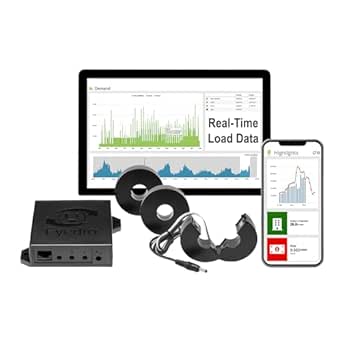
The Eyedro EB6-EW-E3 is a 3-phase energy meter with real-time monitoring of kWh, Watts, Amps, Volts, Power Factor, and cost. It installs non-invasively with split-core CT sensors (3x200A included), connects via 2.4 GHz WiFi or Ethernet, and supports solar/net metering with direction detection.
Pros:
- Non-invasive installation with split-core CT sensors — no wiring changes or special tools required
- Free cloud software with 24/7 data history, alerts, reports, and bill projections — no subscription fees
- Solar and net metering ready, differentiating generated vs. consumed power
- Dual connectivity options via 2.4 GHz WiFi or wired Ethernet
Cons:
- Full net metering with solar breakout requires a second EB6-EW-E3 unit
- European-style power adapter sold separately
- Setup requires configuration in the MyEyedro cloud platform
Best for: Monitoring household energy use
Not ideal for: Limited circuit support or complex setup
Bottom line: Choose an energy monitor that offers comprehensive data and smart connectivity.
Smart Thermostats
The ecobee Smart Thermostat Enhanced, Programmable Wi-Fi Thermostat offers advanced control over your home’s heating and cooling. It learns your schedule, adapts to your preferences, and can be managed remotely via app. When selecting a smart thermostat, consider compatibility with your HVAC system, voice assistant support, and features like geofencing or energy reports.
Common mistakes include ignoring compatibility requirements or overestimating the need for complex features that may not suit your lifestyle. Proper installation is critical for accurate temperature control and energy savings. Look for models with intuitive interfaces, easy installation, and integration with your existing smart home ecosystem. A good thermostat can significantly enhance comfort while reducing energy costs over time.
What to look for:
- Compatibility with your HVAC system
- Support for voice assistants
- Learning and scheduling features
- Remote access and control
- Energy usage reports
ecobee Smart Thermostat Enhanced, Programmable Wi-Fi Thermostat

The ecobee Smart Thermostat Enhanced offers automatic energy savings by adjusting temperatures based on occupancy and schedules. It is compatible with most HVAC systems, supports smart home integration, and includes tools for easy DIY installation.
Pros:
- Automatic energy savings and occupancy-based adjustments
- Supports multiple smart home platforms including Apple HomeKit, Alexa, and Google Assistant
- Easy DIY installation with included kits
Cons:
- Requires compatibility check with existing HVAC system
- Some features may require additional smart sensors
- Power Extender Kit needed for homes without a C wire
Best for: Smart climate control
Not ideal for: Limited compatibility or complex setup
Bottom line: Pick a smart thermostat that fits your system and simplifies climate management.
When approaching your smart home upgrade, prioritize your budget to identify the most impactful devices first. Focus on essential categories like smart thermostats and air purifiers to maximize comfort and health without overspending. Remember, quality and compatibility are key to ensuring your devices work seamlessly together, creating a truly connected living space.
Take your time to research each product, use this checklist as a guide, and enjoy the process of transforming your home into a smarter, more efficient environment. Happy shopping and here’s to a more comfortable, tech-savvy home in 2026!