
TL;DR

Get home appliances delivered free with Prime
- Fast, free delivery on millions of items
- Prime Video, Amazon Music and more included
- Member-only deals all year
A Hunker report describes clear contact paper as a low-cost way to add privacy to windows while allowing daylight through. The adhesive-backed covering can be trimmed after application and removed later, though the source does not give prices or independent performance tests.
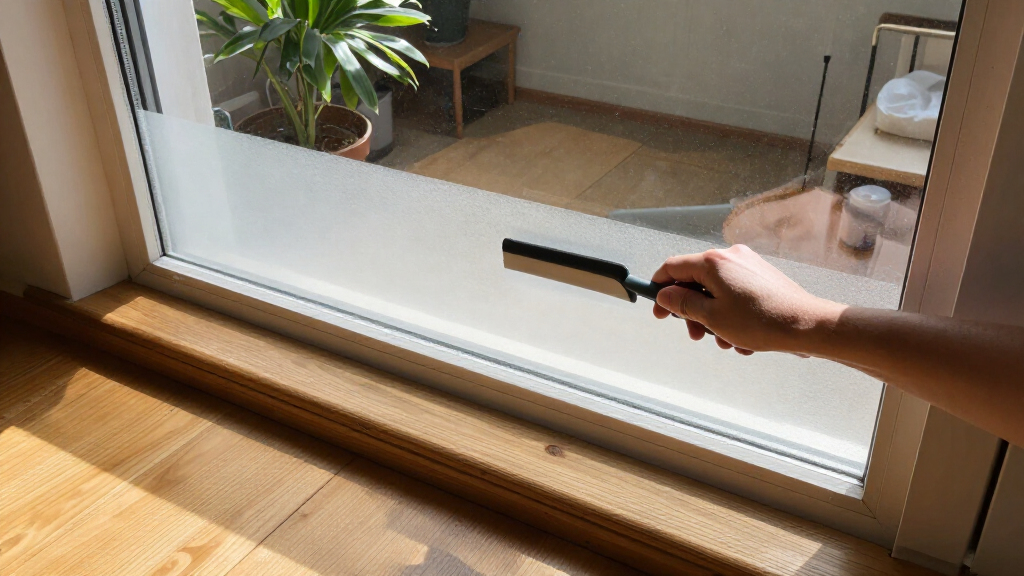
Clear contact paper can provide a lower-cost alternative to curtains for people seeking privacy at a window without blocking all incoming light, according to a home-improvement report by Hunker. The adhesive-backed material is applied directly to glass, where it gives the window a frosted appearance and obscures views into the room.
The approach is aimed at windows where curtains may be costly or visually bulky, including small rooms such as bathrooms. Hunker says clear contact paper lets light filter through while making it harder to see inside. The report describes it as generally less expensive than static-cling window film when a larger amount of material is needed, but it does not provide prices or a direct cost comparison.
Application requires a clean glass surface, a measuring tool, a smoothing tool such as a wallpaper smoother or credit card, and a utility knife. The report advises cutting the paper slightly larger than the glass, smoothing out bubbles as it is applied, and trimming excess material afterward. Starting with a piece that is too small could leave uncovered gaps.
Contact paper is attached with adhesive, which Hunker says can help it stay in place in humid areas such as bathrooms, compared with static-cling film. The report also says the covering can be removed if a homeowner changes their mind; residue may be cleaned with soap and water or an adhesive-removal product. It names clear, lace-patterned, frosted, striped, solid-color and stained-glass-style options, which can vary how much light passes through and how the window looks.
A Privacy Option for Small Rooms
The suggestion offers renters and homeowners another way to address direct sightlines through a window without buying and installing curtains. In a compact room, a covering attached to the glass can avoid adding fabric and hardware around the window, while still allowing some daylight in when a clear or frosted-style product is used.
Cost and ease of removal may matter to people who want a temporary or modestly priced change. However, the report’s cost claim is comparative rather than quantified: it gives no product prices, coverage estimates or installation-cost figures. The best choice will depend on window dimensions, the level of privacy needed and whether retaining daylight is a priority.
Products Worth Considering

Sonos Era 100 SL Compact, Microphone-Free Speaker – Black

Dyson Car+Boat Cordless Handheld Vacuum

Philips Hue Secure Wired Video Doorbell, 2K, Black
As an affiliate, we earn on qualifying purchases.
How the Glass Covering Works
Contact paper is commonly used as a liner or to cover flat surfaces, according to Hunker. For windows, the report recommends a clear version to create a frosted effect. This differs from curtains, which hang in front of the glass, and from static-cling film, which stays attached without adhesive.
The material can also be used selectively rather than across an entire pane. Hunker suggests applying it in strips for a patterned look, or choosing a colored or opaque design to block more light. These are design options described in the report, not claims that every product will provide the same privacy or light level.
““A much more budget-friendly way to add privacy to your windows, while still letting in light, is to skip the curtains entirely and apply clear contact paper directly to the glass.””
— Hunker report
Costs and Privacy Levels Vary
The supplied report does not state when the article was published, list specific prices, or compare the cost of particular contact-paper and window-film products. Its description of contact paper as less expensive is qualified by the amount needed and is not accompanied by a stated baseline or calculation.
It also does not provide measurements of how much visibility or daylight different finishes block, or explain how performance varies by product and window. Readers should check the product’s instructions and test a small area if appearance, removability or privacy is a concern. The report does not establish that the covering is suitable for every type of glass or every household situation.
Check the Product Before Applying
Anyone considering the method can compare the cost of enough contact paper for the window with available window films, then confirm that the chosen product is intended for the surface and finish they have. Before covering the full pane, cleaning the glass and following the product directions can help with application; a test piece can show how the pattern affects light and visibility.
After application, inspect the edges for gaps and smooth out trapped air. If the covering is later removed, check for residue and use a cleaning method compatible with the glass and surrounding surfaces. No further product testing or price data is included in the supplied report, so those details remain dependent on the specific material selected.
Key Questions
Does clear contact paper block all light?
Hunker says clear contact paper gives glass a frosted look and lets light filter through. The report does not quantify how much light passes through; darker, solid or patterned products may block more.
How do you apply contact paper to a window?
Clean the glass, apply the paper slightly larger than the pane, and smooth bubbles with a wallpaper smoother, credit card or similar tool. Then trim the excess with a utility knife, following the product’s directions.
Is contact paper cheaper than window film?
The Hunker report says contact paper is usually less expensive than static-cling film, particularly when a large quantity is needed. It provides no prices or comparison figures, so actual costs depend on the products and window size.
Can contact paper be removed from glass?
According to Hunker, it can be removed if you change your mind. The report says leftover adhesive may come off with soap and water or an adhesive remover; check product guidance and test cleaners on a small area first.
Source: hunker.com