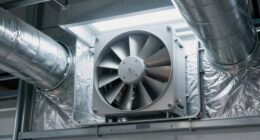
To keep your air purifier running smoothly, regularly inspect and clean or replace filters every 3 to 6 months, handling filters carefully and guaranteeing proper installation. Vacuum pre-filters and avoid harsh chemicals to prolong filter life. Place the device in a central, unobstructed spot away from walls and humidity, and dust nearby surfaces often. Maintaining good airflow and cleanliness boosts performance—continue to explore more tips to ensure your air stays fresh and healthy.
Key Takeaways
- Regularly inspect filters for dirt and replace or clean them as recommended by the manufacturer.
- Turn off and unplug the device before removing filters to prevent damage and ensure safety.
- Clean surrounding surfaces and vacuum pre-filters to reduce airborne particles and extend filter life.
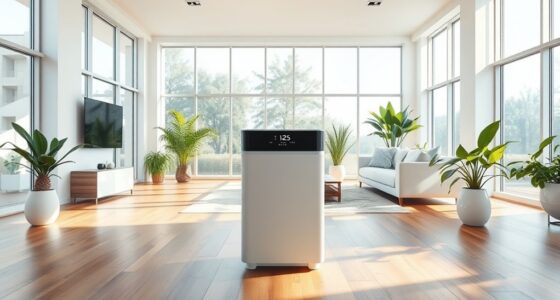
- Position the purifier in a central, unobstructed spot away from walls and furniture for optimal airflow.
- Follow manufacturer guidelines for filter replacement intervals and proper placement to maintain peak performance.

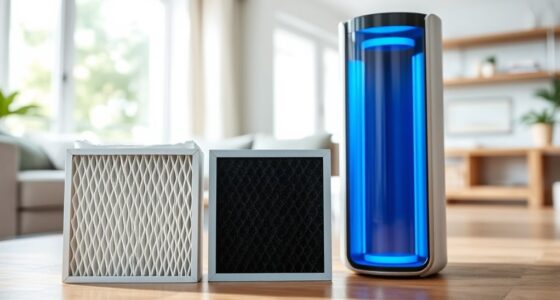
To keep your air purifier working effectively, regular maintenance is vital. One of the most important tasks is filter replacement. Over time, filters trap dust, pollen, pet dander, and other airborne particles, but they don’t last forever. A clogged or dirty filter can reduce your purifier’s efficiency, so check the manufacturer’s recommendations for how often to replace it—usually every 3 to 6 months. When it’s time, make sure you turn off and unplug your device before removing the old filter. Handle it carefully to avoid releasing trapped particles into the air. Installing the new filter correctly is essential; follow the placement tips provided in your user manual to guarantee it fits snugly and functions properly. Proper placement not only maximizes air circulation but also extends the life of your filter. Keep the device in a central location, away from walls or furniture that could block airflow, and avoid placing it in high-humidity areas or near sources of odors. Positioning your purifier correctly helps it draw in contaminated air efficiently and distribute clean air evenly throughout the room.
Regularly inspecting and replacing filters isn’t enough to maintain peak performance. You should also pay attention to the placement tips for your specific model. For ideal results, place your air purifier at a height where it can circulate air freely—usually a few feet off the ground—and avoid cramped corners or areas with clutter. Make sure the intake and outlet vents are unobstructed; blocking these can drastically reduce effectiveness. If your purifier has multiple filters, like pre-filters and HEPA filters, remember that some may require more frequent attention or cleaning. Pre-filters, for instance, can often be vacuumed to remove surface dust, extending the life of your main filters. Always follow the manufacturer’s guidance on cleaning and replacing each component, and avoid using harsh chemicals or water that could damage sensitive parts. Incorporating proper placement strategies can further enhance your device’s performance.
Finally, keeping the surrounding environment in mind can improve your purifier’s performance. Regularly dust and vacuum nearby surfaces to prevent dust buildup, and ensure the room is well-ventilated. When you move or reposition your air purifier, double-check that it’s placed according to the placement tips—this will help it operate at its best. Consistent maintenance, including timely filter replacement and strategic placement, guarantees your air purifier continues to provide cleaner, healthier air for your home or office.
Frequently Asked Questions
How Often Should I Replace the Air Purifier Filters?
You should replace your air purifier filters based on the filter lifespan, which typically ranges from three to six months. Check your device’s replacement schedule and follow the manufacturer’s recommendations for best performance. Regularly inspect filters for dirt and debris, and replace them sooner if they look clogged or dirty. Staying on top of your filter replacements ensures your air purifier works efficiently and keeps your indoor air clean.
Can I Use Household Cleaning Products on My Purifier?
You shouldn’t use household cleaning products on your air purifier. Household chemicals and cleaning solutions can damage sensitive parts, reducing efficiency or causing malfunctions. Instead, you need to follow the manufacturer’s instructions for cleaning, which often involve a damp cloth or specific filters. If you’re tempted to try something bold, think twice—your purifier’s performance depends on gentle, appropriate care. Don’t risk ruining it with harsh household chemicals.
What Are Signs My Air Purifier Needs Maintenance?
You’ll know your air purifier needs maintenance if the filter lifespan is nearing its limit or if it struggles to detect odors effectively. Reduced airflow, persistent odors, or increased noise also signal it’s time to check the filters. Regularly inspect for dust buildup and replace filters as recommended. Keeping an eye on these signs guarantees your purifier continues to improve air quality and works efficiently.
Is It Safe to Run the Purifier While Cleaning?
Did you know that running your air purifier while cleaning can improve its efficiency? It’s safe to do so if you turn it off during filter replacement or deep cleaning. Keep a consistent cleaning schedule, including replacing filters as recommended, to guarantee peak performance. Always unplug the device before cleaning to avoid electrical hazards, and avoid operating it while cleaning filters or internal components to prevent damage and ensure safety.
How Do I Troubleshoot Airflow Issues?
If you’re experiencing airflow issues, first check for airflow blockage caused by dust or debris. Turn off the purifier and inspect the filter for dirt or damage; replace it if necessary. Make sure nothing is blocking the vents, and clean any visible obstructions. Regular filter inspection helps maintain smooth airflow, ensuring your air purifier works efficiently. If problems persist, consult the user manual or contact customer support for further assistance.
Conclusion
By following these simple steps, you’ll keep your air purifier performing perfectly. Regular cleaning and careful care can combat dust, dirt, and debris, ensuring fresh, filtered air flows freely. Stay consistent, stay vigilant, and your purifier will serve you splendidly for years. Remember, maintenance makes the masterpiece — so stay steady, scrub smartly, and savor the clean, clear atmosphere you create with care. Keep it clean, and breathe easy!