
TL;DR

Get home appliances delivered free with Prime
- Fast, free delivery on millions of items
- Prime Video, Amazon Music and more included
- Member-only deals all year
The International Energy Agency (IEA) has confirmed that heat pumps are cheaper to operate than gas boilers in nearly all EU countries, with significant energy savings. However, deployment remains uneven due to policy and cost barriers. The report highlights the need for stronger policy support to accelerate adoption.
The International Energy Agency (IEA) has confirmed that heat pumps are cheaper to operate than gas boilers in 17 EU countries, offering consumers up to €800 ($924) in annual energy savings. This marks a significant shift in the cost dynamics of heating technologies across Europe, with implications for energy policy and consumer choice.
The IEA’s analysis indicates that, based on 2025 prices, heat pumps have lower lifetime costs than gas boilers in 17 EU countries, covering approximately 40% of low-temperature industrial heat demand. In the residential sector, heat pumps are cost-competitive with gas boilers in 16 countries, representing about one-third of EU space heating demand. The report emphasizes that heat pumps are now the more economical option for most consumers, with annual savings reaching up to €800.
Despite these economic advantages, deployment remains uneven across the EU. Countries such as Denmark, Germany, and the Netherlands lead adoption, supported by policies like reduced grid fees for flexible demand. Conversely, in countries like France, Poland, and Germany, higher upfront costs and installation complexities hinder widespread adoption, even though the total ownership cost difference is often less than 5%. The IEA calls for stronger policy measures, including low-interest financing and targeted subsidies, to boost uptake.
The report also notes that policy support, infrastructure development, and market incentives are critical to overcoming barriers. The EU’s Grids Package and reforms to tariff structures could play a role in facilitating industrial heat pump deployment. Overall, the findings suggest a pivotal shift towards electrification of heating in Europe, with potential for significant energy savings and reduced dependence on fossil fuel imports.
Implications for EU Energy Transition and Consumer Costs
This development underscores a major shift in the EU’s heating landscape, with heat pumps emerging as the more cost-effective and environmentally friendly alternative to gas boilers. Widespread adoption could reduce reliance on imported fossil fuels, cut emissions, and lower household energy bills, aligning with EU climate targets. However, the uneven deployment highlights the need for targeted policy support to ensure equitable benefits across member states.
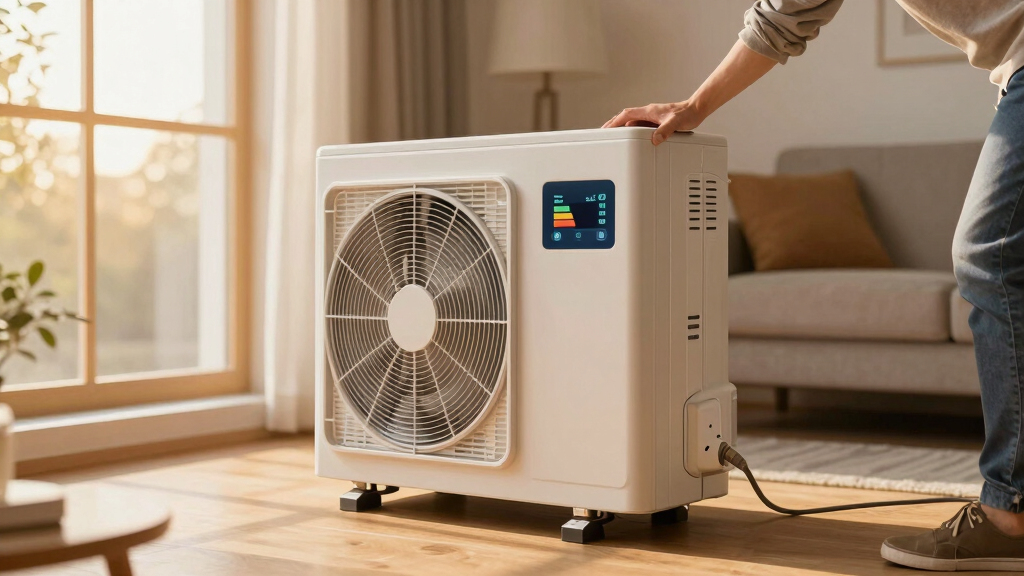
air source heat pump for home heating
As an affiliate, we earn on qualifying purchases.
As an affiliate, we earn on qualifying purchases.
EU Heating Market and Policy Landscape
The EU currently imports around 80% of its fossil fuels, with heating representing a significant portion of energy demand. Heat pumps have been promoted as a key technology for decarbonizing residential and industrial heating, but market penetration varies widely among member states. Prior to this report, the economic competitiveness of heat pumps was recognized mainly in Nordic countries, with adoption limited elsewhere due to high upfront costs and policy gaps. The IEA’s recent analysis confirms that, from a cost perspective, heat pumps are increasingly competitive, especially in markets with favorable electricity-to-gas price ratios and supportive policies.
“Heat pumps are cheaper to operate than gas boilers in almost all EU countries, with annual energy savings of up to €800 ($924).”
— an anonymous researcher
energy efficient heat pump system
As an affiliate, we earn on qualifying purchases.
As an affiliate, we earn on qualifying purchases.
Uncertainties Around Policy Implementation and Market Adoption
It is not yet clear how quickly EU countries will implement the recommended policy measures, such as subsidies and tariff reforms, to accelerate heat pump deployment. The extent to which infrastructure constraints and consumer preferences will adapt remains uncertain, as does the pace of industrial adoption beyond the 17 countries identified as cost-competitive.
residential heat pump installation kit
As an affiliate, we earn on qualifying purchases.
As an affiliate, we earn on qualifying purchases.
Policy Actions and Market Expansion Strategies
Next steps include EU member states and policymakers adopting targeted incentives, revising tariff structures, and investing in infrastructure to facilitate heat pump deployment. Monitoring progress over the coming years will determine how quickly the EU can realize these energy savings and emissions reductions, with the IEA likely to publish follow-up assessments on market developments.
cost-effective heat pump for EU homes
As an affiliate, we earn on qualifying purchases.
As an affiliate, we earn on qualifying purchases.
Key Questions
Which EU countries are already benefiting from cheaper heat pump operation?
Seventeen EU countries, including many in Central and Northern Europe, already find heat pumps more cost-effective than gas boilers based on 2025 prices, with some countries like the Netherlands, Portugal, and Bulgaria seeing ownership costs 15-30% lower than gas boilers.
What are the main barriers to wider heat pump adoption in the EU?
High upfront installation costs, infrastructure constraints, and policy gaps such as lack of subsidies and tariff reforms remain key barriers. Consumer familiarity and perceived complexity also influence adoption rates.
How much can consumers save annually by switching to heat pumps?
According to the IEA, consumers can save up to €800 ($924) per year in energy costs when using heat pumps compared to gas boilers.
What policy measures could accelerate heat pump deployment?
Measures such as low-interest financing, targeted subsidies, tariff reforms to pass through low electricity prices, and infrastructure investments are recommended to boost adoption.
Will the cost advantage of heat pumps continue to grow?
The report suggests that as technology advances and policies improve, the cost competitiveness of heat pumps is likely to strengthen, especially with economies of scale and market maturation.
Source: PV Magazine
Cold & flu season Picks
humidifiers
As an affiliate, we earn on qualifying purchases.