TL;DR

Get home appliances delivered free — and shop member deals
- Fast, free delivery on millions of items
- Access to Prime Big Deal Days deals on October 6–7
- Prime Video, Amazon Music and more included
China’s largest integrated solar-hydrogen-storage project in Jiangsu is now complete and will start full hydrogen production in August 2026. The project combines a 400 MW solar farm, battery storage, and green hydrogen facilities in a single system.
China’s state-owned energy company CHN Energy has completed construction of what it describes as the country’s largest integrated solar-hydrogen-storage project in Jiangsu province, with full hydrogen production expected to begin in August 2026. The project combines a 400 MW coastal photovoltaic (PV) plant, battery storage, and green hydrogen facilities in a single system, marking a significant step in China’s renewable energy development and hydrogen economy efforts.
The project, located near Yangkou Port in Rudong county, includes a 400 MW PV plant, a 60 MW/120 MWh battery energy storage system, and a hydrogen production facility capable of producing 482 tons of green hydrogen annually. It also features a 220 kV shore-based substation and hydrogen refueling capacity of 500 kg per day. The PV plant is expected to generate approximately 468 GWh of electricity annually, enough to supply nearly 200,000 households.
The project reached its first grid connection milestone in early 2025, with the full-capacity connection of the PV plant achieved on April 29, 2025. The entire system was completed on June 10, 2026, following joint commissioning, with performance indicators meeting design specifications. The hydrogen production facility is currently in its final stage of equipment commissioning and is scheduled to begin operations in August 2026. A dedicated submarine cable connects the PV plant directly to the hydrogen facility, allowing surplus renewable electricity to be used for hydrogen production without passing through the public grid.
Designed to demonstrate integrated renewable energy use, the project also incorporates coastal ecological restoration measures, including tidal-flat land use and wetland restoration, as part of broader environmental efforts.
Implications of China’s Largest Solar-Hydrogen Project
This project represents a major advancement in China’s renewable energy infrastructure, demonstrating the feasibility of large-scale integration of solar power, energy storage, and green hydrogen production. Its successful operation could influence future energy policies and deployment strategies, promoting renewable hydrogen as a key component of China’s clean energy transition. Additionally, the project’s integrated model aims to increase local renewable electricity consumption and reduce reliance on fossil fuels, aligning with China’s broader climate commitments.
As an affiliate, we earn on qualifying purchases.
Background on China’s Renewable Energy and Hydrogen Initiatives
China has been rapidly expanding its renewable energy capacity, with large-scale solar and wind projects forming part of its strategy to meet carbon neutrality goals by 2060. The country’s third batch of large-scale wind and solar power bases includes several such integrated projects. The development of green hydrogen, produced via electrolysis powered by renewable energy, is a key part of China’s plan to decarbonize sectors like transportation and industry. The Jiangsu project is among the first to combine these elements into a fully integrated, commercial-scale demonstration system.
“This project exemplifies the potential for large-scale renewable energy systems to produce and utilize green hydrogen directly, reducing grid dependence and enhancing energy security.”
— an anonymous researcher
large scale solar energy storage system
As an affiliate, we earn on qualifying purchases.
As an affiliate, we earn on qualifying purchases.
Remaining Questions About Project Operations
It is not yet clear how the hydrogen production facility will perform once fully operational, including efficiency and reliability metrics. Details about the project’s long-term economic viability, operational costs, and integration with local energy markets are still emerging. Additionally, the broader impact on regional ecological restoration and local community benefits remains to be fully assessed.
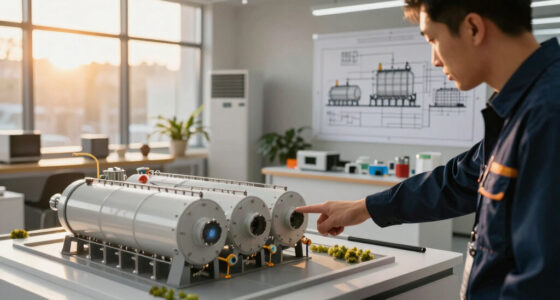
green hydrogen production equipment
As an affiliate, we earn on qualifying purchases.
As an affiliate, we earn on qualifying purchases.
Next Steps for Full Hydrogen Production and Deployment
The hydrogen facility is expected to commence full operations in August 2026, after completing final equipment commissioning. Monitoring of system performance, efficiency, and environmental impacts will follow. The project serves as a prototype for similar integrated renewable energy systems in China and potentially elsewhere, with future scaling and replication likely if successful. Continued evaluation of operational data will inform policy and investment decisions in renewable hydrogen infrastructure.
As an affiliate, we earn on qualifying purchases.
Key Questions
When will the hydrogen production facility start full operation?
The hydrogen facility is scheduled to begin full operations in August 2026, following final equipment commissioning.
What is the capacity of the solar and hydrogen components?
The project includes a 400 MW solar PV plant and a hydrogen production capacity of 482 tons annually, with a 60 MW/120 MWh battery system for energy storage.
How does the project connect renewable energy to hydrogen production?
A dedicated submarine cable links the PV plant directly to the hydrogen facility, enabling surplus solar power to be used for electrolysis without passing through the grid.
What environmental measures are included in the project?
The project incorporates coastal ecological restoration, including tidal-flat land use and wetland restoration, as part of broader environmental efforts.
Why is this project considered significant?
It is China’s largest integrated solar-hydrogen-storage project, demonstrating a scalable model for renewable energy and green hydrogen production at a commercial level.
Source: PV Magazine
Fall yard work Picks
leaf blowers
As an affiliate, we earn on qualifying purchases.