Your home’s floor plan greatly affects your robot vacuum’s performance. Well-organized and clutter-free layouts help the robot navigate smoothly and clean efficiently, while narrow or complex spaces can cause it to get stuck or miss spots. Open areas with clear pathways enable better detection of carpets and smoother movement. Managing furniture placement and virtual boundaries can also improve results. Keep these factors in mind to get the most out of your vacuum’s capabilities—more tips await your discovery.

Get home appliances delivered free with Prime
- Fast, free delivery on millions of items
- Prime Video, Amazon Music and more included
- Member-only deals all year
Key Takeaways
- Layout simplicity and open pathways enhance navigation efficiency and reduce the chance of the vacuum getting stuck.
- Cluttered or narrow areas hinder maneuverability and obstruct sensor performance.
- Well-placed carpets in accessible areas improve detection and suction adjustment.
- Clear zones and virtual boundaries optimize cleaning routes and focus high-traffic areas.
- Managing furniture placement minimizes sensor interference and facilitates systematic cleaning.

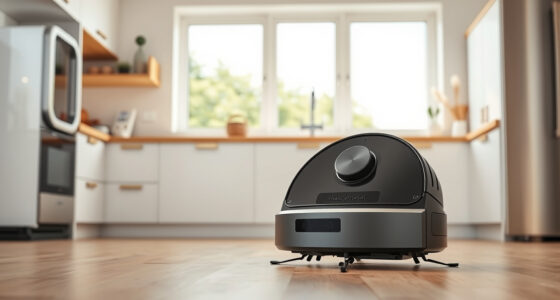
When it comes to robot vacuum performance, your floor plan plays a vital role in how effectively these devices clean your space. The layout determines how well the vacuum can navigate around furniture, reach every corner, and handle different surfaces. A well-organized floor plan makes obstacle navigation smoother, allowing the robot to avoid bumping into furniture or getting stuck, which can significantly improve cleaning efficiency. If your space has a lot of clutter or narrow pathways, your robot might struggle to maneuver, leading to missed spots or repeated passes over the same area. Simplifying your layout by moving objects away from common pathways can help the robot vacuum do its job better and faster.
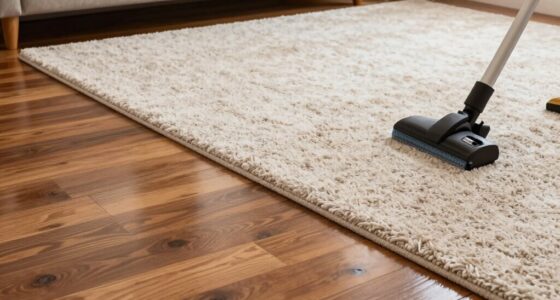
Carpet detection is another critical aspect influenced by your floor plan. Many modern robot vacuums have sensors that automatically detect carpets and rugs, increasing suction power to pick up embedded dirt and debris. The effectiveness of this feature depends on how your carpets are positioned within your layout. If the carpets are placed in open, accessible areas, the robot can easily identify and adjust its settings for optimal cleaning. However, if carpets are tucked away in tight corners or underneath furniture, the vacuum might not detect them consistently, reducing its cleaning performance. Ensuring that your carpets are in open, unobstructed spaces allows the robot to maximize its cleaning capabilities, especially on high-pile or heavily soiled areas. Additionally, floor plan complexity can influence the robot’s ability to create efficient cleaning routes. Open spaces with minimal obstructions enable the device to follow systematic patterns, covering more ground without unnecessary overlaps. Conversely, complex layouts with multiple rooms, doorways, or furniture arrangements can confuse the robot’s navigation system, especially if it relies on algorithms that struggle with intricate floor plans. To improve this, consider zoning your space or setting virtual boundaries to guide your robot vacuum. This way, it can focus on high-traffic areas or avoid rooms where cleaning isn’t necessary, making the process more efficient. Properly managing your layout design can further enhance the robot’s performance and reduce its chances of getting stuck or missing spots. Additionally, floor plan clarity can help in programming the robot to perform more precise and targeted cleaning. Being mindful of obstacle placement can also prevent interference with the vacuum’s sensors, ensuring smoother operation. Planning your space with efficient layout principles can also facilitate better navigation and overall cleaning outcomes.
robot vacuum virtual boundary set
As an affiliate, we earn on qualifying purchases.
As an affiliate, we earn on qualifying purchases.
Frequently Asked Questions
How Does Furniture Placement Affect Robot Vacuum Efficiency?
Furniture placement considerably impacts your robot vacuum’s efficiency. When furniture clutter creates too many floor obstacles, the vacuum struggles to navigate smoothly, missing spots and taking longer to clean. To improve performance, keep pathways clear and avoid blocking the vacuum’s sensors with clutter or low-hanging furniture. Smart furniture placement allows your robot to move freely, ensuring thorough cleaning and saving you time and energy.
Do Open Floor Plans Improve or Hinder Vacuum Performance?
Open floor plans generally improve robot vacuum performance because they reduce navigation obstacles, allowing the robot to move smoothly without frequent stops or rerouting. With fewer furniture barriers, the vacuum uses less power, decreasing power consumption. This streamlined layout helps the device cover more area efficiently, making cleaning quicker and more thorough. So, an open floor plan benefits your robot vacuum by enhancing its navigation and conserving battery life.
Can Rugs or Carpets Impact Navigation Accuracy?
Like a knight maneuvering treacherous terrain, your robot vacuum faces challenges with rugs and carpets. Area rugs and varied carpet textures can hinder navigation accuracy, causing the device to miss spots or get stuck. These surfaces often confuse sensors, reducing cleaning efficiency. To improve performance, consider trimming or removing thick carpets, or choose a robot with advanced sensors designed to handle diverse textures.
How Do Multi-Level Homes Influence Robot Vacuum Use?
Multi-level homes can challenge your robot vacuum’s efficiency. You need to set up smart scheduling to guarantee each level gets cleaned regularly, and avoid battery issues by managing charging cycles carefully. Using a robot with multi-level mapping features helps prevent missed spots and reduces the need for manual intervention. With proper planning, your vacuum can effectively maintain cleanliness across all floors, saving you time and effort.
Are There Specific Floor Plan Designs Best for Robot Vacuums?
Ever wondered which floor plan designs boost your robot vacuum’s efficiency? Open layouts with fewer obstacles and seamless room shifts are ideal, allowing smart technology to navigate easily and optimize cleaning paths. Compact, cluttered spaces can hinder performance and drain battery life faster. To maximize your robot vacuum’s potential, choose homes with minimal furniture obstructions and straightforward designs, ensuring longer battery life and thorough cleaning.
robot vacuum obstacle detection sensors
As an affiliate, we earn on qualifying purchases.
As an affiliate, we earn on qualifying purchases.
Conclusion
Remember, your home’s layout acts like a secret map, guiding your robot vacuum’s success. Just as a compass points true north, understanding your floor plan helps optimize cleaning. So, don’t underestimate the power of your home’s design—it’s the silent partner in your cleaning routine. Embrace the challenge, and let your space’s unique blueprint steer your robot to spotless victory. After all, isn’t a well-mapped home the key to effortless cleanliness?
As an affiliate, we earn on qualifying purchases.
As an affiliate, we earn on qualifying purchases.
Fall Picks
fall essentials
As an affiliate, we earn on qualifying purchases.