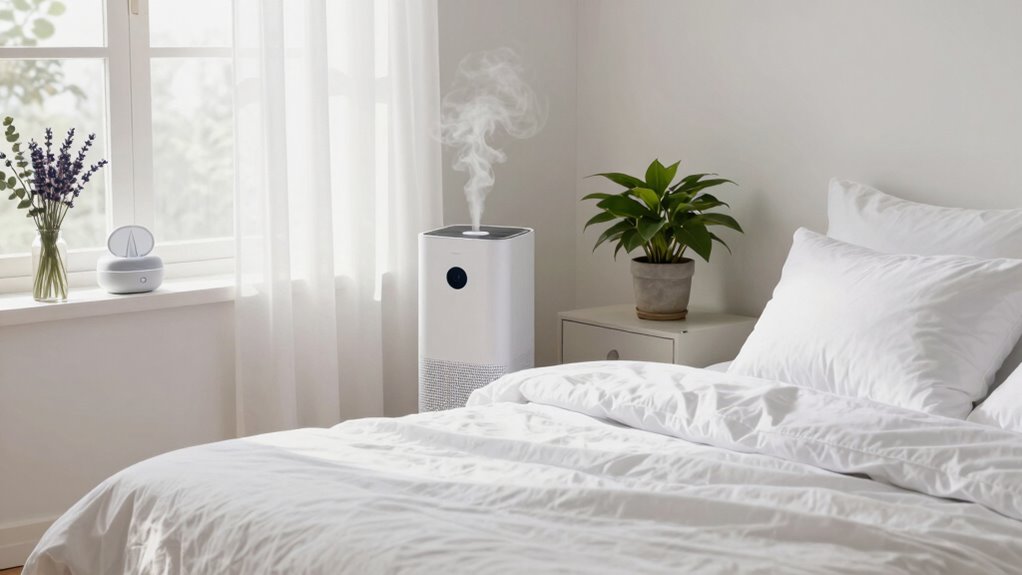

To improve your bedroom air quality for better sleep, use HEPA air purifiers to remove dust, pollen, and pet dander, and guarantee proper ventilation by opening windows during the day. Keep your space clean, wash bedding regularly, and maintain humidity around 40-50% to prevent mold and dust mites. Avoid indoor pollutants like smoking or candles. Incorporating air-purifying plants can help, but combining these strategies will lead to healthier, more restful nights. Keep exploring for more tips to breathe easier.
Key Takeaways
- Use HEPA-filtered air purifiers to remove airborne pollutants and allergens effectively.
- Ventilate the room daily by opening windows or using exhaust fans to circulate fresh air.
- Maintain humidity levels around 40-50% to prevent mold growth and dust mites.
- Avoid indoor pollutants like smoking, burning candles, and using harsh cleaning chemicals.
- Incorporate air-purifying plants, but prioritize filtration and ventilation methods for optimal air quality.

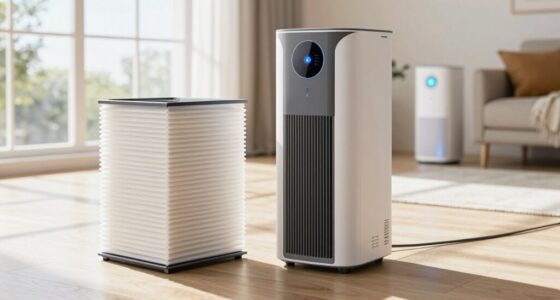
Have you ever wondered how the air in your bedroom might be affecting your sleep quality? It’s easy to overlook, but the quality of the air you breathe every night plays a vital role in how well you rest. Poor air quality can lead to allergies, respiratory issues, or restless sleep, making it harder for you to wake up feeling refreshed. Luckily, there are simple steps you can take to improve your bedroom’s air, starting with using air purifiers. These devices efficiently remove dust, pollen, pet dander, and airborne pollutants, creating a cleaner and healthier environment. When choosing an air purifier, look for one with HEPA filters, which are effective at capturing tiny particles that can disturb your sleep. Keep the purifier running regularly, especially if you have pets or live in an urban area with higher pollution levels.
Using HEPA-filtered air purifiers can significantly improve your sleep environment by removing airborne pollutants.
In addition to using air purifiers, natural ventilation is a key strategy for enhancing air quality. Opening windows during the day allows fresh air to circulate, diluting indoor pollutants and reducing stuffiness. Even if you can’t leave your windows open all night, ventilating the room before sleep can considerably improve the air you breathe. If outdoor air quality is poor, consider using exhaust fans or venting systems that draw in cleaner air from outside while pushing stale air out. Maintaining good airflow helps prevent the buildup of indoor pollutants, which can accumulate from everyday activities like cooking, cleaning, or even sleeping with a pet. Proper ventilation is crucial for maintaining healthy indoor air quality and reducing indoor pollutant levels. Incorporating indoor air pollutants awareness into your routine can further support a healthier sleeping environment. Being mindful of indoor air quality is essential for creating a safe, restful space. Additionally, understanding how airborne contaminants can affect respiratory health can help you make better decisions about your environment.
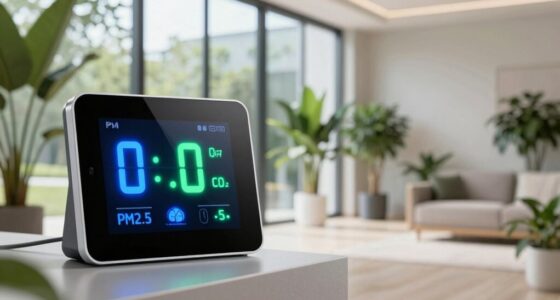
Don’t forget to keep your bedroom clean, as dust and allergens settle on surfaces and can become airborne again when disturbed. Regularly dust and vacuum with a HEPA-filtered vacuum cleaner, and wash bedding weekly in hot water to eliminate dust mites and other allergens. Controlling humidity levels is also essential; aim for around 40-50% moisture, as too much humidity encourages mold growth and dust mites, while too little can dry out your respiratory passages. Use a dehumidifier or humidifier as needed to maintain this balance.
Finally, avoid smoking indoors or burning candles, as these activities release pollutants into the air. Incorporate plants known for air-purifying qualities, like snake plants or pothos, but keep in mind that they shouldn’t replace proper ventilation or filtration methods. Combining these strategies creates a healthier sleep environment, ensuring you breathe cleaner air every night, helping you fall asleep faster and wake feeling more rested.
HEPA air purifier for bedroom
As an affiliate, we earn on qualifying purchases.
As an affiliate, we earn on qualifying purchases.
Frequently Asked Questions
Can Houseplants Really Purify Bedroom Air Effectively?
Yes, houseplants can effectively purify your bedroom air through plant detoxification. They absorb pollutants and release oxygen, boosting your sleep environment. Green air benefits include reducing toxins like formaldehyde and benzene, which can disturb sleep. To maximize results, choose easy-care plants like snake plants or pothos, and keep them healthy. Regular watering and proper placement will enhance their detoxification abilities, creating a fresher, more restful bedroom atmosphere.
How Often Should I Replace My Air Filters?
You should replace your air filter every 90 days for guaranteed air quality. The air filter lifespan can vary based on usage and environment, so check your manufacturer’s recommendations. Incorporate a maintenance schedule to monitor filter condition regularly. If you notice decreased airflow or increased dust, replace the filter sooner. Consistent maintenance ensures your bedroom stays fresh, reduces allergens, and supports better sleep.
Do Air Purifiers Emit Harmful Ozone?
Air purifiers can emit small amounts of ozone, but most models prioritize purifier safety by minimizing ozone emissions. While some units produce harmless levels, certain older or cheaper purifiers might release ozone that irritates your lungs. To keep your bedroom safe, choose a purifier labeled as ozone-safe or ozone-free. This way, you guarantee cleaner air without risking harmful ozone emissions that could compromise your health or disrupt your sleep.
Can Pets Affect Bedroom Air Quality?
Yes, pets can affect your bedroom air quality. Pet dander is a common indoor allergen that can trigger allergies or asthma, especially if you’re sensitive. Cats, dogs, and other animals shed fur and skin flakes that linger in the air. Regular cleaning, using HEPA filters, and keeping pets out of the bedroom can help reduce pet dander and indoor allergens, improving your sleep environment.
Are Natural Remedies Better Than Electronic Air Purifiers?
Like a gentle stream, natural remedies can soothe your air quality, but electronic air purifiers act like a vigilant guardian. While natural remedies such as plants and essential oils may improve air quality, electronic purifiers often provide faster, more consistent results by filtering pollutants effectively. For ideal sleep, combining both approaches offers a balanced solution—embracing nature’s touch while relying on technology’s precision.
bedroom air purifier with HEPA filter
As an affiliate, we earn on qualifying purchases.
As an affiliate, we earn on qualifying purchases.
Conclusion
Improving your bedroom air quality can markedly boost your sleep quality. Keep your space ventilated, use air purifiers, and choose low-emission furniture and bedding. Did you know that indoor air can be up to five times more polluted than outdoor air? By taking these simple steps, you’ll create a healthier environment that promotes restful sleep and overall well-being. Start today, and enjoy the benefits of fresh, clean air every night.
air-purifying indoor plants
As an affiliate, we earn on qualifying purchases.
As an affiliate, we earn on qualifying purchases.
humidifier for bedroom 40-50%
As an affiliate, we earn on qualifying purchases.
As an affiliate, we earn on qualifying purchases.