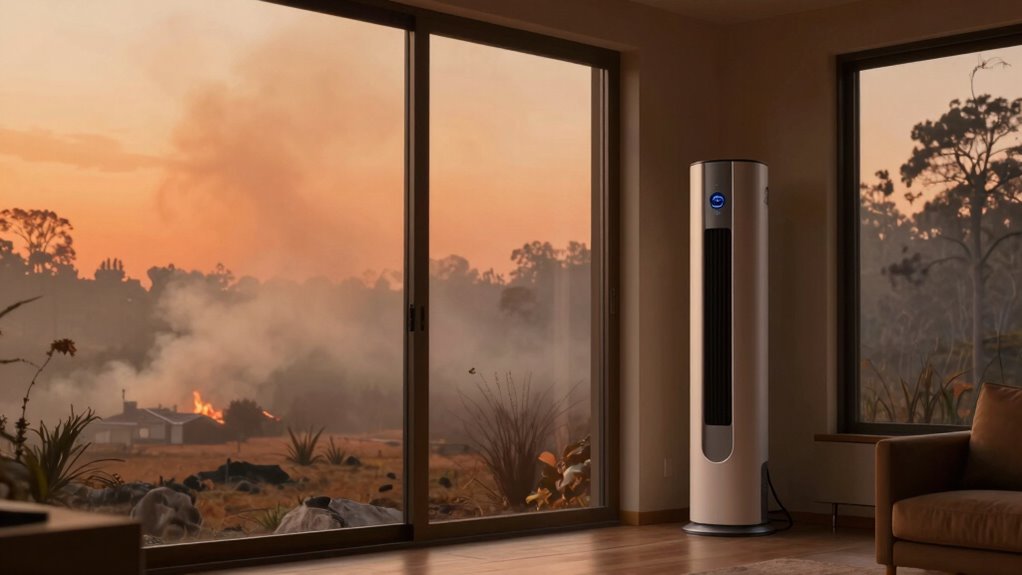

Wildfire seasons have become longer and more intense, forcing you to rethink your home’s approach to indoor air quality. Smoke easily infiltrates homes lacking proper sealing or filtration, even when windows are closed. To protect yourself, you’ll need to seal leaks, upgrade filters, and use dedicated air purifiers. These changes help reduce smoke entry and improve air quality during wildfire events. Keep exploring to discover more ways to keep your home safe and breathable.

Get home appliances delivered free with Prime
- Fast, free delivery on millions of items
- Prime Video, Amazon Music and more included
- Member-only deals all year
Key Takeaways
- Longer, more intense wildfire seasons increase indoor smoke infiltration risks, prompting improved home air quality strategies.
- Sealing leaks and upgrading HVAC filters help prevent outdoor smoke from entering homes effectively.
- The adoption of dedicated air purifiers and advanced filtration systems enhances indoor air protection.
- Monitoring indoor air quality becomes essential to detect smoke infiltration and assess mitigation success.
- Behavioral changes, like avoiding indoor pollutants, complement technological solutions for healthier indoor environments.
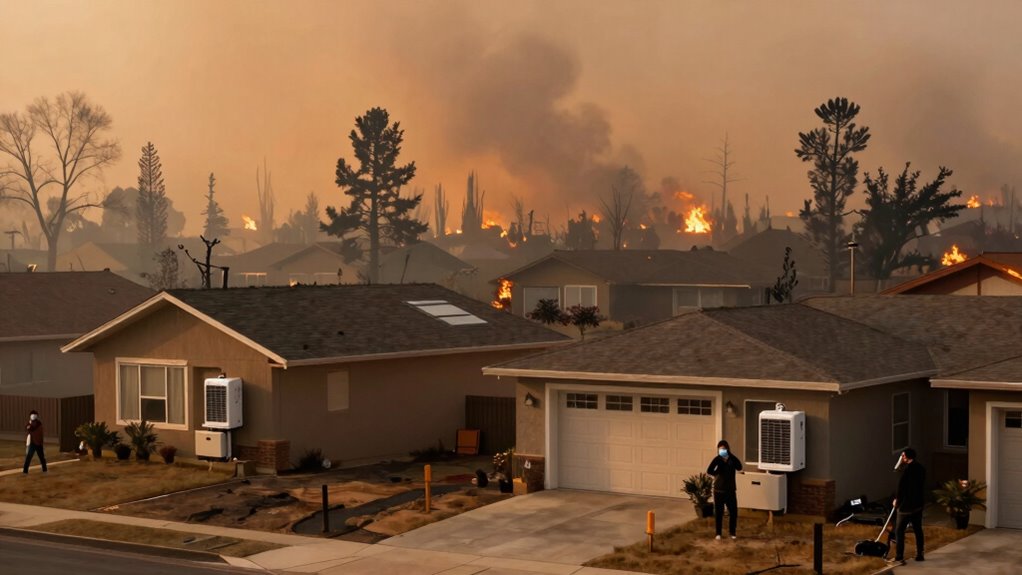
Indoor smoke mitigation has become a central focus in home air quality management. You might not realize how much wildfire smoke infiltrates your living space, especially if your home isn’t airtight or lacks proper filtration. To improve indoor air quality, you need more than just opening windows—outdoor smoke can easily seep in through gaps or ventilation systems. This is where targeted mitigation strategies come into play. Sealing leaks, upgrading HVAC filters, and installing dedicated air purifiers can make a notable difference. Many homeowners now opt for portable air purifiers placed in common areas, ensuring that the air you breathe is as clean as possible. Regular maintenance of these devices, such as changing filters and cleaning vents, helps sustain their effectiveness during intense wildfire seasons. Beyond technology, you can also implement behavioral changes like reducing indoor smoking and avoiding activities that generate indoor pollutants, which further enhances indoor air quality. As wildfire seasons grow longer and more intense, understanding air purifier innovations can help you select the best solutions for your home’s needs. Incorporating proper filtration techniques is essential for maintaining a healthier indoor environment in wildfire-prone areas. Staying informed about indoor air quality monitoring can also help you track improvements and identify problem areas more effectively. Additionally, exploring advanced filtration methods can further improve the indoor environment during wildfire events.
HEPA air purifier for wildfire smoke
As an affiliate, we earn on qualifying purchases.
As an affiliate, we earn on qualifying purchases.
Frequently Asked Questions
How Do Wildfire Smoke Particles Affect Indoor Air Quality Long-Term?
Wildfire smoke particles can cause long-term indoor air contamination by infiltrating your home through particle infiltration pathways like gaps around windows and doors. These tiny particles linger in the air, potentially causing respiratory issues and aggravating allergies over time. You should improve sealing measures and use high-quality air filters to reduce particle infiltration, helping to maintain healthier indoor air quality and protect your household from prolonged exposure to wildfire smoke.
Are There Specific Air Filtration Systems Recommended for Wildfire-Prone Areas?
In wildfire-prone areas, you should choose air purifiers with advanced technology like HEPA filters, which effectively trap smoke particles, allergens, and pollutants. Consider filtration system types such as activated carbon filters for odor and chemical absorption, or UV purifiers for added sterilization. These systems help maintain indoor air quality during wildfire season, ensuring you breathe cleaner air and reduce long-term health risks associated with smoke exposure.
How Often Should Air Filters Be Replaced During Wildfire Season?
During wildfire season, you should replace your air filters every 1 to 2 months, depending on filter type and air quality. Regular air purifier maintenance is essential for peak performance. Follow the filter replacement schedule recommended by the manufacturer, and check filters frequently for dirt and debris. This guarantees your home stays protected from wildfire smoke, improving indoor air quality and reducing health risks during high-risk periods.
Can Indoor Plants Help Improve Air Quality During Wildfires?
Indoor plants can help improve air quality during wildfires by providing natural air purification. Plant varieties like snake plants, pothos, and spider plants are especially effective at filtering pollutants and toxins from the air. You should keep these plants healthy and well-maintained, as they absorb airborne particles and release oxygen. Incorporating such plants into your home creates a cleaner, fresher environment during wildfire season.
What Are the Signs of Poor Indoor Air Quality Caused by Wildfires?
Imagine your home’s air as a delicate dance floor—when indoor air pollutants from wildfires invade, the movement stumbles. Signs of poor indoor air quality include persistent coughing, eye irritation, and a stale smell. You might notice difficulty breathing or feeling unwell even indoors. To combat this, you should evaluate ventilation strategies, ensuring fresh air circulates and indoor pollutants are filtered out, restoring your home’s breathable atmosphere.
dedicated indoor air purifier for smoke
As an affiliate, we earn on qualifying purchases.
As an affiliate, we earn on qualifying purchases.
Conclusion
As wildfire seasons grow more intense, you might think investing in air quality solutions is just an extra expense. However, prioritizing indoor air filtration and sealing your home isn’t just about comfort—it’s about safeguarding your health. The truth is, these measures can considerably reduce harmful particles, even during the worst fires. So, don’t wait for another smoky season to take action; upgrading your home’s air quality is a smart, proactive choice for your well-being.
HVAC air filter upgrade for wildfire season
As an affiliate, we earn on qualifying purchases.
As an affiliate, we earn on qualifying purchases.
As an affiliate, we earn on qualifying purchases.
Fall Picks
fall essentials
As an affiliate, we earn on qualifying purchases.