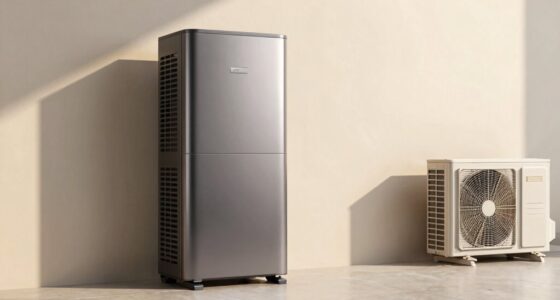
If you incorrectly size your mini-split, even a high-end system can seem weak and struggle to keep your home comfortable. An undersized unit runs nonstop, causing fatigue, while an oversized one short-cycles and wastes energy. These mistakes reduce efficiency, increase wear on parts, and lead to higher bills. Getting the right size is essential for performance and longevity. Keep going to discover common sizing pitfalls and how to avoid them for maximum comfort.

Get home appliances delivered free with Prime
- Fast, free delivery on millions of items
- Prime Video, Amazon Music and more included
- Member-only deals all year
Key Takeaways
- Oversized mini-splits cycle frequently, causing inconsistent comfort and perceived weakness despite high costs.
- Undersized units struggle to meet cooling or heating demands, making the system feel underpowered.
- Ignoring home insulation and layout leads to improper sizing, reducing system effectiveness and performance.
- Incorrect sizing increases strain on components, leading to premature wear and diminished system strength.
- Poor calculations result in inefficient operation, making an expensive system feel weak and ineffective.

Are you confident you’ve sized your mini-split correctly? Many homeowners overlook the significance of proper sizing, which can lead to significant issues down the line. An undersized unit struggles to meet your heating or cooling needs, while an oversized one cycles on and off too frequently, wasting energy and increasing wear and tear. Proper sizing is essential because it directly impacts energy efficiency and the overall performance of your system. When your mini-split isn’t correctly matched to your space, you’ll notice higher utility bills, reduced comfort, and more frequent repairs.
One common mistake is ignoring the unique layout and insulation quality of your home. It’s tempting to simply pick a unit based on square footage, but this approach often overlooks critical factors like ceiling height, window placement, and insulation levels. Poorly calculated sizing can lead to installation challenges, making the process more complicated and costly. For example, an oversized system might require additional modifications to ductwork or electrical connections, increasing your initial investment and prolonging installation time. Conversely, an undersized unit might fail to adequately heat or cool the space, forcing you to run the system continuously, which diminishes energy efficiency and inflates energy bills. Additionally, understanding the importance of proper sizing can help you avoid these costly mistakes and ensure long-term comfort.
Energy efficiency is directly impacted by how well your mini-split is calibrated to your specific needs. When a system is too large, it short-cycles — meaning it turns on and off frequently — wasting energy and increasing operational costs. On the other hand, an undersized system runs nonstop, trying to compensate for its inability to reach the desired temperature. Both scenarios lead to higher electricity consumption and reduce the long-term savings mini-split systems are designed to offer. Proper sizing guarantees the unit operates smoothly, maintains consistent temperatures, and maximizes energy savings over time. Accurate sizing is key to optimizing energy consumption and system longevity. Correctly assessing your home’s insulation quality can greatly influence the appropriate size for your system, ensuring efficiency and comfort.
Installation challenges also play a role in incorrect sizing. If your system isn’t properly matched to your space, you might face difficulties during installation, like needing additional support or modifications to existing structures. These challenges can increase labor costs and time, potentially delaying the comfort you’re seeking. Additionally, incorrect sizing can cause strain on the compressor and other components, leading to premature system failure. This not only results in costly repairs but also diminishes the reliability and lifespan of your mini-split.
As an affiliate, we earn on qualifying purchases.
Frequently Asked Questions
How Often Should I Have My Mini-Split System Serviced?
You should have your mini-split system serviced at least once a year to guarantee peak energy efficiency and keep it running smoothly. Regular maintenance, following a consistent schedule, helps prevent dust buildup, refrigerant leaks, and other issues that can reduce performance. Scheduling professional inspections annually also prolongs your system’s lifespan and saves you money on costly repairs, keeping your home comfortable year-round.
Can Improper Installation Affect System Performance?
Imagine you’re sailing a ship with the wrong sails—improper installation can seriously impact your mini-split’s performance. Installation errors and sizing inaccuracies can cause reduced efficiency, uneven cooling or heating, and increased energy bills. When your system isn’t installed correctly, it works harder than it needs to, leading to wear and tear. To avoid this, always guarantee professional installation to maximize your mini-split’s performance and longevity.
What Signs Indicate My Mini-Split Is Undersized or Oversized?
You’ll notice your mini-split struggles to heat or cool effectively if it’s undersized, especially during extreme weather, or if it’s oversized, leading to short cycling. Check if your thermostat calibration is accurate and assess your insulation quality; poor insulation can mimic signs of an undersized system by causing uneven temperatures. Persistent hot or cold spots and high energy bills are clear signs your system might not be properly sized for your space.
Are There Specific Brands Better for Proper Sizing?
Some brands are better for proper sizing because of their strong reputation for accuracy and reliability, like Mitsubishi and Daikin. You should prioritize brands known for precise sizing recommendations and consistent quality. Research customer reviews and consult with HVAC professionals to make sure the brand’s reputation aligns with your needs. Choosing a reputable brand helps guarantee your mini-split is correctly sized, so it performs efficiently without feeling weak or overworked.
How Does Climate Impact Mini-Split Sizing Needs?
Think of climate as the weather’s mood swings—you need a system that adapts. Climate variability and seasonal adjustments directly influence your mini-split’s sizing needs. If you live in a region with hot summers and cold winters, you’ll require a more robust system to handle temperature swings. Ignoring these factors can lead to an underpowered unit that struggles during peak seasons, making your comfort unpredictable and energy bills higher.
As an affiliate, we earn on qualifying purchases.
Conclusion
Getting the size just right is like tuning a musical instrument—you want harmony, not discord. When you pick the wrong mini-split size, it’s as if the system is trying to sing a song it can’t quite hit, leaving you frustrated and uncomfortable. Avoid these sizing mistakes, and you’ll guarantee your mini-split hits the right notes, providing efficient, reliable comfort all year round. Don’t let a small mistake turn your home into a noisy, underperforming symphony.
energy efficient mini split system
As an affiliate, we earn on qualifying purchases.
As an affiliate, we earn on qualifying purchases.
As an affiliate, we earn on qualifying purchases.
NFL season / tailgating Picks
team gear
As an affiliate, we earn on qualifying purchases.