

Sensors are the core of a truly helpful smart home, automatically adjusting your environment for safety, comfort, and efficiency. They detect movement, temperature, light levels, and sounds, enabling your devices to respond seamlessly. Whether turning lights on when you enter a room or alerting you to potential hazards, sensors keep everything running smoothly. If you want to discover how these tiny devices create a smarter, safer home, keep exploring the details behind their essential role.

Get home appliances delivered free with Prime
- Fast, free delivery on millions of items
- Prime Video, Amazon Music and more included
- Member-only deals all year
Key Takeaways
- Sensors enable automatic adjustments for energy efficiency, controlling lighting, heating, and cooling based on environmental conditions.
- They enhance home security by detecting movement, door/window status, and unusual sounds, providing real-time alerts.
- Sensors monitor safety hazards like smoke, carbon monoxide, and water leaks, allowing early intervention.
- They facilitate seamless device communication, supporting automation that adapts to user routines and preferences.
- Sensors improve comfort by regulating climate and lighting, creating a personalized, responsive living environment.
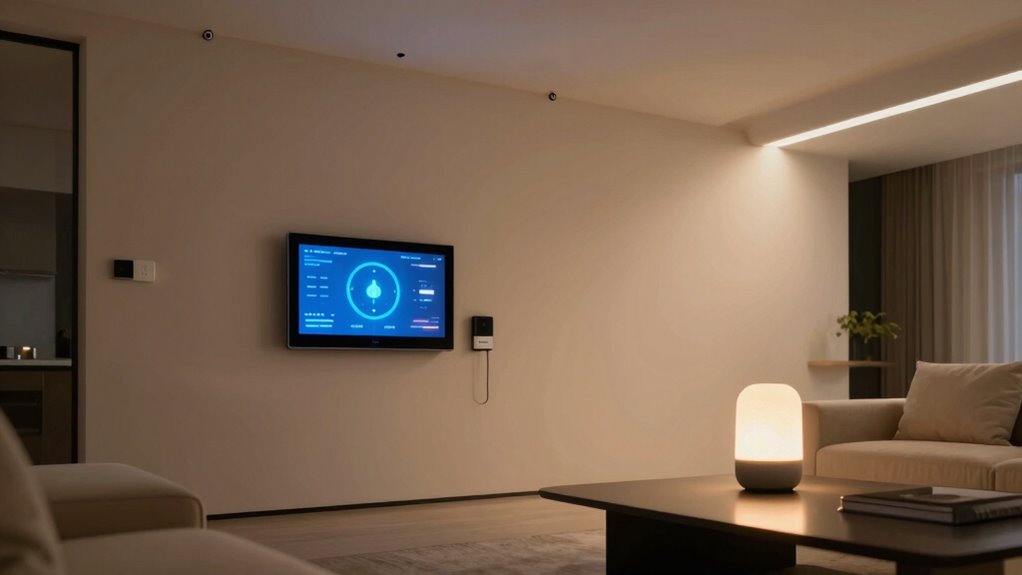
Sensors play an essential role in making smart homes more efficient, secure, and comfortable. When you think about how your smart home functions, sensors are the unseen heroes working behind the scenes to optimize energy use, enhance security, and provide convenience. They detect movement, temperature changes, light levels, and even sound, allowing your home to respond automatically to various conditions. This responsiveness not only makes your living space more comfortable but also helps you save on energy costs and keep your home safe.
Sensors enhance smart homes by optimizing energy, security, and comfort seamlessly behind the scenes.
For energy efficiency, sensors are fundamental. Imagine walking into a room where the lights turn on automatically when you enter and switch off when you leave. That’s the power of motion sensors and light sensors at work, reducing unnecessary energy consumption. Temperature sensors enable your heating and cooling systems to operate only when needed, maintaining a comfortable environment without wasting energy. Smart thermostats use these sensors to learn your routines and adjust settings accordingly, ensuring your home stays cozy while minimizing energy bills. By continuously monitoring environmental conditions, sensors help you optimize the use of appliances and systems, making your home eco-friendly and cost-effective. Additionally, sensor integration allows different smart devices to communicate and work together seamlessly for an even smarter home experience.
Security monitoring is another critical aspect where sensors shine. Motion detectors can alert you instantly if unexpected movement is detected when you’re away, providing peace of mind. Contact sensors on doors and windows notify you whenever they’re opened or closed, helping prevent unauthorized access. Glass break sensors detect the sound of shattering glass, which can be crucial for early intrusion detection. These sensors work together to create a thorough security system that’s always vigilant. With real-time alerts sent directly to your smartphone, you can respond quickly to any potential threats, whether it’s a break-in or an accidental opening of a door. This constant monitoring acts as a digital watchdog, making your home safer and more secure.
Beyond security and energy, sensors also improve overall comfort. Temperature sensors regulate climate control systems, ensuring your home remains pleasant no matter the season. Light sensors adjust window blinds or lighting levels based on the natural sunlight, enhancing ambiance and reducing energy use. Sensors can even detect smoke, carbon monoxide, or water leaks, providing early warnings that can prevent disasters. Environmental monitoring is a crucial aspect of smart sensors, enabling early detection of hazardous conditions and preventing potential damage. Understanding the types of sensors involved helps homeowners better grasp how their smart home operates. They also facilitate automated responses, allowing your home to react proactively to environmental changes. In addition, integrating sensors with smart home ecosystems creates a cohesive system that enhances your daily life. These smart sensors work seamlessly together, creating an integrated ecosystem that enhances your daily life.
In a truly helpful smart home, sensors are the backbone of automation, efficiency, and safety. They enable your home to adapt to your needs automatically, saving you money, increasing security, and boosting comfort—all without you having to lift a finger.
Products Worth Considering

Sonos Era 100 Wireless Smart Speaker with Alexa, Black

Philips Hue Smart Light Starter Kit with Bridge and 4 White and Color A19 Bulbs

Levoit Eleva 300X Air Purifier with Fully Sealed HEPA Filtration and Smart Control
As an affiliate, we earn on qualifying purchases.
Frequently Asked Questions
How Do Sensors Improve Energy Efficiency in Smart Homes?
Sensors improve energy efficiency in your smart home by enabling precise energy saving optimizations. They detect occupancy, light levels, and temperature changes, allowing your system to adjust settings automatically. Regular sensor calibration guarantees accuracy, preventing energy waste. As a result, your home conserves power when rooms are unoccupied and optimizes climate control, leading to lower utility bills and a more environmentally friendly living space.
Can Sensors Detect Emergencies Like Fires or Gas Leaks Automatically?
Did you know that smart sensors can detect emergencies like fires or gas leaks within seconds? Yes, fire detection sensors automatically alert you and emergency services, while gas leak monitoring sensors identify dangerous leaks instantly. These sensors work in real-time, providing critical safety alerts that can prevent accidents and save lives. By integrating these sensors into your smart home, you guarantee rapid responses to emergencies, keeping your family safe and secure at all times.
What Privacy Concerns Are Associated With Smart Home Sensors?
You should be aware that smart home sensors raise privacy concerns, especially around data collection and security. Your data might be vulnerable if not protected by strong data encryption, risking unauthorized access. It’s vital that your devices obtain clear user consent before collecting any personal information. Always review privacy policies and settings to guarantee your data remains secure, giving you control over what’s shared and stored in your smart home ecosystem.
How Do Sensors Integrate With Existing Home Automation Systems?
You integrate sensors with existing home automation systems by ensuring proper sensor calibration, so data transmission is accurate and reliable. Connect sensors through compatible hubs or controllers, often via Wi-Fi, Zigbee, or Z-Wave networks. Once calibrated, they transmit data seamlessly to your system, enabling real-time responses like adjusting thermostats or turning on lights. This integration creates a smooth, responsive smart home experience tailored to your preferences.
Are Sensors in Smart Homes Susceptible to Hacking or Interference?
Sensors in smart homes can be vulnerable to hacking or interference due to sensor vulnerabilities like weak passwords or outdated firmware. To prevent hacking, you should regularly update device software, use strong, unique passwords, and enable two-factor authentication where possible. Additionally, secure your Wi-Fi network with encryption, disable unnecessary services, and monitor device activity. These steps help protect your smart home sensors from potential threats and maintain your privacy and security.
Conclusion
Imagine a smart home that truly understands your needs, responding seamlessly thanks to sensors. While some skeptics doubt sensors can fully mimic human intuition, recent advances suggest they’re steadily bridging that gap. As technology evolves, sensors will become even more intuitive, making your home safer, more efficient, and genuinely helpful. It’s not just a theory—it’s a promising reality that’s shaping how we live, one sensor at a time.