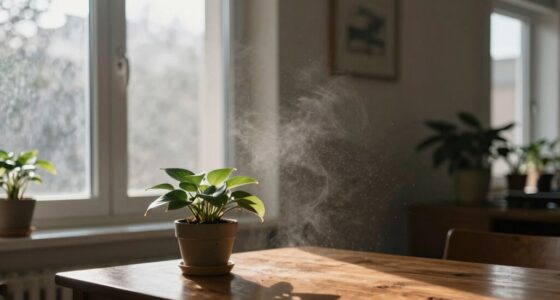
Dust keeps coming back even after deep cleaning because environmental factors like poor air filtration, high humidity, and inadequate ventilation continuously introduce and circulate dust particles. These conditions make it easy for dust to settle quickly again on surfaces. To reduce this recurring problem, it’s essential to manage these elements effectively. Keep exploring how adjusting your indoor environment can make your cleaning efforts more lasting and keep your space cleaner longer.
Key Takeaways
- External environmental factors continuously introduce dust into indoor spaces despite cleaning efforts.
- Inadequate air filtration allows airborne dust to settle quickly after cleaning.
- Poor humidity control causes dust to stick or become airborne, leading to rapid reaccumulation.
- Insufficient ventilation prevents effective removal of dust particles from indoor air.
- Unidentified dust sources or overlooked problem areas contribute to ongoing dust buildup.
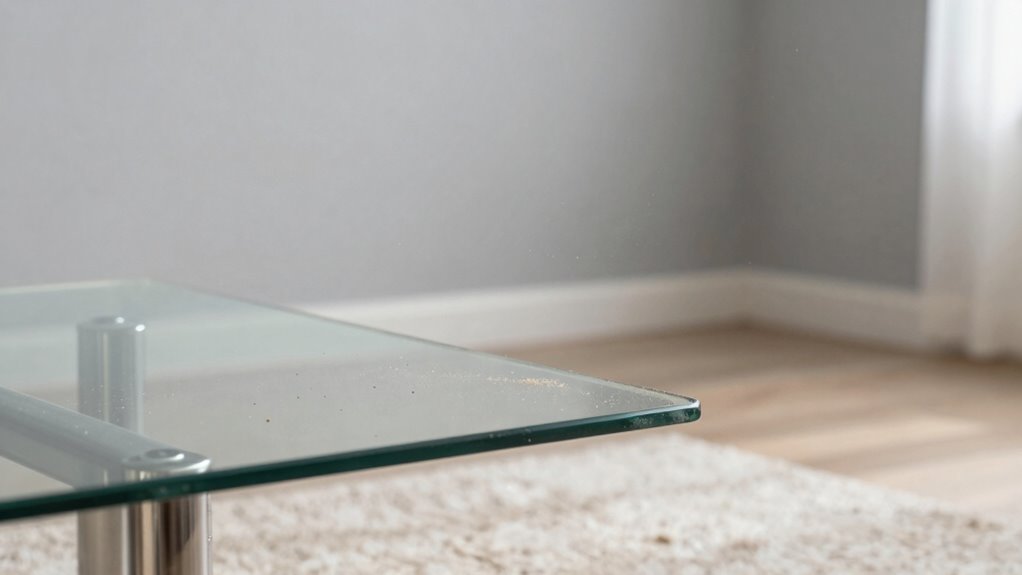
Even if you’re diligent about dusting and vacuuming, these environmental factors constantly influence how much dust is present in your home. Air filtration helps by capturing airborne dust particles before they settle, so your surfaces stay cleaner longer. Meanwhile, humidity control keeps dust particles from floating excessively or sticking stubbornly to surfaces, which can make your cleaning efforts more effective. If you notice dust reappearing quickly after cleaning, it’s worth evaluating your home’s air quality and humidity levels. Simple adjustments, like adding a humidifier or an air purifier, can make a noticeable difference. Proper ventilation also plays a crucial role in reducing dust buildup by exchanging stale indoor air with fresh outdoor air, further helping to maintain a cleaner environment. Additionally, understanding the sources of dust in your home can help you target specific areas more effectively. You should also consider air quality sensors that can monitor dust levels in real-time and alert you when they rise. Recognizing the importance of air circulation can help you optimize your home’s airflow to diminish dust accumulation. Ultimately, persistent dust isn’t just about physical cleaning but about managing the environment that allows dust to continually circulate and settle. You need to think about the air you breathe and the humidity in your home as part of your cleaning strategy. By improving air filtration and maintaining proper humidity levels, you can reduce dust’s relentless return and enjoy a cleaner, healthier living space.
As an affiliate, we earn on qualifying purchases.
Frequently Asked Questions
Can Air Purifiers Eliminate Dust Completely?
Air purifiers can’t eliminate dust completely because of their limitations. They effectively capture larger dust particles, but tiny particles, especially those smaller than 0.3 microns, can slip through. Dust particle size varies, and some microscopic dust remains airborne despite using an air purifier. To reduce dust buildup, combine air purifiers with regular cleaning, humidity control, and proper ventilation for the best results.
How Often Should I Deep Clean to Prevent Dust Buildup?
You should deep clean your home at least once every two weeks, especially if dust seems relentless. Coincidentally, maintaining your vacuum regularly enhances allergen control by ensuring it’s efficient at trapping dust. This routine helps prevent buildup and keeps dust at bay longer. Don’t forget to check filters and brushes often—this simple habit supports your deep cleaning efforts and keeps your space cleaner and healthier.
Do Certain Cleaning Products Attract More Dust?
Certain cleaning products can attract more dust if they leave a sticky residue or static charge. Your cleaning habits and surface materials matter too; for example, dust tends to stick more to fabric or rough surfaces. Using the right products for your surfaces and avoiding overly greasy or glossy cleaners can help. Regular dusting and choosing products that don’t create static will reduce dust buildup over time.
Is Dust More Persistent in Humid Environments?
The saying “it never rains but it pours” fits here because dust tends to be more persistent in humid environments. High humidity affects dust adhesion, making dust particles cling more stubbornly to surfaces. The moisture creates a sticky surface, so even after cleaning, dust quickly settles back. To combat this, use a dehumidifier and regularly wipe surfaces, preventing moisture from helping dust stick around longer than it should.
Can Pets’ Fur Contribute to Ongoing Dust Issues?
Yes, pets’ fur can definitely contribute to ongoing dust issues. Pet dander and fur shedding release tiny particles into the air, which settle on surfaces and become part of the dust you see. Even with deep cleaning, fur and dander quickly resettle, making dust appear persistent. Regular vacuuming with a HEPA filter, grooming your pets, and maintaining good air quality can help reduce this ongoing dust problem.
As an affiliate, we earn on qualifying purchases.
Conclusion
Even after deep cleaning, dust seems to keep coming back, almost like a stubborn shadow that refuses to leave. It’s frustrating, but understanding its sources—like air currents, fabrics, and household clutter—helps you tackle the problem more effectively. Think of dust as a persistent visitor; no matter how many times you clean, it’s always waiting just outside the door. With consistent effort and smart habits, you can keep your space cleaner and dust-free, even if it’s a constant battle.
As an affiliate, we earn on qualifying purchases.
As an affiliate, we earn on qualifying purchases.